Charcuterie / Kitchen

Wood is a friendly and warm surface to touch and look at in a home, and it finds special places in the kitchen. Over a lifetime of woodworking, I have done many projects for kitchens including coasters, trivets, cheese boards, cutting boards, and now Charcuterie boards.

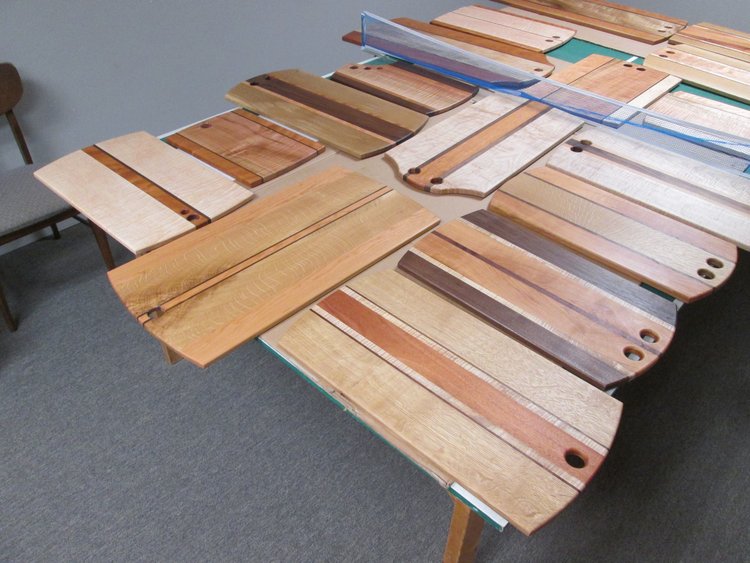
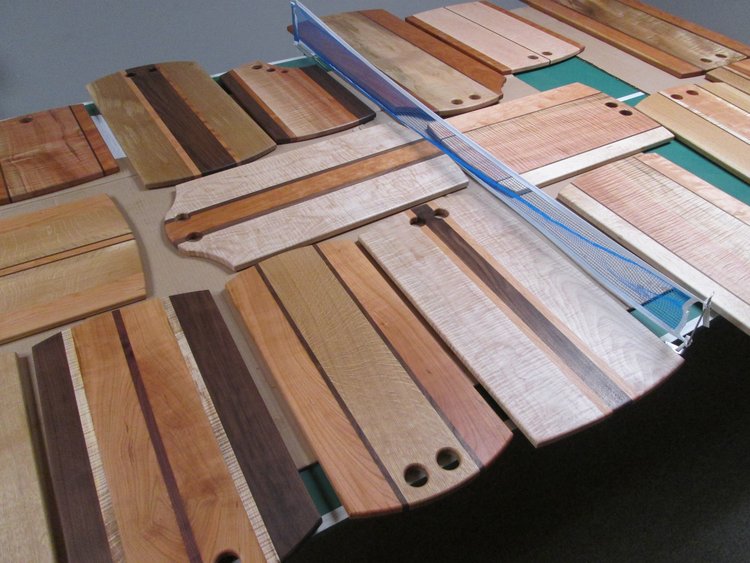
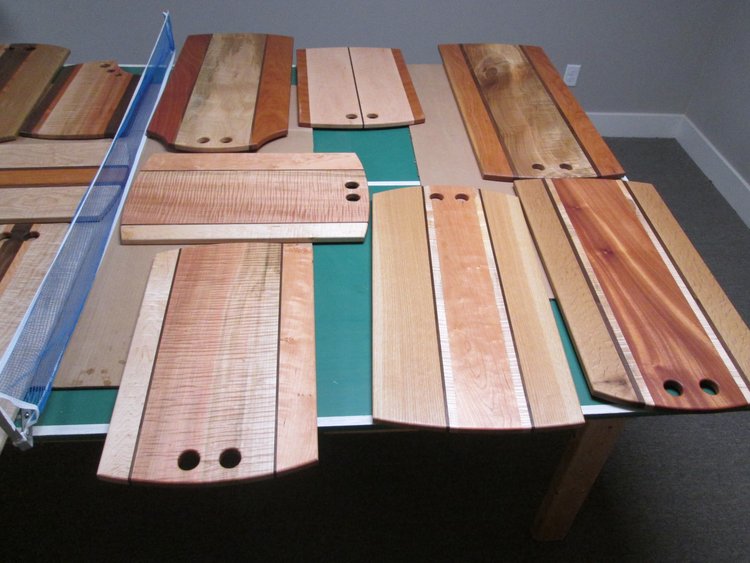
Looking for all of the interesting pieces of wood left over from projects along the way, and too small to become a piece of furniture made this collection: White Oak, Curly Maple, Cherry, Mahogany, and Walnut.
The fun thing was arranging them in pleasing combinations.
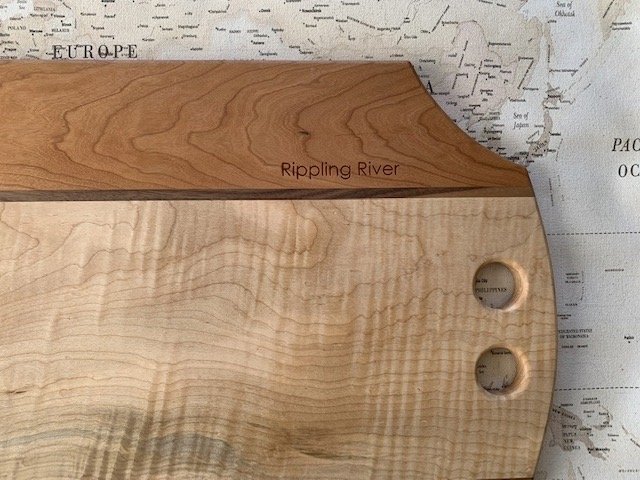
As I looked at the boards, such personality seemed to emerge, that I began naming them, and the names were eventually engraved on them. This is Rippling River, of curly maple, walnut and cherry. The others were After Glow, Sunburst, Northern Lights, Elegance, Exuberance, Harvest Party 1 & 2, Hearts Desire, Joy Overflowing, Ribbons of Grace, Waves of Grace, Early Dawn, First Light, Mahogany Morning, Golden Tassel, and Rolling Thunder.
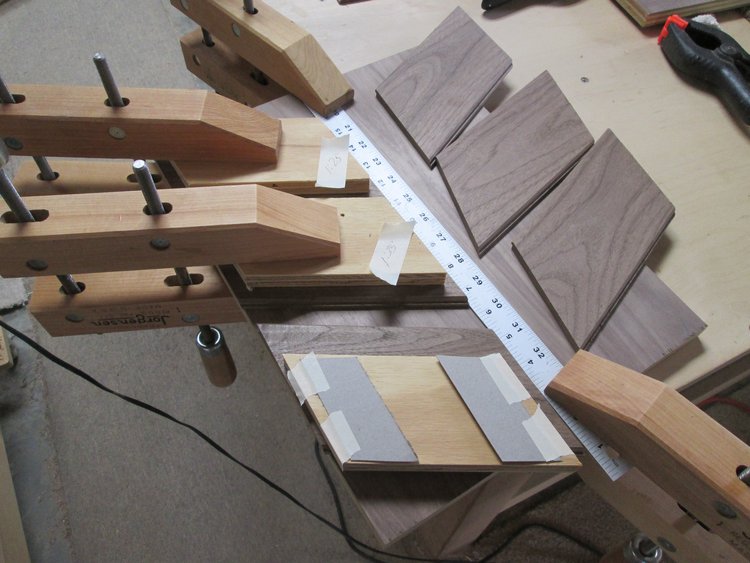
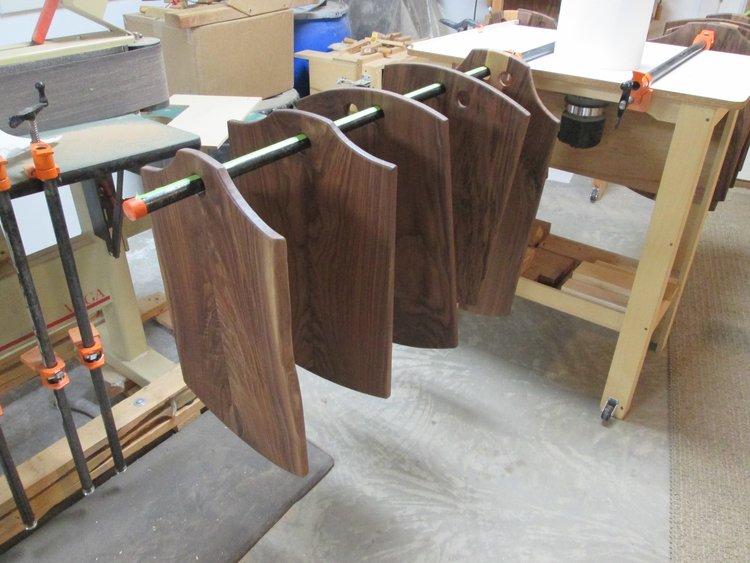
Another series of Charcuterie boards were done for sister Anne’s Christmas list. In this case I found an interesting plank of walnut, and sliced it down the middle to make book matched pieces.
The first coat of finish really lit up the grain!
Last but not least was the group of wire cheese slicers I bought and assembled into some left over, even smaller treasures of spalted maple. They take cheese to a whole new level of sophistication.

Thompson Transom 2

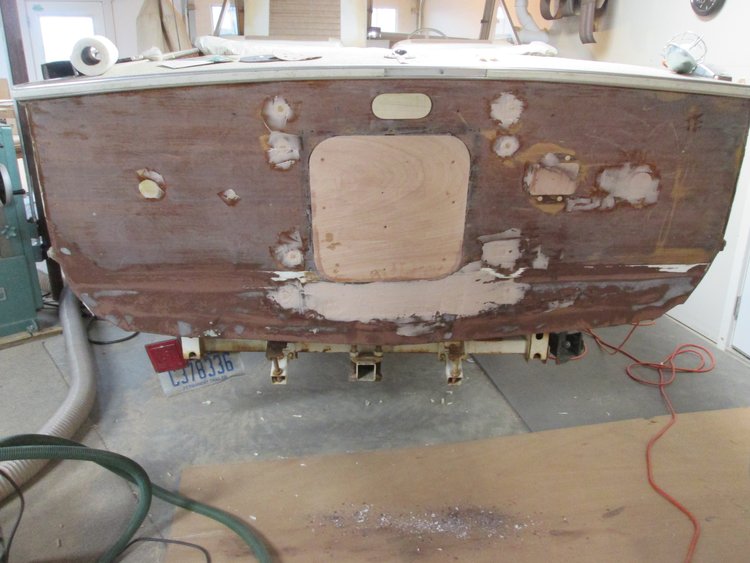
After all the wood repair was complete, and the holes filled with new wood and epoxy to last another generation, I called Scott at Lake Effect Marina to see if we should just paint the back end because the corners were not in good shape. He said that the owner was really hopeful that the same Mahogany look could be retained.

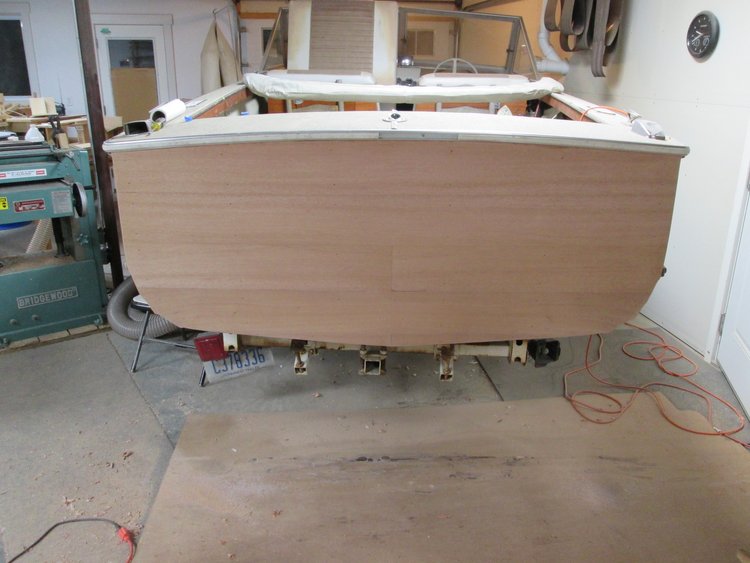
I asked about the corners and the bottom, and finally Scott said, “Dave, I have seen your boat. Just do this the way you would do it for yourself and I am sure it will be good.” Well, that settled it and made it clear how to proceed. it was time to add the pretty Mahogany layer.

The top piece was the most time consuming, trying to conform the the rub rail as closely as possible.
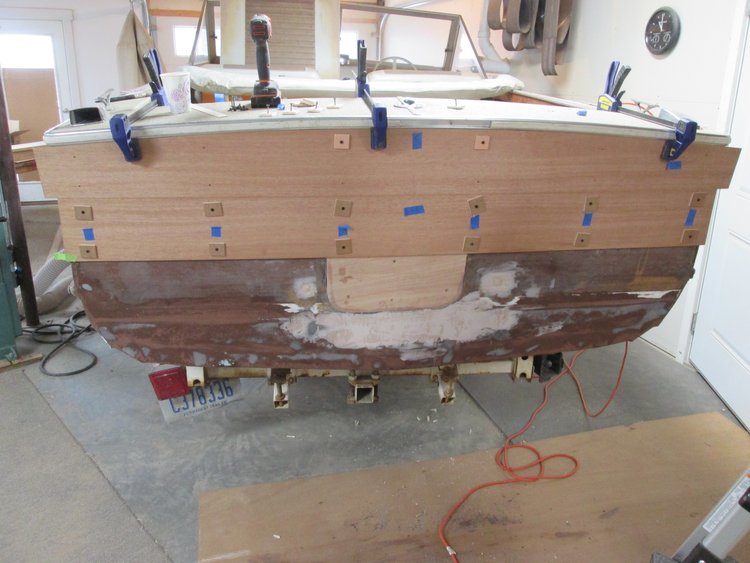
Then the pieces were epoxied and held in place by screws with wood washers, to prevent a large hole made by the head of the screw.
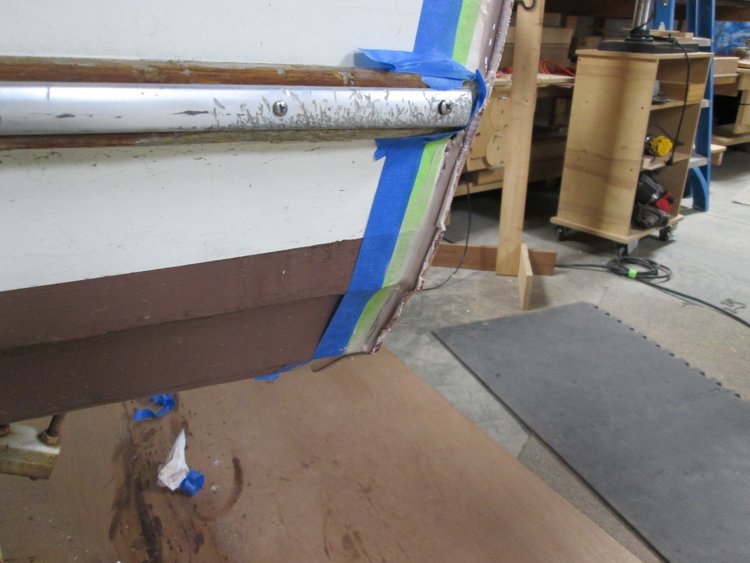
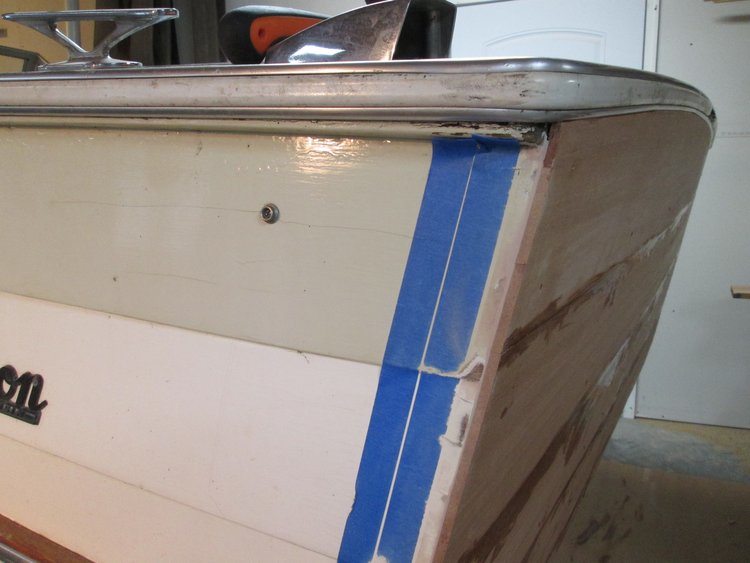
Usually, the transom wood goes first, and the side planks overlap the back. In this case, the corner was worn and chipped some, so the fairing epoxy was added to restore a strong and clean corner. That was how I’d do it.
Cutting away the extra 1/4” veneer, and shaping epoxy fairing compound involves some tricks. The roughest cutting was done with the American and Japanese saws, with the ends taped to protect against scratching the side. The rasp and chisels did more refinement, and the trusty orbital sander finished the job.
Yes, now the the side and bottom are now ready for paint touch up. The corner line is now accurate and will be beautiful.
The next step was to consider how to fill the small holes left from the screw clamps. The way I would do it is was with some elegant face grain plugs. So I did it that way. . . I cut off the end of a mahogany board, and made saw kerfs on both end. Then I used the band saw to cut the 1/4” square rods which have face grain on the ends.
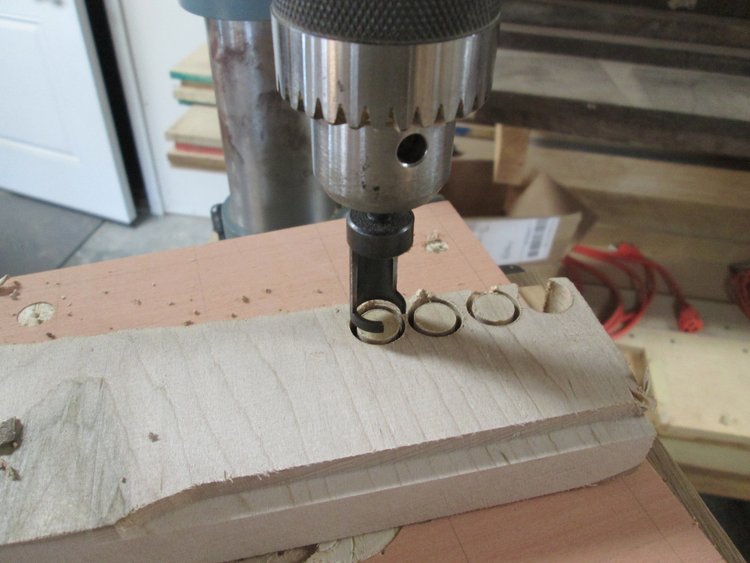
The fragile cross grain rods are chucked gently into the drill, supported by the forked holder, and spun into a dull pencil shape.
The boat needed around 60 of these small face grain plugs.
Here are a couple of them, glued in.
Voila, the plugs nearly disappear even to a close inspection. Sanding started with a 80 grit long board for fairing, and then went through 120, 180 and 220 grits to prepare for varnish to be sprayed on. The beautiful iridescence will be showing soon, and I can imagine a boat name appearing near the top.
Jay from Lake Effect Marina came to pick it up, and kindly removed a snow pole rather than running over it. I hope to see the old Thompson when the project is finished.

Thompson Transom 1

Last summer when I took my wood boat for spring fire to Lake Effect Marina in Union, Michigan, the service tech Todd, asked me if I would some transom repair on an old wooden boat they were rebuilding. I thought about it a bit, and then said something like, “Um, well, I don’t know.” Todd took that for a yes, and escorted me to the storage building where it sat in sad circumstances.

I looked at it and mentally compared it to the size of my walkout basement shop. It still did not register yes. I said that I work pretty slow, so if he has another option, he should probably take it. Todd said that he had no other options, and that in the next couple of weeks he would clear the transom for me to rework.

A few weeks went by, then a couple of months, and relief was starting to settle in. Then, in October, I took my wood boat back to the marina for winter maintenance. The topic came up again, and this time Scott, the service manager, also talked about the 1962 Thompson.

This time I said I was about ready to start a boat of my own, so that them in a hustle to get first in line. Around November 15, Jay from the big office, brought it out to my house, and expertly backed it toward the garage door. The windshield would not clear the header, until we figured out that the canopy support frame was in the way. We rotated it down and then we backed her in with an inch to spare.

It filled up my shop, so I figured the only solution was to get to work. I picked up a 4 x 8 sheet of Okume Marine plywood, and some epoxy supplies at Johnson’s Workbench in South Bend, Indiana. The Mahogany came from Nisley and Sons east of Goshen.

The first task was adding an inch of thickness to the transom, on the inside of the boat. The existing framework required that the pieces be cut so I staggered the joints for the best strength. Each piece was glued in place and held with screws until the epoxy set up. The the screws were removed so there is no metal in the way of the future installation,, and each hole injected with epoxy.

When the inside was in place, I painted on a couple of coats of varnish and started to repair the back side.
A large hole needed a custom fit plug.
Another hole needed a round filler, so I rough cut it on the bandsaw and finished it by spinning on the sander.
The large hole marked by blue tape had some undercut decayed wood, so I made a router jig to cut out a rectangular hole to make a fill piece.
For smaller holes where I had drilled out some decayed wood, I made 1/2 inch face plugs.
Eventually, all the holes were filled, and sealed up, and the previous motor hole filled.
Epoxy filler was added to hollow areas, and sanded smooth to fair the surface in preparation for the new mahogany.

Fixing A Broken Screw

With furniture old and new, occasionally a screw breaks off under the surface and hides contentedly. The most common fix is to drill another hole beside it and put a new screw in there. The problem is that either the new screw will pull the hinge out of square, or more likely, the screw will go in at an angle. Then the screw head usually sticks up, which can interfere with the easy closing of the hinges.

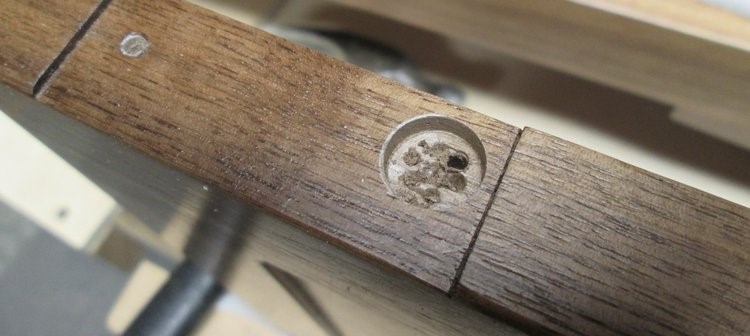
This time, I decided to fix it right and remove the half screw. I first drilled a 1/2” hole with a Forstner bit close the the metal shaft. Then, several 1/16” holes were drilled around the screw.

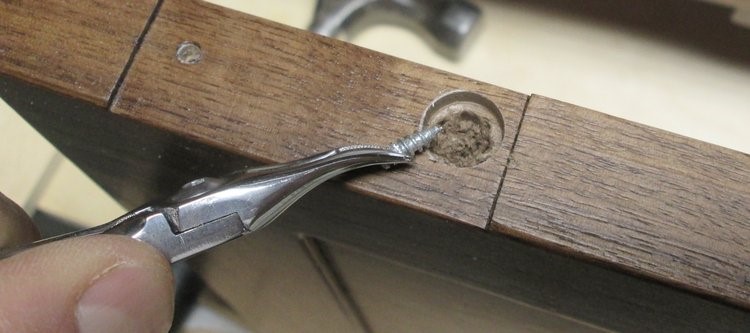
A little picking around it with a needle nose plier gave a purchase point, and I reversed the screw out of the hole. Voila!

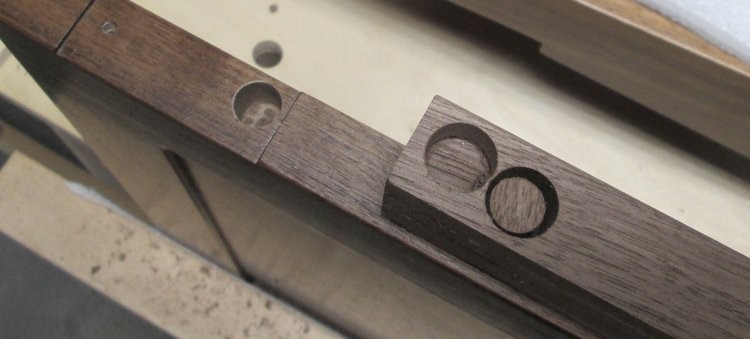
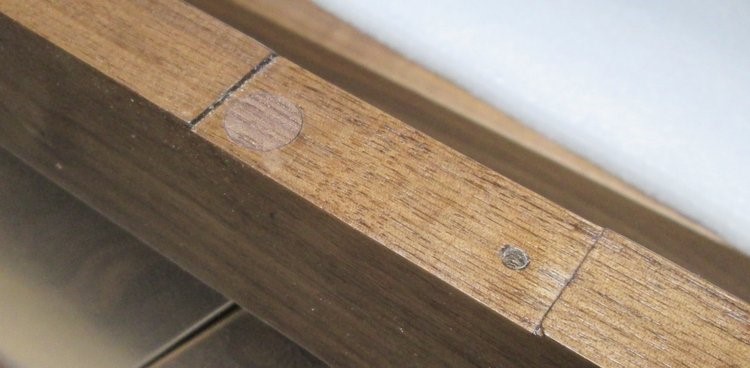
After drilling more deeply into the hole with the same 1/2” bit, I cut a 1/2” plug from a section of walnut that matched fairly well, and glued it into place.

A little clean up with a sharp chisel, and a touch of finish makes as good as new, and ready for a new screw hole to be drilled. It’s just another one of those things buried into the construction of a furniture piece, that should never to be seen again. Sometimes the toughest test of craftsmanship is recovering from the inevitable and unexpected detours.

Sofa Cabinet Framework

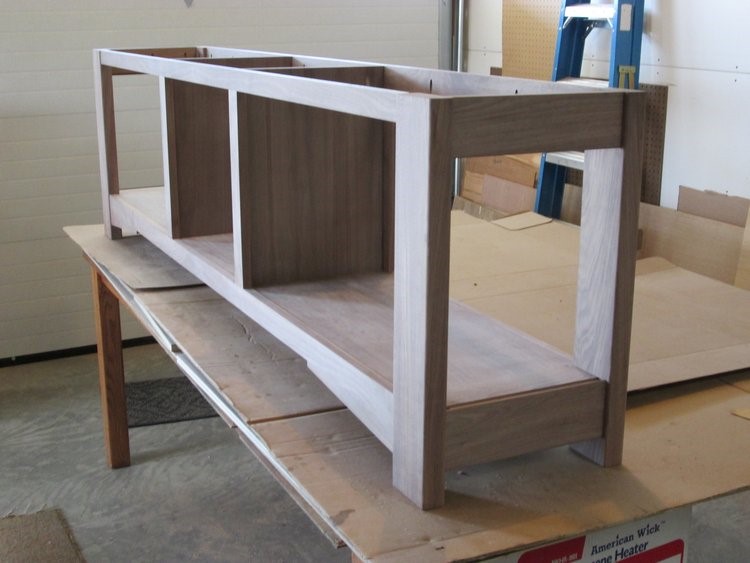
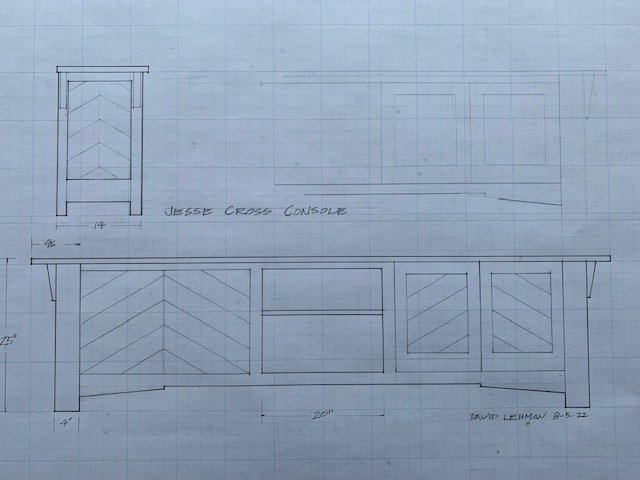
A recent project was a sofa cabinet which needed to be 8’ long. For the reasons of the long span, and the hope of it meeting the “hundred year warranty,” uncommon strength was necessary. The angled braces at the bottom give visual support, like the arch of a bridge, but they also stiffen the ends of the lower face frame, and make a wider connection to the leg.

For the best strength, wood joints need physical wood crossover. The traditional mortise and tenon joint is a thing of beauty and enduring function, when perfectly executed. But I chose the underrated dowel for most of the joints, which can imitate or exceed the function of the mortise and tenon in several ways:

  1. The holes in both parts to be joined are made with the same drill, giving the best repeated fit.
  2. Dowels are pre-made with spiral flutes that hold just the right glue thickness and resist being pulled out.

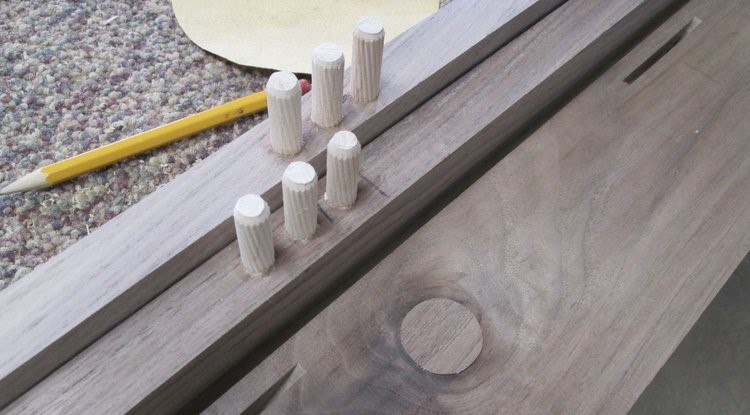
Spiral fluted dowels

Below are two pieces of face frame, with the holes drilled and dowels just glued in. The good fit shows a small amount of glue pressing up and is cleaned off before it sets up. By the way, the knot was not going to show, but it seemed worthy of replacing with a solid plug. Maybe some day when it is moved, it may be noticed on the inside of the bottom face.

For drilling the holes, the best helper tool I have found is the Dowelmax. It is adjusted by adding washers to move the dowels farther from the edge, and I also use spacer sticks like the one shown on top of the walnut leg. This allows very accurate repeat positioning for each part of the process.

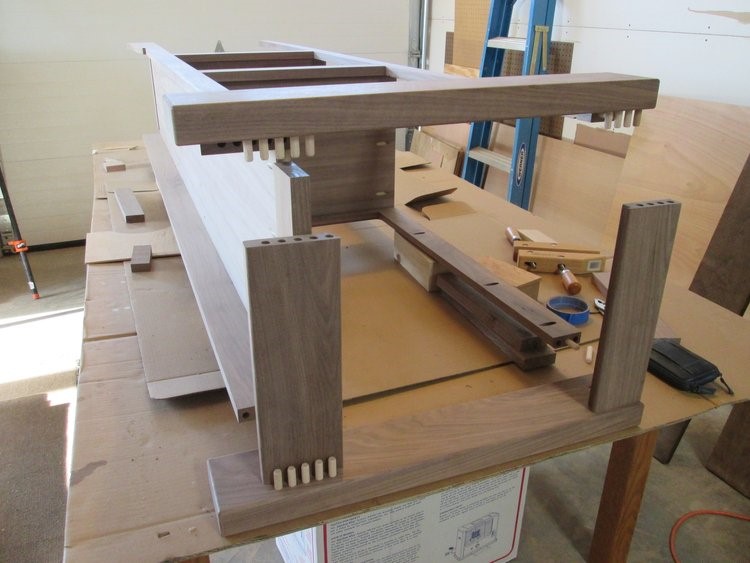
By patiently laying out the joints, and positioning the jig carefully in place, very accurate results can be gained. Then, there is the important sequence of gluing, so that all of one face is completed before adding sides. I always dry fit each joint to make sure it goes together as planned.

The last glue up step is the most nerve racking, as the second entire end must be clamped to front and back face pieces. The length of the cabinet required use of two clamps hooked together in a couple of places.

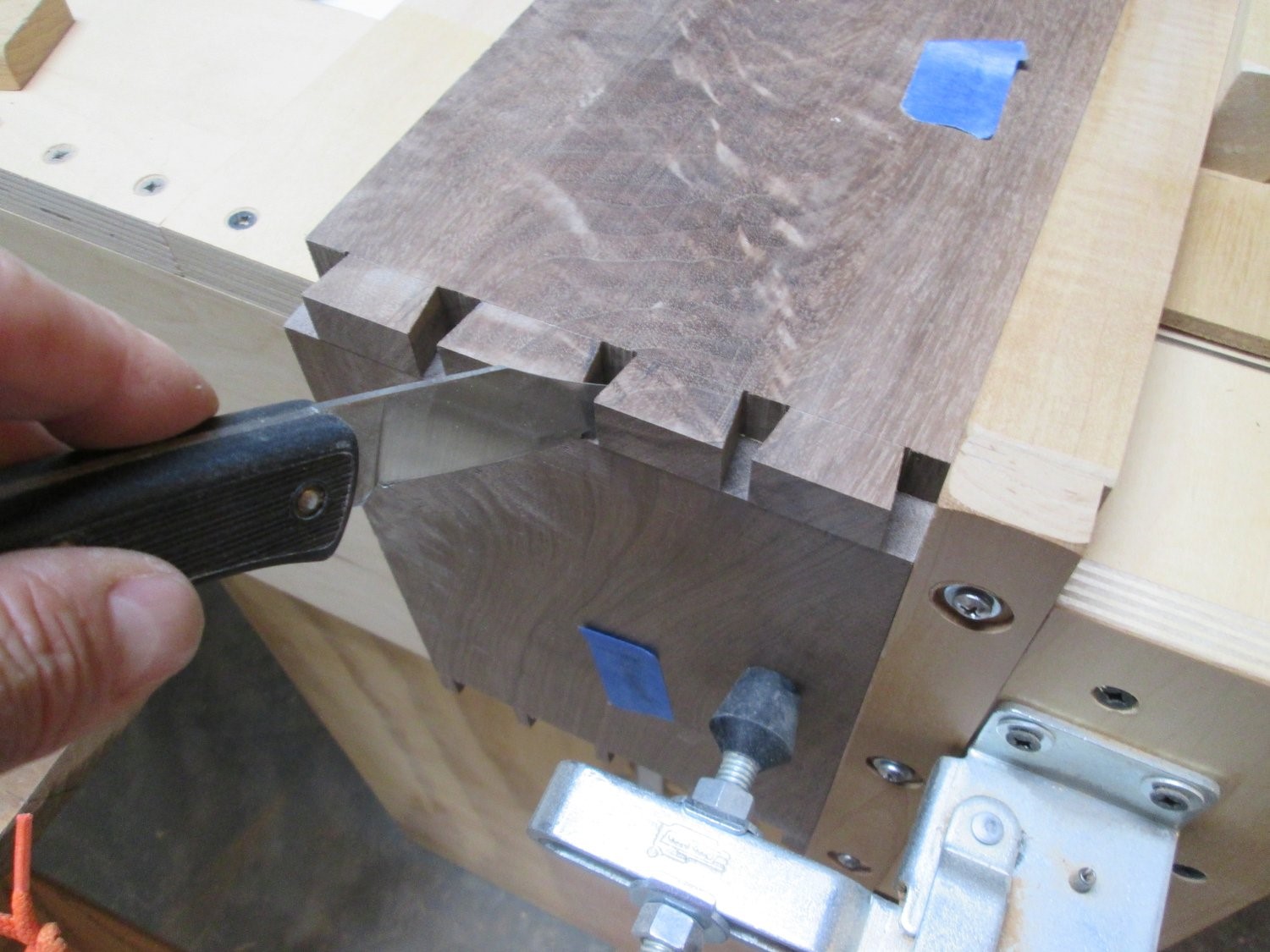
The Pocket Knife

As I remember it, the sharp, shiny steel and black pocket knife showed up at our house on Myers Avenue when I was about 8 years old. To this day, I am confused about where it came from, but my Dad showed it to me around my birthday and said it would be mine to keep when I turned 12.

Photo of my present Pocket Knife

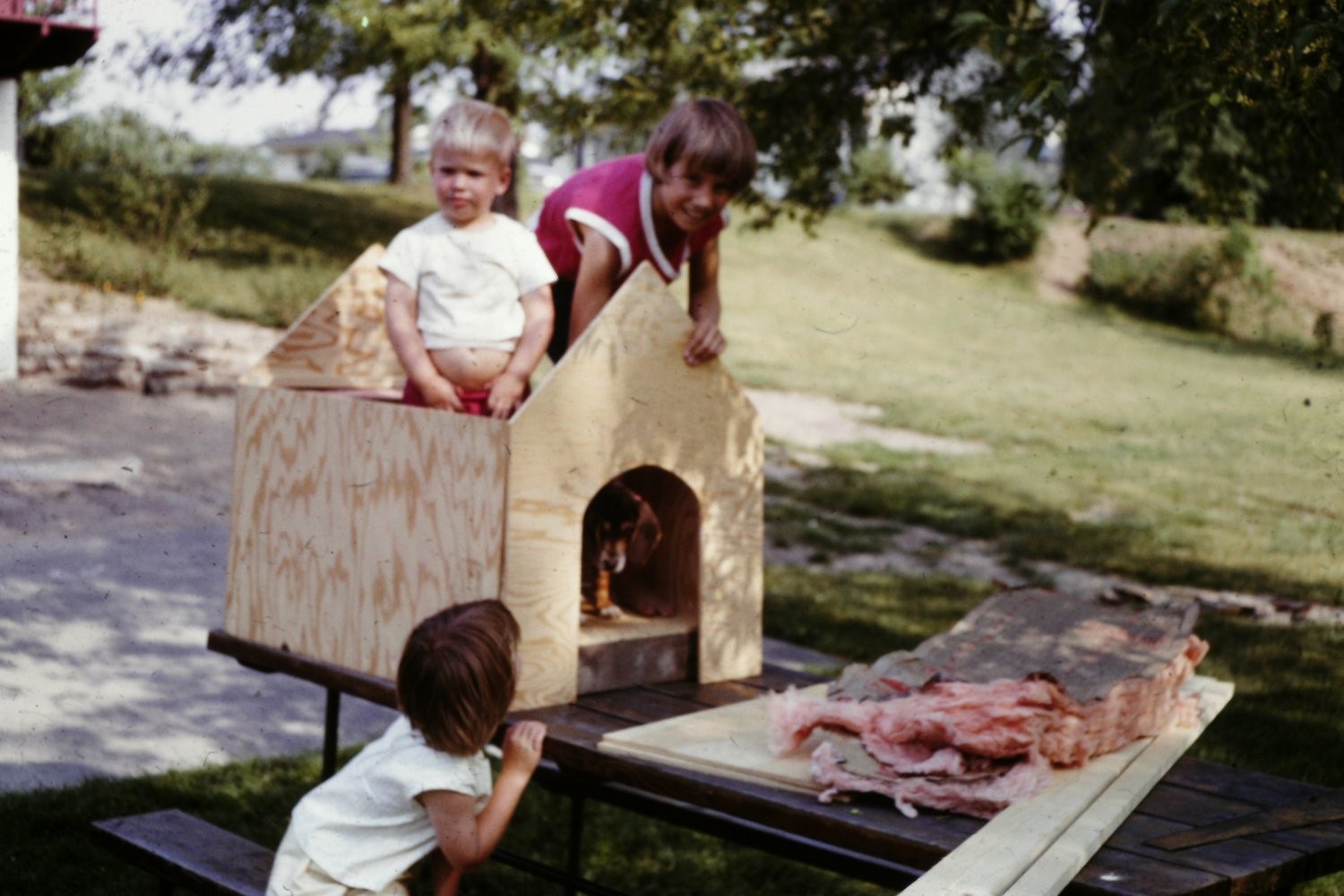
My dad never went hunting or fishing, so I didn’t think the knife was directly from him. The main tools he had were for gardening or some house remodeling.  Once, he let me help build a dog house for our new puppy.

Photo of dog house, my sisters Margaret and Mary, and Brother Joe and our new puppy, Murphy..


Most likely, the pocket knife came from a sale when my Liechty Grandparents moved off the farm to Brussels St. in Archbold, Ohio. In any case, it was a great reminder of him, because with around 45 Liechty first cousins, I didn’t get to know him real well.  He always seemed bigger than life, and then he passed away when I was 7.

Unfortunately, having seen the knife and knowing it was forbidden fruit, caused me to poke around for it on occasion, when my dad was at work.  Voila, one day I found it in the back of Dad’s dresser drawer, in a fine little cardboard box, wrapped up with tissue inside.

I didn’t see any harm in carefully taking it out and admiring it, but before long, I wanted to see how it worked.  We lived beside the woods along Yellow Creek, and so I took it along exploring, practicing carving as I went.  The spear point went well, but the sling shot required a special pull stroke.

Since this had been an unauthorized, private adventure, I did not get the basic education in carving, especially Rule No. 1: Never, never, never carve toward yourself.  The knife slipped and cut to the bone at the base of my right index finger, which produced an impressive amount of blood.

I had to hustle in to the house to show mom.  She bandaged it and mentioned that Dad would be coming home soon.  The pain of the injury was exceeded by the spanking, but I still love pocket knives.

Full Circle

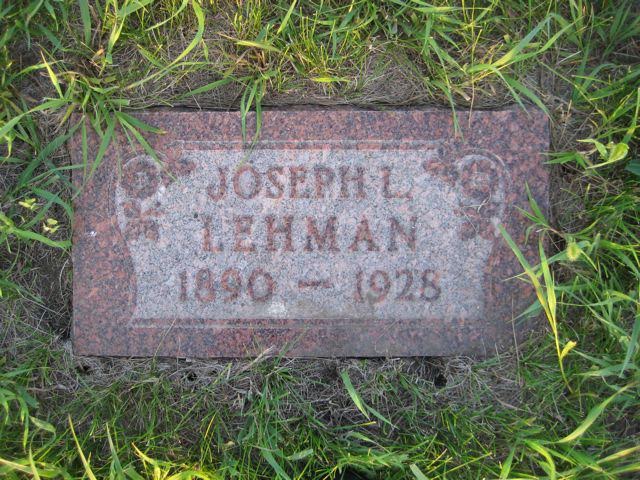
My father, David Gideon Lehman, was born January 25, 1926 to Joseph L. and Stella Lehman in Kenmare, North Dakota and joined their adventure. He was not quite three years old when his father died, which left little direct memory and no personal relationship with his dad. However, the sense of his mother’s grief and the weight of the load she had to carry, did leave a powerful impression, contributing to a lifetime habit of responsibility and sensitivity to people in need.

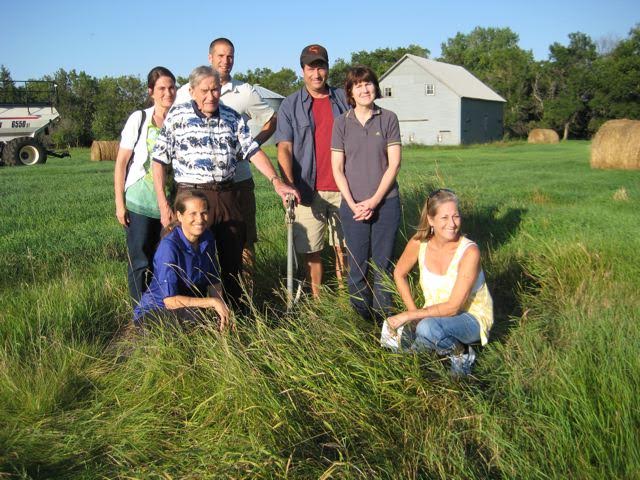
Here is Dad with all of us children, Anne, Margaret, Jane, Mary, Joe and myself by the pump handle on the home place.
unnamed

During the late twenties and early thirties, the shadow of the great depression hung over the country, and farming in North Dakota was getting even more difficult. Fortunately, Grandma Stella knew that true wealth was not about having lots of stuff, but having a Good Father, who she trusted to care for the fatherless and widows. Much kindness was expressed by the local Christian community, and she taught her children to have thankful hearts. And for a bonus, there was the one Christmas when some friends brought presents…

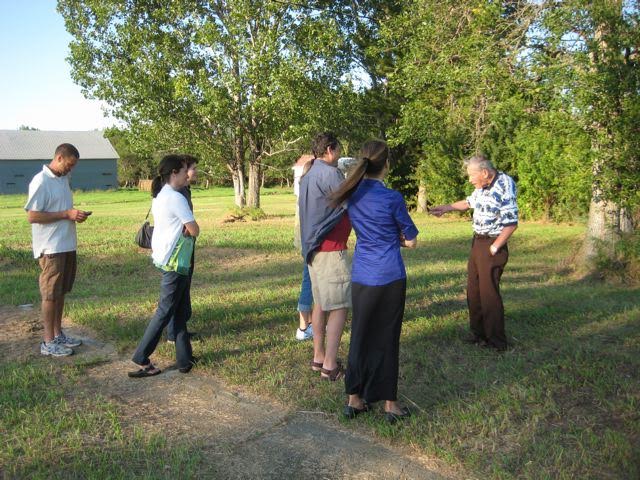
Dad’s older sister Mary remembers that her mother often read to the children, and played a variety of games, many of them being homemade. Grandma Stella often used scripture text calendars, teaching the children a new verse every day. Mary also said that Uncle Levi C. and Aunt Becca Kauffman helped them buy a small house, and move it to their farm where they could have a garden plot and a cow in the barn. As a young boy, Dad remembers being responsible to ride out on the pony and keep the cattle out of the corn. Here he is doing a show and tell about the farm where he lived for the first eight years of his life.
unnamed-1

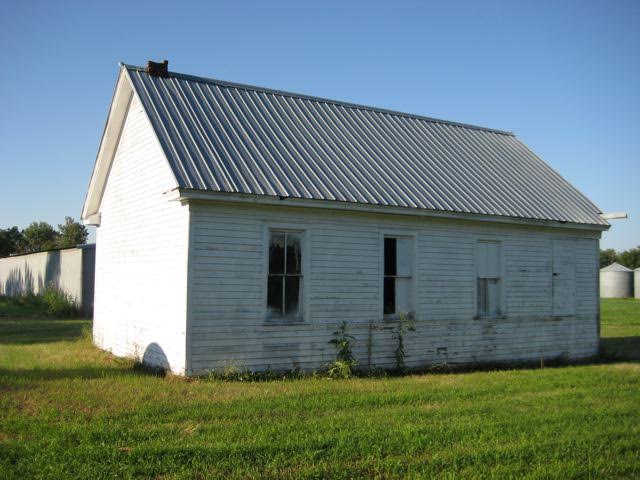
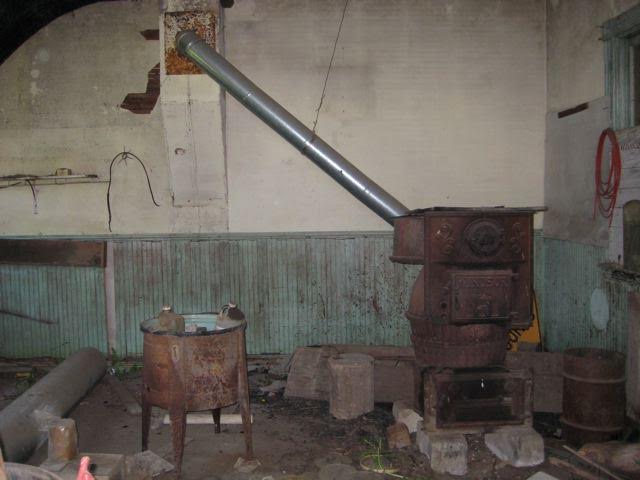
When it was time to go to school, Dad walked one half mile down to the one room school house. His first teacher, Miss Anderson, got sick and died in the middle of the year, and she was replaced by Miss Coffee from Minneapolis. She had a harsh attitude and a pointing stick, used to correct wrong answers by hitting the student’s hands or heads. He does not remember her fondly. Below is inside of that school house where Dad went 85 years ago.
unnamed-2unnamed-3

In the early 1930’s, farms were experiencing crop failure from drought, dust storms, and grasshoppers and the gardens produced little. For awhile, Grandma received a Widow’s Pension from the State, but it had been reduced. Many people were leaving North Dakota, and Stella wrote a letter in November 1934, to her sister, Aunt Lina Zook in Fairview, Michigan asking for help. Her husband, Uncle Chauncey Zook took the letter to the Fairview Mennonite Church and a vote was taken to invite Stella and her children to come.

In early December, Grandma Stella took the letter of invitation to the North Dakota welfare board. They stipulated that if she would stay off welfare for two years, they would provide one-way train tickets to Michigan. Grandma quickly arranged for a sale, and they boarded the train with only a few clothes, linen bedding, a trunk of dishes, books and a few photos. This was right after Christmas 1934, and they arrived in Fairview with a new sense of optimism and faith.

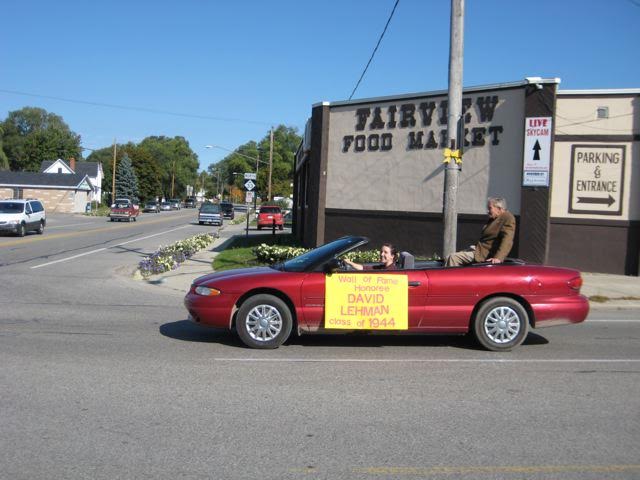
Below is Dad returning to Fairview to be honored with the Wall of Fame Award.
unnamed-4

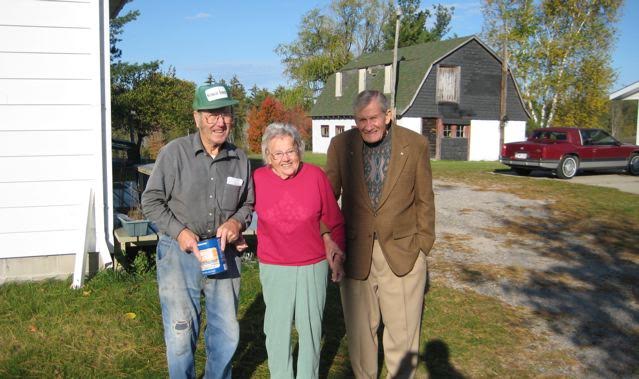
The refugee family was welcomed with open arms, and the whole church showered them with furniture, food and clothing until they were able to fend for themselves. Uncle Chauncey and Aunt Lina provided a small house for the family rent-free, and gave them milk, firewood, and helped in so may ways. Uncle Chauncey was a godfather in the most true representation of our Heavenly Father and is thought of kindly whenever the story is told. Below are Chauncey and Lina’s children, Delbert and Ruth, who grew up with Dad.
unnamed-5

They wasted no time that January 1935, settling in and finding their place. At a family gathering with the Zooks, daughters Vera, Vesta, and Ruth quizzed Dad on his reading. Vera said to give Dad the Bay City News, and the Gospel Herald to read out loud. He read well, and joined most of his church friends who were in 3rd grade.

The Fairview chapter of life was satisfying in so many ways and left its mark on Dad for the rest of his life. Opportunity was knocking, and he answered its call with preparation and persuasive diligence. When heart and soul are wound tightly together, with a dash of good fortune and a heavy dose of adrenalin, the memories made can last beyond the time when you can no longer remember your phone number.

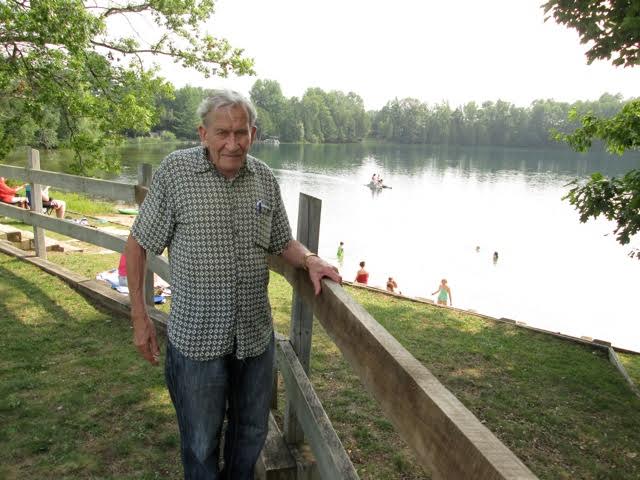
So it was for Dad. Life was simpler then, with daily work around home, baseball in the summer, and basketball in the winter. School was done by Memorial Day, and summer kicked off with swimming at Smith Lake or the gravel pit, for those with no internal thermostats. The last swim was on Labor Day, and then back to school.
unnamed-6

In 5th grade, Dad found an old discarded baseball glove with most of the seams gone. He restitched it with string and began practicing, throwing the ball up in the air and running to catch it. Sometimes, he could persuade Josephine to hit ground balls for him to practice.

By junior high, Dad was splitting poplar and birch firewood with an axe for heating their home. This added muscular strength to his mental will to prepare. In the fall of 9th grade, Clyde Knepp was moving from shortstop to pitcher, and Coach Johnson was looking to replace him. After hitting grounders to half a dozen contenders, Dad was invited to step in.

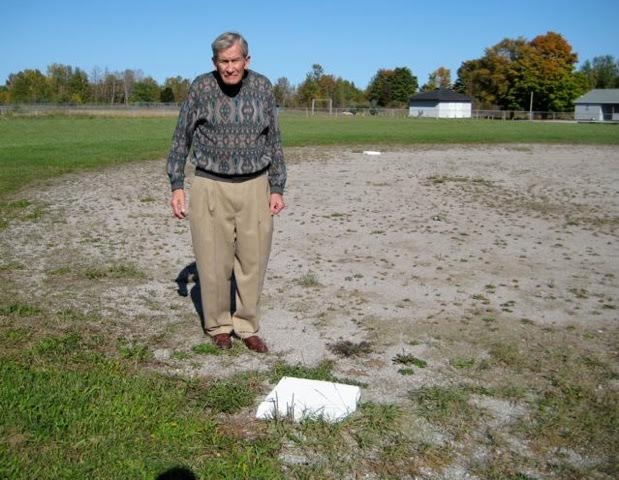
In the next few years of baseball, there were quite a few double plays from Dad to Bob Shantz at second, who threw to first. One day over at Harrisville High School, a shallow blooper was hit over third base with bases loaded, and the runners took off. Dad sprinted back in the grass toward the ball, and with a leap at the end, caught the ball on the fly. He turned quickly and threw to Bob at second, who threw it to first, to complete an extremely rare triple play. Here is Dad standing by third base at Harrisville, some seventy plus years later.
unnamed-7

One spring day, the Fairview baseball team was down 4-1 against rival Alpena High. Dad came up late in the game with two outs, and hit a ball into deep right center with bases loaded. As he rounded third, and saw that the throw was inadequate, he came home to win the game 5-4.

As he started his senior year, a chance came to go to school at Hesston Academy in Kansas. His school day ended around 3:30 and he started using his time to practice basketball, including the revolutionary one hand push shot. The money ran out at the end of the semester, and Dad returned to Fairview. He managed to find his place once again on the basketball team, thanks in part to an encouragement from Coach Armitage.

In the first game of the district tournament, Fairview played Gaylord St. Mary’s and won 32-26, with Dad scoring 16 points. Next, they faced Gaylord High and were down 23-26 with a couple of minutes left. Richard Kaufman shot a long one, that Dad fielded and put back for two. With just seconds left, Gibbs was fouled and missed his free throw. Dad had positioned on the lane where he anticipated the ball coming off, caught the rebound in the air and simultaneously tipped in in the bucket for the win, 27-26.

In the Regionals at Petosky, Fairview first overcame McBain High in a squeaker, 27-25. Then they prevailed over Frankfort, before playing Bear Lake in the final.

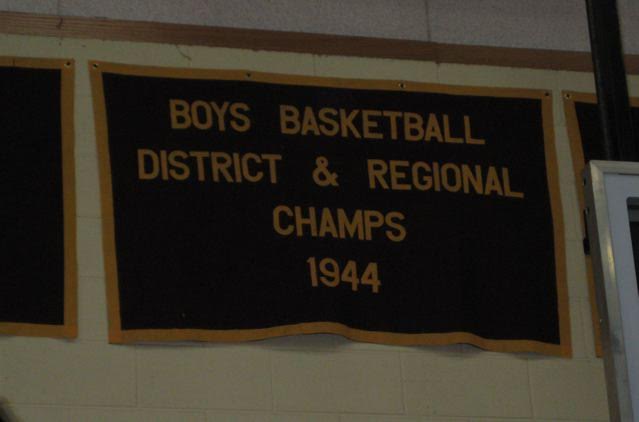
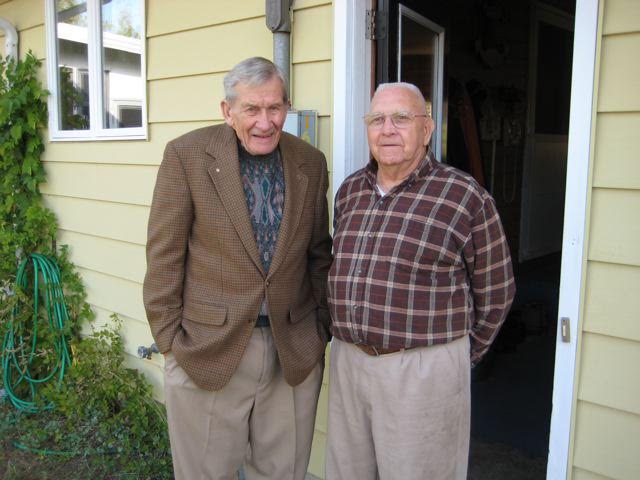
Dad got to play on the team that became legendary, winning the district, and regional tournament in 1944 for the only time in Fairview history. He stands below with Dick Handrich, captain of that team.
unnamed-8unnamed-9

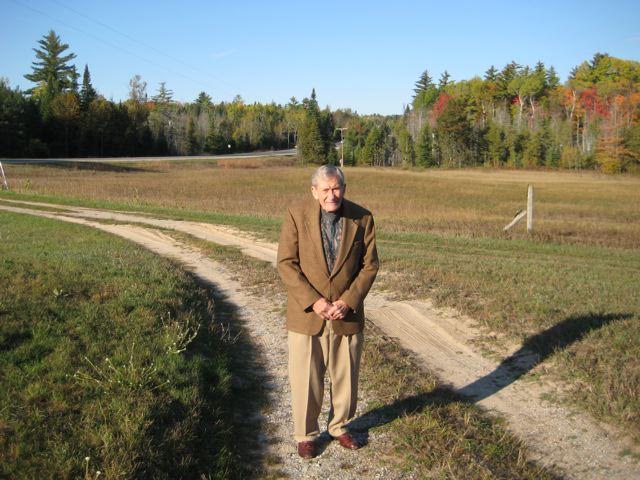
Fairview provided the opportunity for the children to begin to work and gain independence of their own. Below is Dad in front of the 1/4 acre field where he planted and harvested nearly 100 bushels of potatoes.
unnamed-10

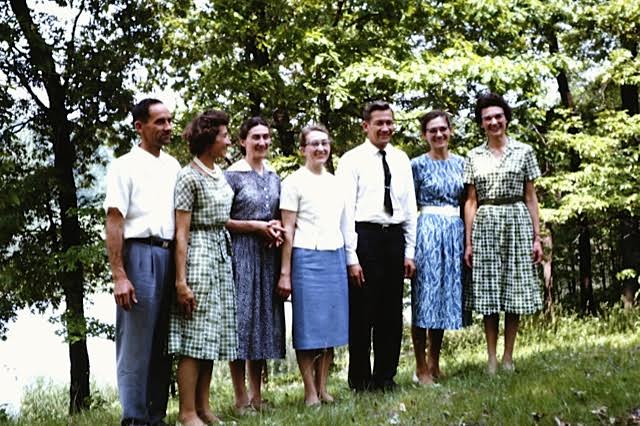
It also gave a chance for them to go to high school. All seven of the children, Reuel, Mary, Ruth, Genevieve, Dad, Ethyl and Josephine, graduated from high school at Fairview, four from Goshen College, two from La Junta School of Nursing and Dad from IU Dental School.
unnamed-11

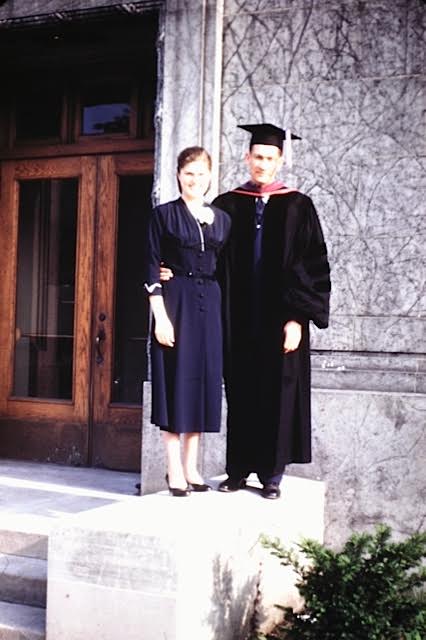
Following high school, Dad went to work on a turkey farm near Detroit, and also on a boat taking horses to Poland after the war. Then he enrolled at Goshen College and diligently pursued a science degree, leading toward dental school. During this time, he married Doris Liechty, and started the family which eventually included Anne, Margaret, Jane, Mary, Joe and me.
unnamed-12

A formative event in Dad’s growing up years occurred one summer at the Fairview Mennonite Church during the yearly evangelistic meetings. He was around twelve and remembers being so moved by the Holy Spirit during the hymns of invitation, that he went forward to receive Jesus Christ as his Savior. It started a lifetime of being a student of the spoken and written word.

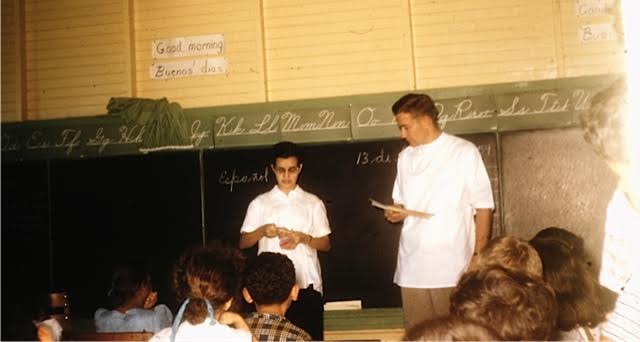
At many crossroads and critical moments as life unfolded, Dad found just the right help from God to go forward with purpose and provision. Most times it was the opportunity to work, in the cafeteria on campus or the construction job on the Indianapolis center circle. This led to the decision to take our family to Puerto Rico for a two year service term, doing missionary dental work. Here he is talking about dental health in a school classroom.
unnamed
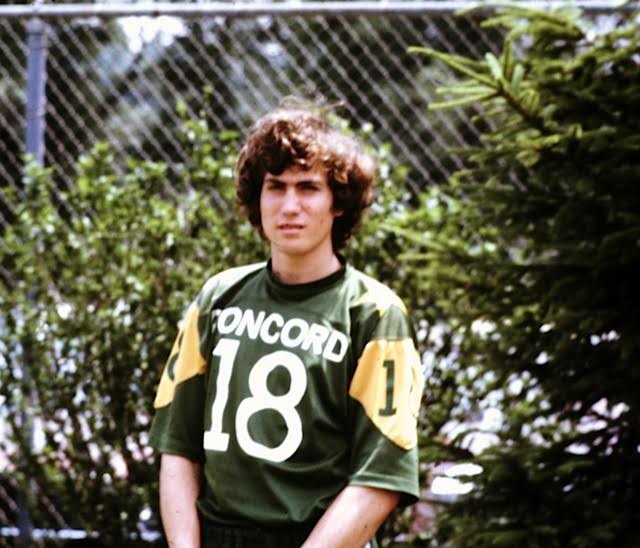
Dad’s story is a book in itself, so I can only mention a few more of his activities and interests. He was the catalyst for bringing the Leighton Ford Evangelistic Crusade to Elkhart in 1972 and received the Layman’s Leadership Award from the Kiwanis Club that year for community Christian service. He served as President of the Elkhart County Dental Society, President of the Goshen College Alumni Association, and was a member of the Concord School Board.

He took us on family vacations to Little Eden, and the west coast, photographed beautiful flowers, had a passion for orthodontics, traveled the world in dental or mission trips, and enjoyed golf, reading, softball and skiing.
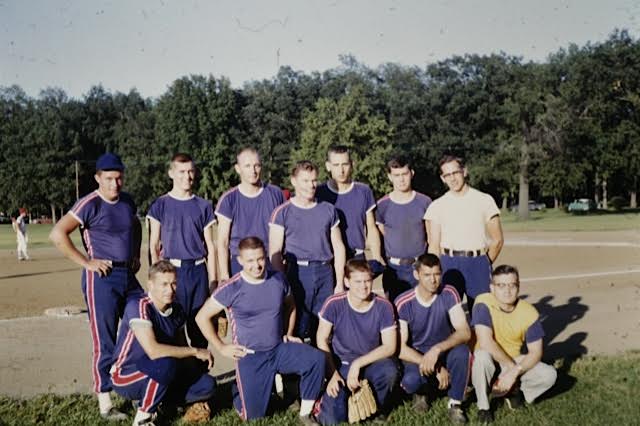
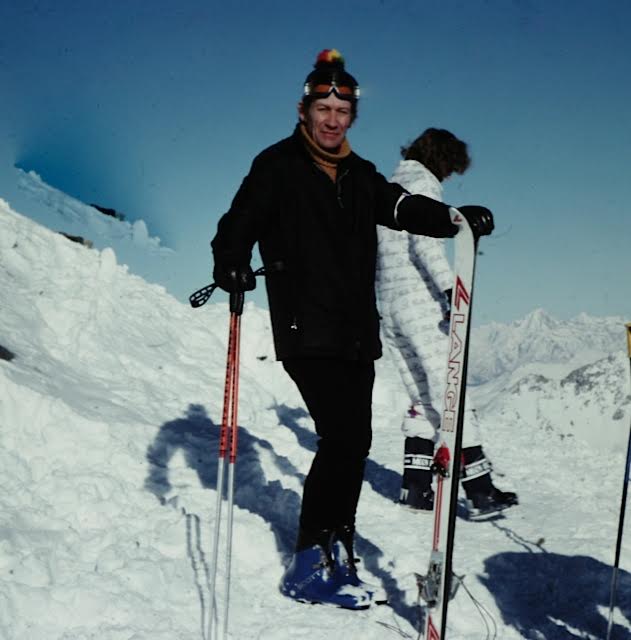
unnamed-13unnamed-14

Dad has had to exert great effort to overcome loss over the years, and to take opportunity with faith. His youthful dreams have either been fulfilled or put aside, and the resolution of life regret and pain seems mostly complete. The chafing against the immovable past is generally over and he is more contented than ever. Dad is thankful for the little things like his children coming to visit and Jan always having enough of something healthy if he comes for dinner.

Earlier this summer we were doing our bi-annual golf outing, and I asked if there was any thing else he would rather be doing, and he said no. He also told me that it is a pretty fine boat I had built. It never hurts when a father compliments a child, and it is not likely to ever be forgotten either.

Only a couple of weeks ahead, I decided to take this afore-mentioned boat to the Les Cheneaux Boat Show in Hessel, Michigan show. On Friday, August 12, Jan and I hooked up the boat trailer to the Honda Pilot, and headed north with Jeff and Cheryl Margush.
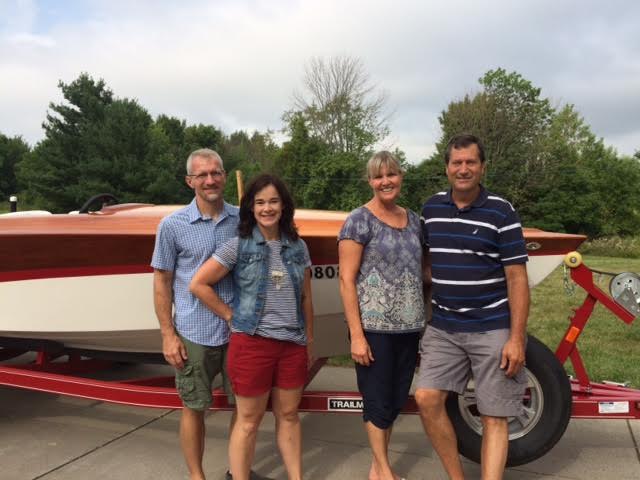
unnamed-15

We stayed at the Cedar Hill Lodge in St. Ignace and took the boat over to the marina early Saturday morning. After three years of mostly private building, it was an amazing time of affirmation, interacting with like-minded boat builders.
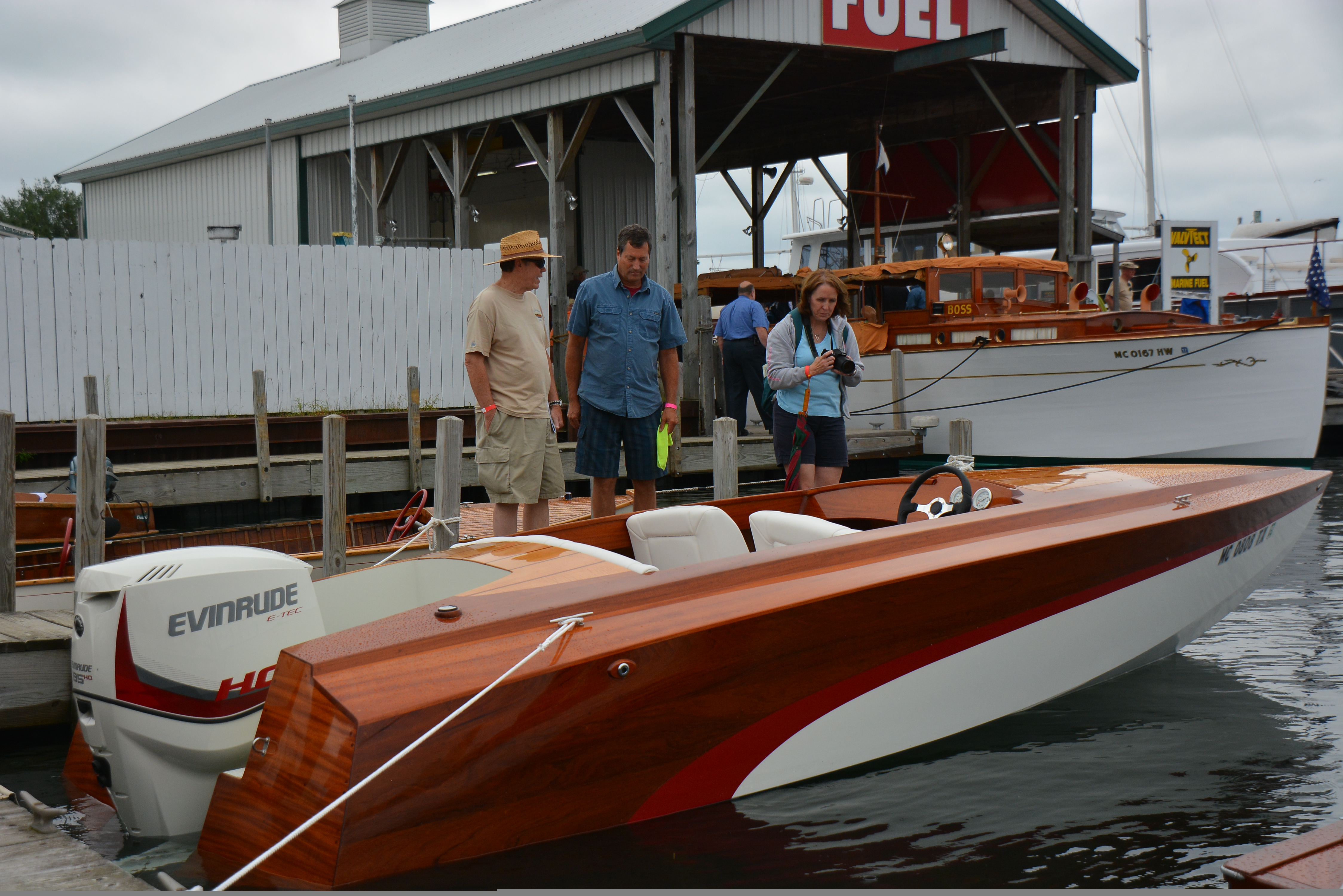
Hessel Show 2016 (47).JPG

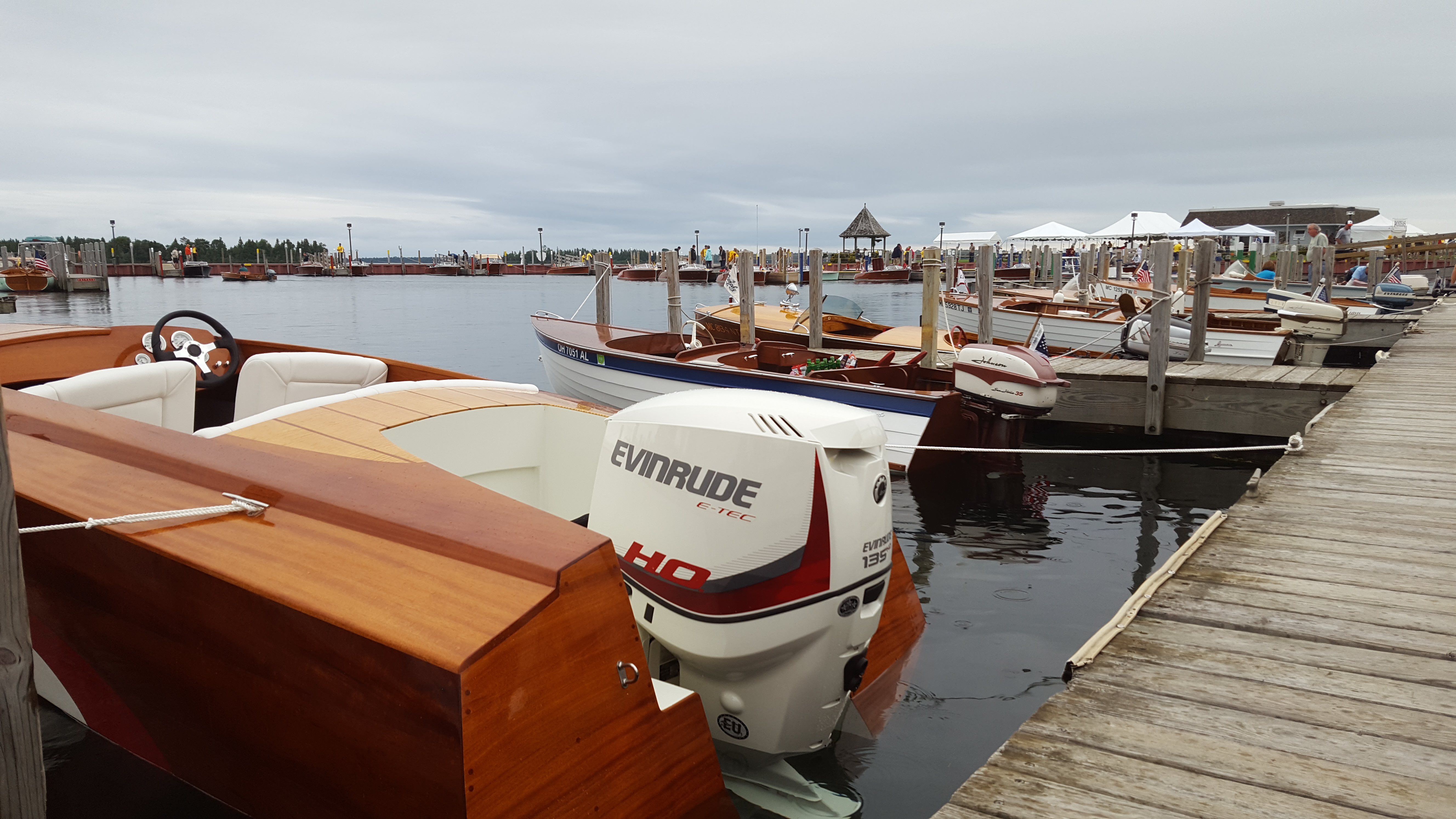
There were 162 boats there, some of which are shown below. Thanks to Jeff Margush for all of his photography and much help all along.
Hessel Boat show 2016 (8).jpg

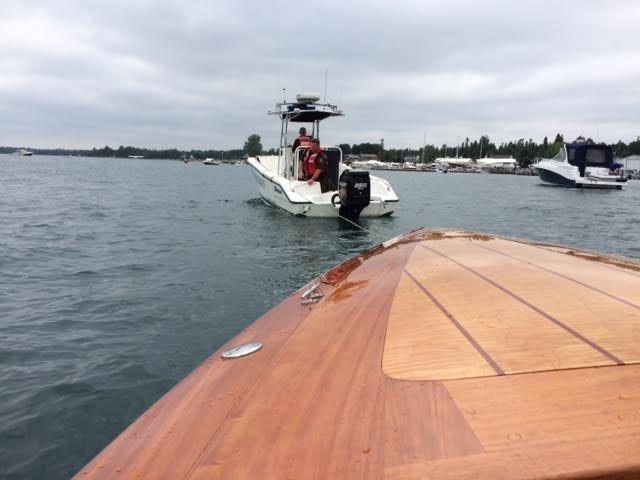
We were entered in the Contemporary/Replica Class and honored with first prize. At the end of the show day, we headed out to cruise the islands and sat for a few minutes with a mechanical problem of my own creation. Fortunately, we got a short tow by the Coast Guard, and a mechanic was there who had just the trick to get it fixed.
unnamed-16

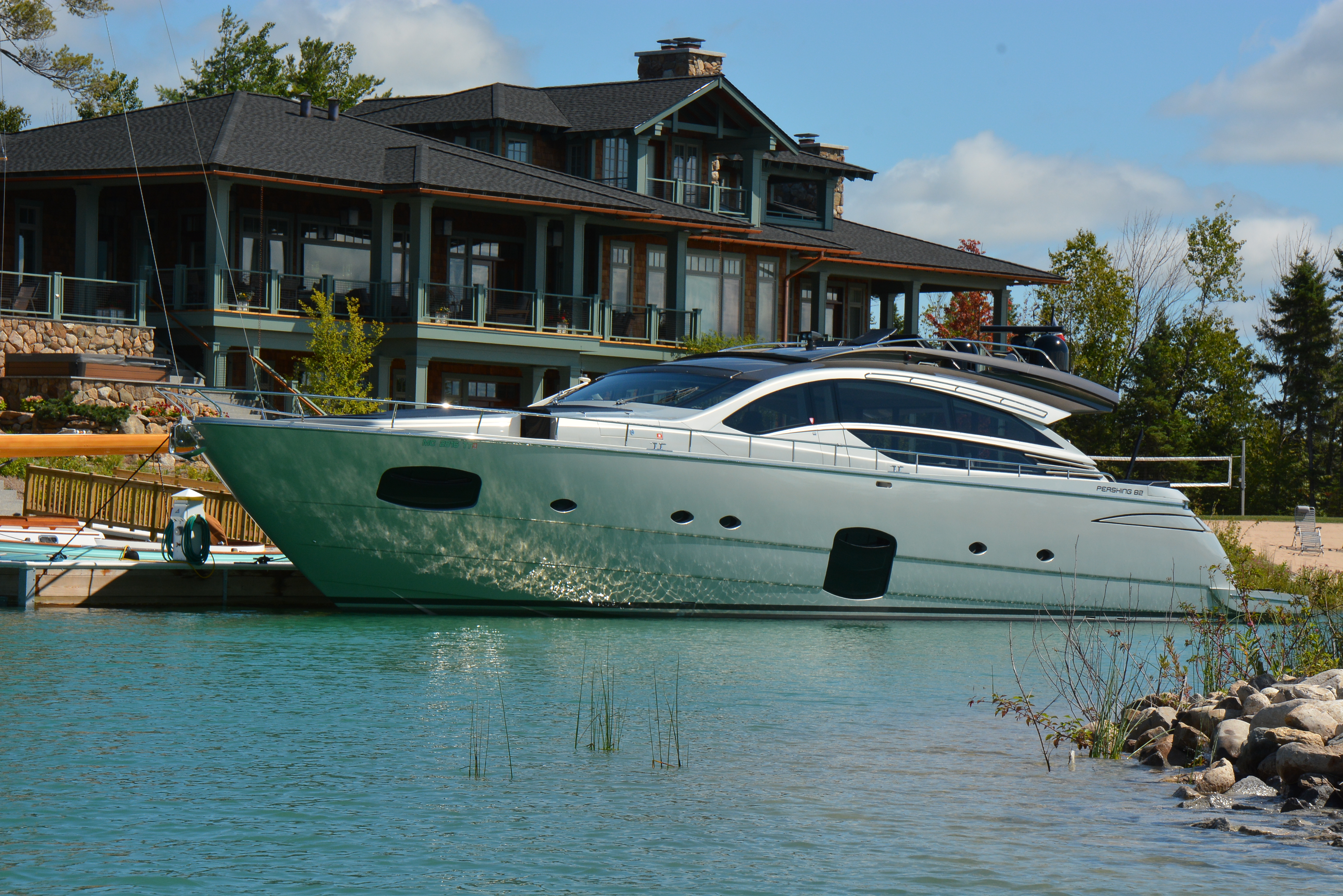
The ride from Hessel to Cedarville, around the Les Cheneaux Islands was filled with the beauty of the north. The next day, my curiosity was rewarded as we explored Lake Charlevoix, particularly one hidden water cul-de-sac. Around the corner, we encountered this 82 foot boat and house.
Lake Charlevoix tour (35).JPG

As we returned home and put the boat in the garage, I passed a milestone that seemed like it would never come, and then sneaked up to surprise me. Three years ago, my daughter Amanda had initiated the process of writing, with the blog she designed and has managed since then. These stories were written for my children and grandchildren, so that they might know a bit more of their family heritage. Maybe some of them will follow a dream, gain a stronger sense of commitment, and pursue Christian faith more actively from people told about here.

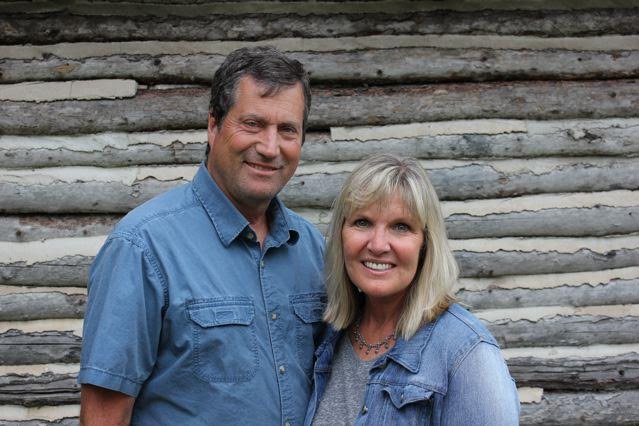
So with this post, I have come full circle, finishing the duty and pleasure of telling my stories and the challenges of building a boat in my basement. It is already a mix of nostalgia and the dreams of new places the experience might take me. Much gratitude and appreciation is due, especially to my wife Jan, who has tracked with me on this zig zag course and has been strong support of all my adventures.
unnamed-17

I also give genuine thanks to anyone, from more than 100 countries, who took time to read this blog. It would be really satisfying to hear from any of you.

David Lehman
Elkhart, Indiana

As some unknown person said, “Never be afraid of doing something new. Remember, amateurs built the ark and professionals built the Titanic.”

Long Journeys

My grandpa, Joseph L. Lehman, was born January 7, 1890 to David S. and Annie Burkholder Lehman at Chambersburg, Pennsylvania.  Little is known of his growing up years, but apparently at age 27, he must have had a question that needed an answer.  This, along with a spirit of adventure, took Joseph west on a long journey with a friend around 1917, to follow the wheat harvest. This is Anne, Jane, and Joe discovering the beauty of North Dakota when we went there a couple of years ago.

unnamed

Stella Elmira Sharp was born Oct. 27, 1893 at East Lynne, Missouri.  When she was 6 1/2 years old, she moved with her parents, Gideon and Salina Yoder Sharp, to a homestead near Kenmare, North Dakota, where they lived in a sod house.  She later lived in Fairview, Michigan, Belleville, Pennsylvania, and Garden City, Missouri.  When Joseph came through Colorado, he met Stella where she was taking nurses training in La Junta.

The attraction of some common past, and perhaps the same wanderlust, along with  the call of God, led them to be married, at ages 30 and 27 on October 31, 1921 in Garden City.

Maybe some of the same factors came into play December of 1976, as I hitched a ride with Erie Bontrager on his mobile home transport to Louisville, Kentucky.  The snow ran out somewhere around Columbus, but it was still cold when he dropped me off at the truck stop.  These were the days before insurance ran the world, and after asking a few drivers for a ride, one guy agreed to take me on south.

unnamed

Then I had a series of rides with a trucker, a family in a camper, and and a few miscellaneous rides that left no enduring impression, besides needing to keep your wits about you on the road.  This got me into northern Alabama.  At that point, I was riding in a GMC truck with a large flat bed with a big construction man driving.  It was dusk, and all of a sudden, the lights went out and the ignition went off, and the truck was coasting to a stop.  The driver got on his CB radio for help and soon another truck came along.  Being a little nervous, I asked the other guy if I could go on with him and he said that he could drop me off at the Birmingham bus station.

It was late evening when I arrived at the station with my back pack and the winter clothes I started with.  The keyed up feeling from the day would have been replaced by fatigue, if the place hadn’t been so sketchy.  There were a few loners, some twos or more, with a least one in each group keeping watch.  The occasional roving eyes suggested it would be best not to sleep there.

This was a near impossible place to hitchhike from, so I bought a ticket to ride a few hours to Talahassee, leaving at 4 o’clock in the morning.  The bus took a circuitous route, with many stops before arriving mid-morning, and I got out on the road again.  The next ride there was the worst of the trip, as the driver was a true crazy and would not let me out without me getting a little animated.

Then there was a family going on vacation to the beach, a business man, a VW bus with an offer to share the previously illegal plant (I declined), and a few more forgettable rides.  Finally around dusk, an elderly black man stopped in a 20 year old, boat-sized Oldsmobile.  He was headed to Tampa, so I threw my pack in the backseat and off we went.

Somewhere near Ocala on I-75, after sunset, the same thing happened as the night before.  The lights went out, and the ignition cut off, and we were coasting to a stop.  He was pretty upset, but I told him I would help him get to his family.  We were near a road cross bridge, so I went down the hill and flagged a car down for help.  After they slowed, and I moved to the side, they sped up again and left.  This repeated in some form for half a dozen vehicles, so I went back to the broken-down car.

A sign said that a Rest Stop was one mile ahead, so we left the car and started walking.  The old man said he would never get home, but I said we could go together.  Finally at the rest stop, I freshened up in the bathroom, and we went out to find a ride the rest of the way.  I would ask people coming, and they would look at the pair of us with suspicion, and say no or nothing.  This repeated itself over 50 times in an hour, and the old man was getting more discouraged.

Finally, since people obviously did not trust the two of us, I began making requests for a ride for him only, and I would go separately.  This took another half hour and then some kind soul allowed him to go with them.  After he was gone, the third person I asked agreed to take me along.  I got dropped off in Tampa in the middle of the night, with no hope of a ride, so I found a city park and went to sleep under a bush.

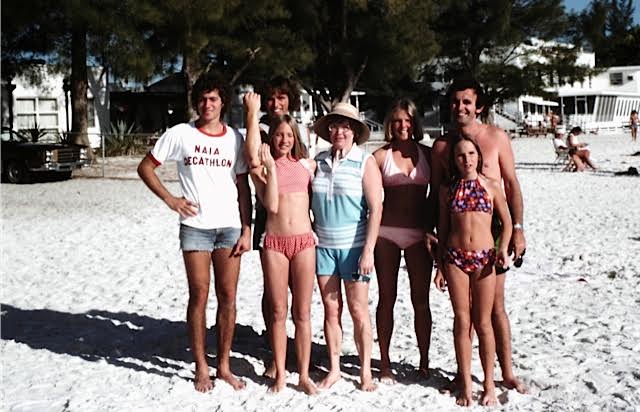
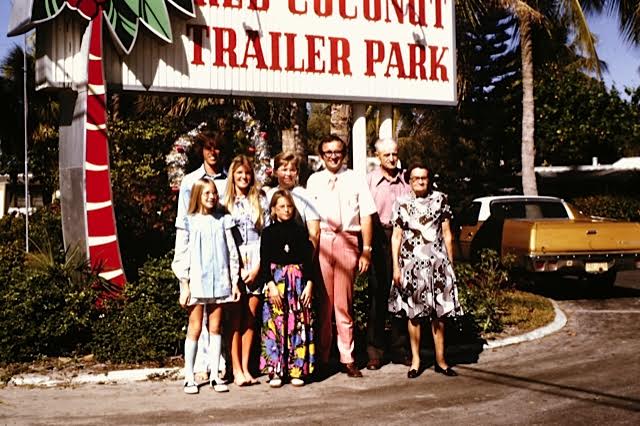
After about four hours, I got up and continued hitch hiking along the highway.  After a few more rides and some interesting conversations, I was finally walking into the Red Coconut RV Park in Fort Myers, Florida, where Ed and Marge Neufeld were quite surprised to see my grungy winter costume, and my scruffy unshaved face before scruffy was popular.  Ed took it in stride, and Patty and Martha seemed amused.  Jan had been forewarned but still showed the lack of confidence that I would deliver on that possibility. You’ll notice the NAIA Decathlon shirt, which I was proud of, but also the subtle question of who I came to Florida to visit: my friend and college roommate, Ron, or was it his sister?

unnamedunnamed-1

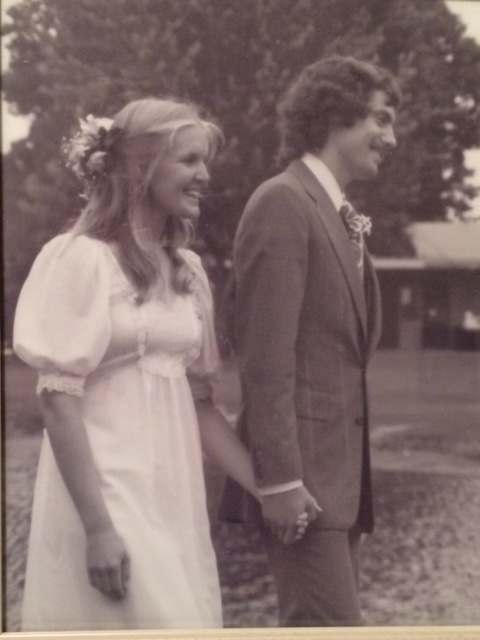
Those few days included the hello and novelty of a dramatic pursuit, the attraction from some common past and family friendship, a reignited heart throb going back to junior high orchestra, and a brave goodbye as Jan pursued her Study Service Trimester adventure to Haiti.  Perhaps the same desire for adventure, along with the call of God, led us also to be married, at ages 23 and 22 on August 19, in Elkhart, Indiana.

IMG_1717

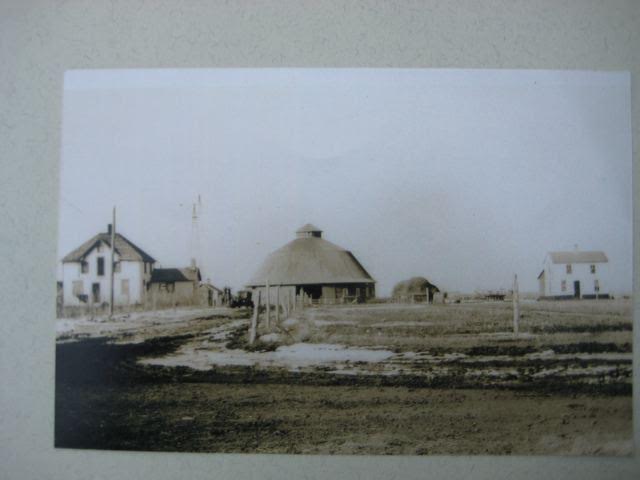
Joseph had worked in North Dakota when following the harvest, and was apparently captivated by this land of stark beauty and opportunity.  Maybe he saw what I saw on an August evening, a gentle breeze at around 75 degrees, with the low angled sun brilliantly lighting the houses and barns.  The flat land of waving wheat was turning white with a promise of a fine harvest.

unnamed-3

 After Joseph and Stella got married, they worked on a farm, and in addition, Joseph was ordained as a minister to serve the Spring Valley Mennonite congregation.  They soon began having children and Reuel, Ruth, Mary, Genevieve came along first.  My father, David Gideon Lehman, was born the fifth child on January 25, 1926 in Kenmare.

unnamed-7

unnamed-6

Then came Ethel, and finally Josephine was born, on the day after her father’s funeral.  He had been loading some potatoes into the cellar at night and was found dead by the windmill with a bruised head.  That was October 10, 1928, and he was only 38 years old.  Grandma said he must have fallen from the windmill, but many other people thought there were reasons to suspect foul play.

Grandpa Joseph fulfilled his calling, and finished his race well. Two generations later, the way he left his mark is still evident in our family, in faith, fortitude and fatherhood.

unnamed-8

I sure would have been pleased to meet my Grandpa, and talk about the farm, his life of Christian service, and about the life lessons in building my boat.  Maybe we would have seen common ground in the courage to take risks and the commitment to follow them through.

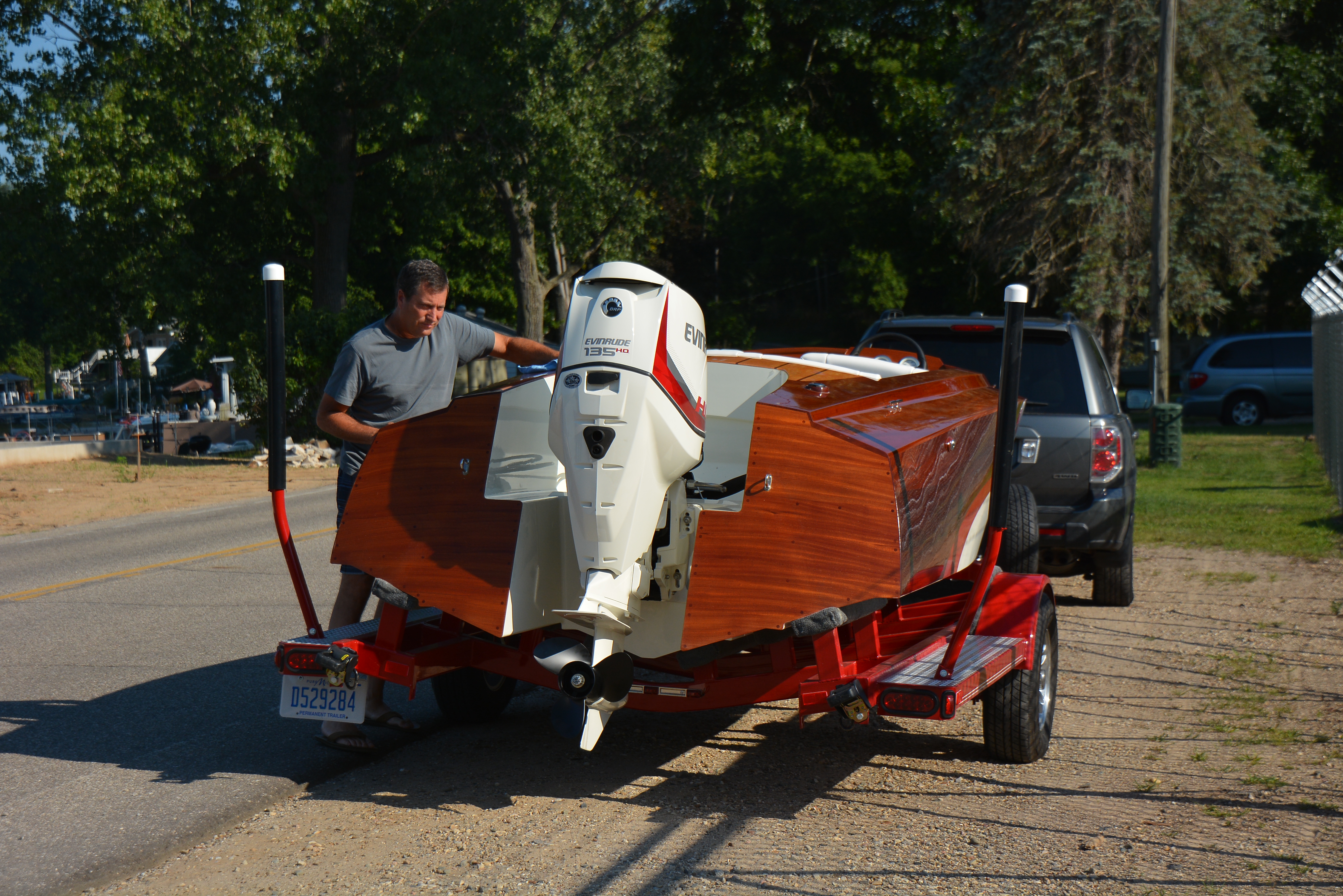
Finally the boat has all of the essential ingredients to float and swim.  Andy Peterson at Starboard Choice Marina, connected the 135 HP Evinrude HO to the gauges and the navigation lights, and it was time for a test drive.  Below is a photo of the motor mounted on the transom.

 D71_4164.JPG

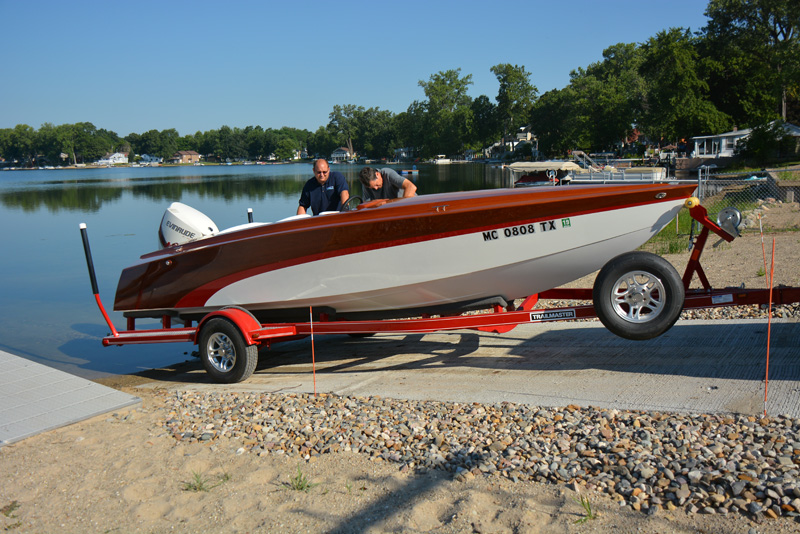
It is time to back it down into the water.

D71_4168

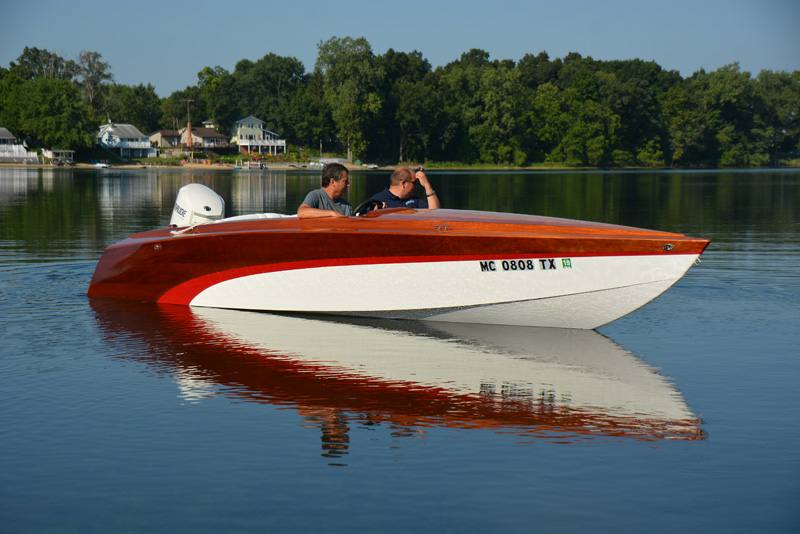
What an amazing feeling to see it sit just right, at attention and looking fast sitting still.

D71_4172

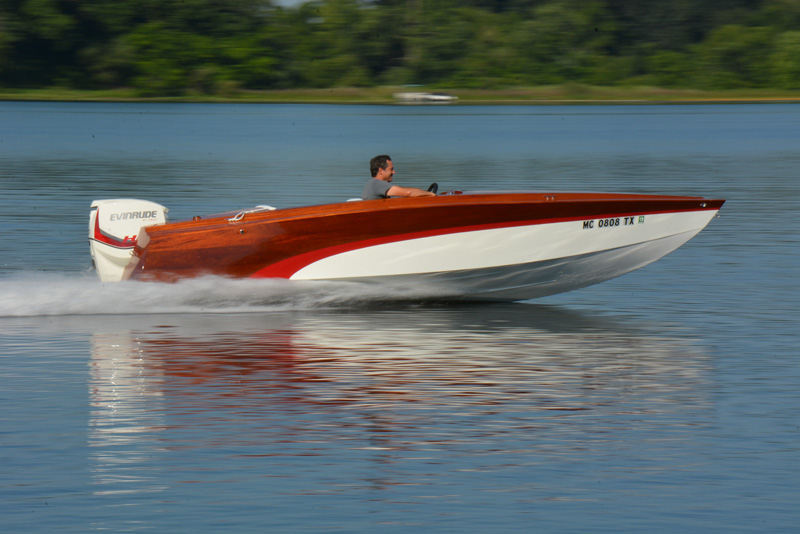
But it also could run, around fifty, with a beautiful small wake.

D71_4228

To repeat my neighbor Mike’s comment from a couple of years ago when I was complaining about not being done, “If you want a boat this summer, go out and buy one.  Where is the journey in that?”  No question about that.

Finish Strong

Doris Jane Liechty was born August 17, 1928, in Archbold, Ohio, into the Joseph and Emma Liechty family, with two sisters and six brothers. She was the eighth child of nine, which allowed her not to be a “second mother,” and so after high school, she headed off to Goshen College. She majored in Home Economics, and her adventurous spirit took her on a trip with a student group to Europe.

unnamed

At college, Doris met my dad and soon began a relationship which lead to them getting married on June 16, 1951.

unnamed-1

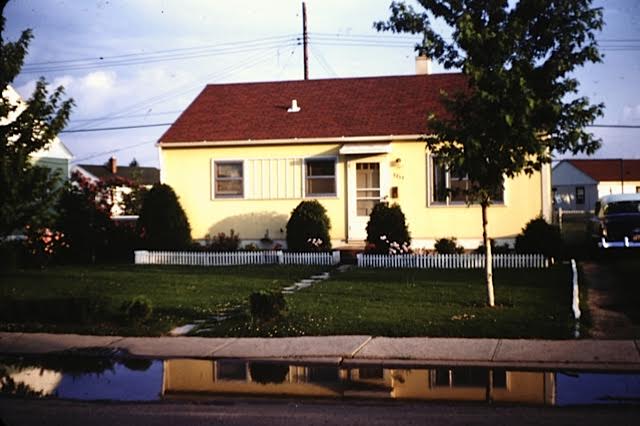
They moved to Indianapolis, and lived in a little post-war house at 3217 West 22nd street. During that time, mom worked as a home demonstration agent, and they went to the little Mennonite Church on Kessler Boulevard.

unnamed-2

That is home where I lived my first few years of childhood, and the place my sister Anne and I escaped on our trikes for a long ride along Kessler Boulevard. But mom eventually found us, and did not chide us for the experience.

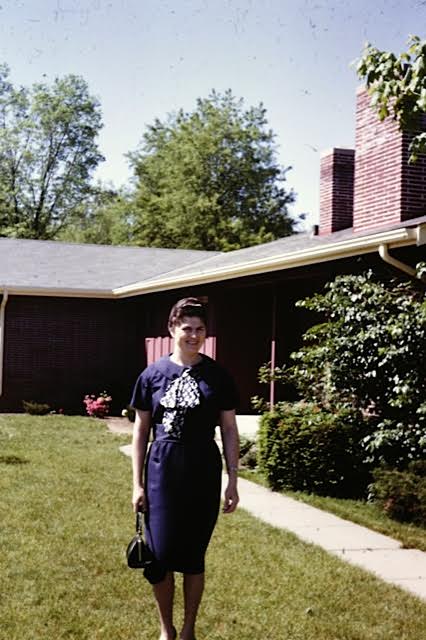
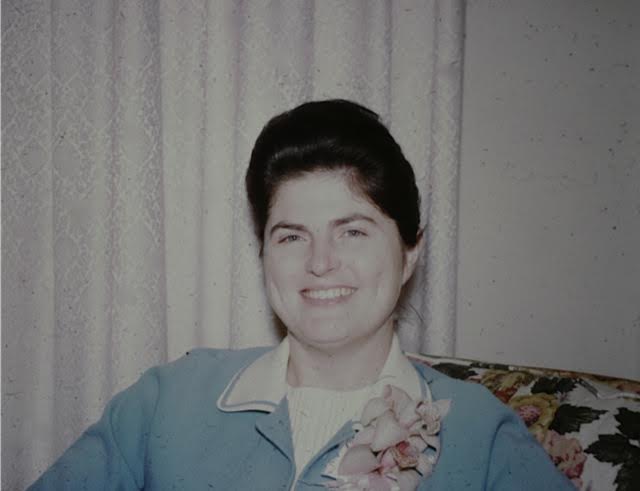
Then, we moved to Elkhart, Indiana. In our growing years, she took us apple, peach and berry picking, and rewarded us on those evenings with a cobbler or pie from the fruit of our labor. Then there was the pitting, snapping, and peeling of the fruits and vegetables, to can hundreds of glass jars for the winter. Here is mom in front of our house on Myers Avenue.

unnamed-3

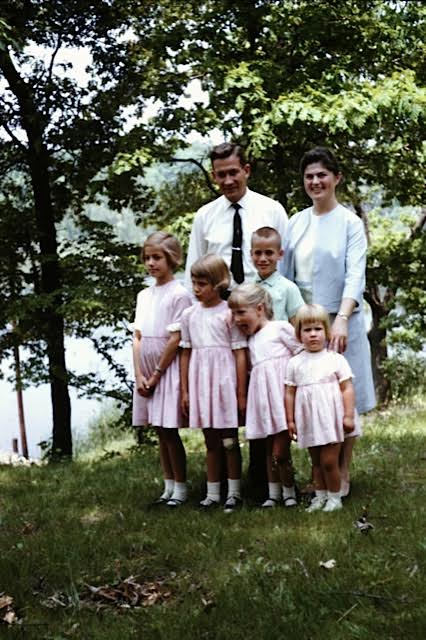
Mom was a great cook, and always made holidays and birthdays special, with sculptured layer cakes cut into bunnies, dolls and cars. She also sewed clothes for the children, including this matched set for my sisters.

unnamed-4

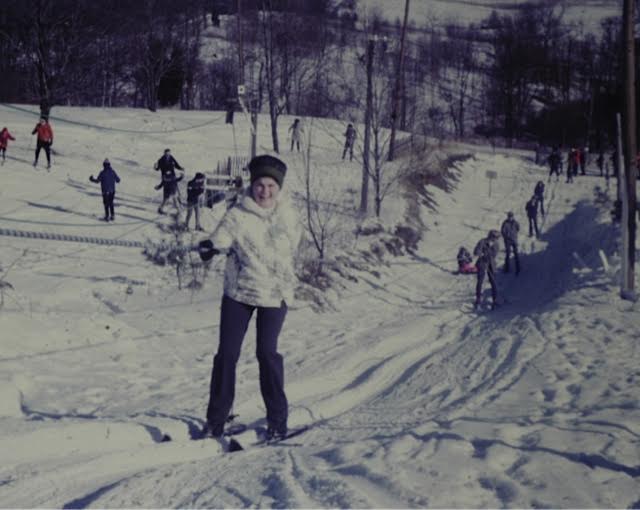
Here is mom joining the fun skiing at Swiss Valley.

unnamed-5

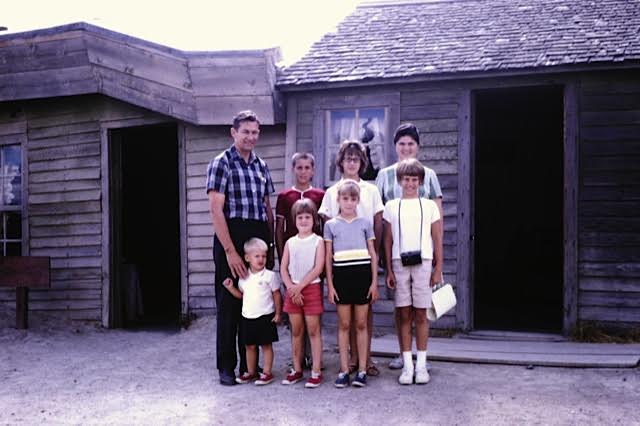
Below is the family on a trip to the west coast around 1966.

unnamed-6

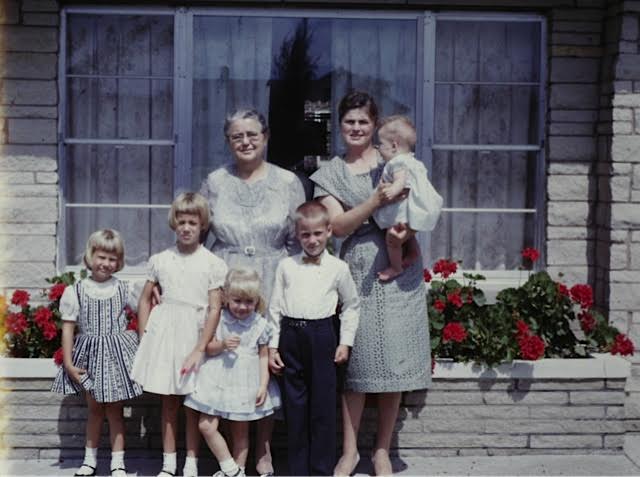
She taught me how to write backwards, and had us help with cookie decoration, gift wrapping, marzipan making, and the occasional ice cream socials for friends. Many friends and relatives came to our table, including the rather famous Elizabeth Elliot. Here are mom and grandma with five of us.

unnamed-7

One summer day when I was twelve, we had a back yard softball game and I was pitching. Mom was a good hitter, and that time, her line drive caught me right in the forehead. It dropped me right over backwards. Later in high school, when I told her that I was not up to the pressure of running cross country in the mornings and doing football practice after school, she understood, and said it would be okay if I did just one of them.

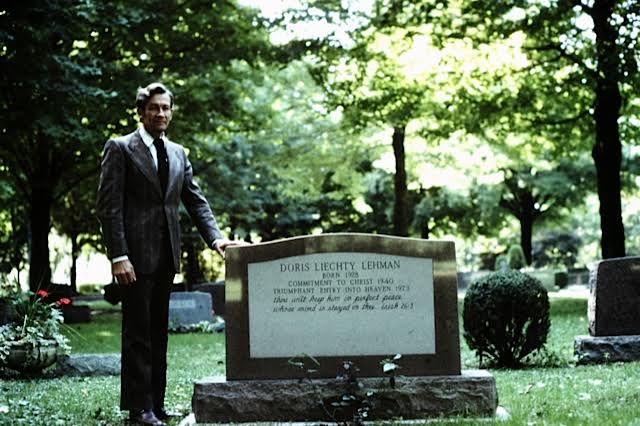
Her adventure on this earth ended early by most measures, at 45 years old. The year of 1973 was a hard one for her, walking through the valley of the shadow of death. She gradually began losing health, weight, and energy for the tasks of life. She did not seem afraid, for the Lord was with her, but the undone responsibility of care for her family must have weighed heavily on her.

unnamed-8

Finally, on a Sunday evening in September 1973, we were gathered around her bed, and she boiled down the meaning of her life into a short, quiet statement. “What matters most is your relationship with Jesus Christ.” It was a great legacy, and she was a good mother. She finished strong.
unnamed-9

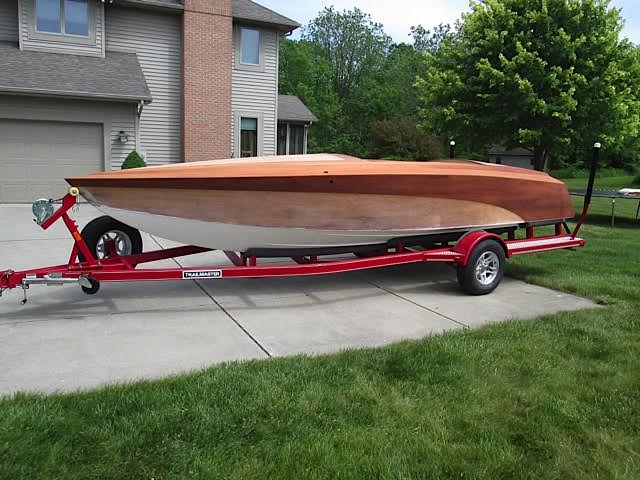
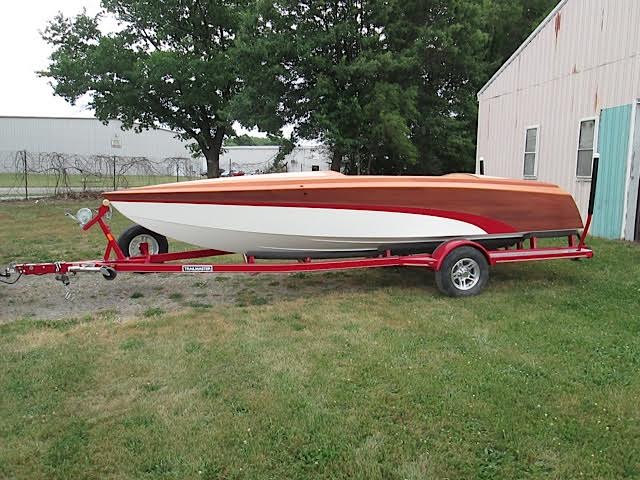
No disrespect is intended in the comparison of a life finished well, to finishing a boat. Actually, the boat reminds me of my mother’s creativity, and I think she would have been proud. She had done some oil paintings, and always rewarded my artistic interests. Here is the boat before paint and varnish.

unnamed-10

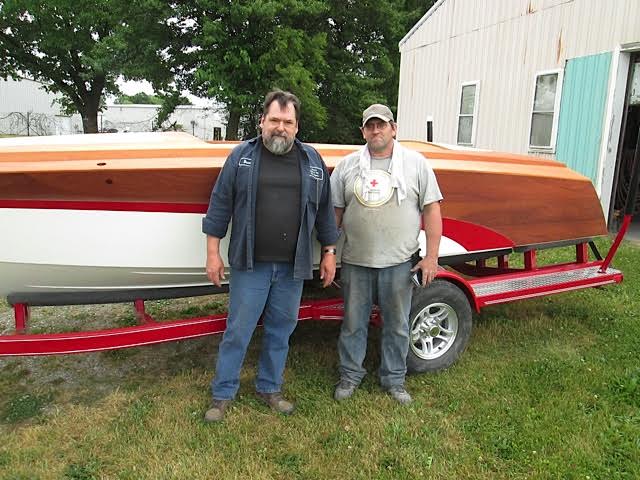
I had worked very hard on the bottom paint, with less than stellar results, so this time, I had Dave’s Paint and Hot Rod Repair, in Elkhart, Indiana spray on the white side with a red stripe. Here are Dave Shank and his sidekick Kerry.

unnamed

Regardless of the actual outcome, the boat is looking fast!

unnamed-1

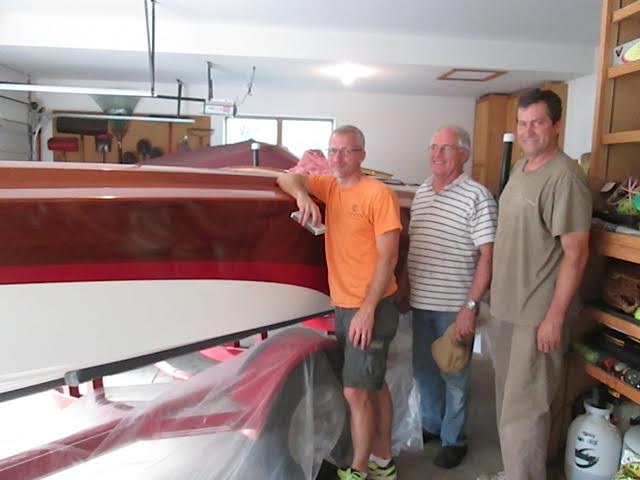
Varnish is the coating of choice for wood boats, for its beauty, toughness and water resistance. This does not correlate to easy, especially with no personal experience. I started with two sealer coats of thinned varnish, and had a few more coats sprayed on by Dave and Kerry. Then, I took the boat home where Jon Smucker and Jeff Margush helped me do two more brush painted coats of varnish.

unnamed-2

Eventually, enough varnish is enough, and I decided we had enough buildup for a strong finish. The next step is buffing it out to a gleaming luster, and then completing the rigging. There is a light at the end of the tunnel that does not seem to be an oncoming train.

Boat Going Through the Wall

Around 3 years ago, I started on the 20′ speed boat, thinking it might be a one year project. I first made some models and some half hulls, before launching into the full scale parts.

unnamed.jpgunnamed-1.jpg

The problem was that I needed to learn so much as I went along, and the mistakes from inexperience caused plenty of detours. But finally, in the spring of 2016, it became realistic that the boat was ready to move out. The basic shell was complete, along with the mahogany and maple veneer, and the wood work got a coat of thinned varnish sealer. This started waking up the color.

unnamed-2.jpgunnamed-3.jpg

Once the hull had initial protection from water, Jed Long and Jeff Margush helped to beef up the stands it sat on, and brace them diagonally.

unnamed-4.jpgunnamed-5.jpgunnamed-6.jpg

We even put in sliding castor bases that allowed it to move well across the floor and clear the sill plate at the wall.

unnamed-7.jpg

Finally the day came for the moment of truth.  We had checked off the strength and safety requirements from neighbor, Mr. Fix-it Florea (Don), who provided the heavy duty castors, plywood for bracing, strapping to hold it together, and much thought about how to make the whole move as easy as possible.  Our first step was turning the hull 45 degrees.  That is Don on the front left, not letting the foot cast slow him down!

unnamed-8.jpg

Then Jeff Margush was voted as the one most capable to cut the legs off of the bottom with a Sawzall, so it would fit through the wall opening.

unnamed-9.jpg

Then it was time to start moving the speed boat out the hole in the wall. There wasn’t much room to spare, so we moved slowly and carefully.

unnamed-14.jpg

The system of riding on rollers turned out to work very well, and soon we were free of the house. It needed some help when it crossed the sill plate.

unnamed-10.jpg

And then, the boat was out of the basement, temporarily covered due to some drizzle.

unnamed-11.jpg

Soon, we carried it up the hill, and prepared a trailer for temporary transport. The strakes (spray rails) did not fit in between the bunks of the trailer so we just padded the trailer as well as we could, with a cheap mattress, some sleeping bags and some old blankets.

5bd3a3b3-d88e-4802-aee1-91a2c9cd1497.jpgunnamed-12.jpg

Finally, the boat was positioned on the trailer, and there was a great sense of relief that all had gone well, with no harm to the hull bearers or to the hull itself.  This was also due in part to a friend Andrew Alger, a engineering test lab operator, who knows a lot about a lot and is not a teenager.

During the process, he helped build the moving framework, but also gave us a great surprise gift.  He took a time-lapse video of the whole move, which will be available to view soon.  Thanks, Andrew, and all the rest of you who made the day so successful.  I will never forget.

unnamed-13.jpg

All’s well that ends well.
Pa Wilder