In the Driver’s Seat

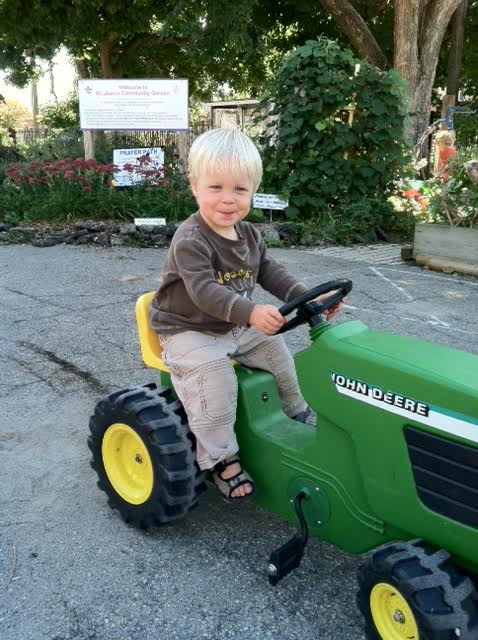
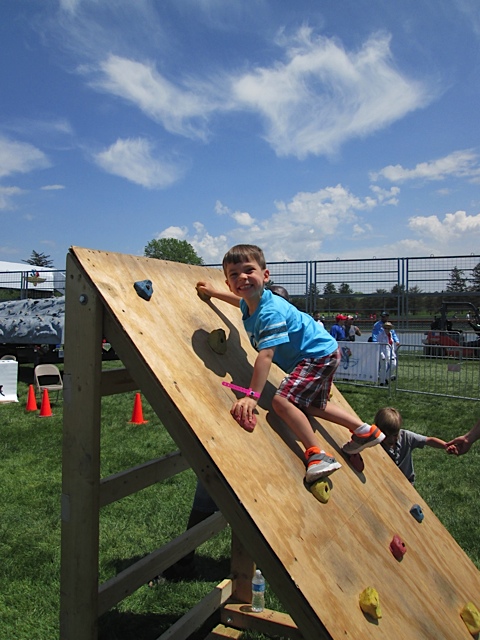
The Driver’s seat has a magnetic pull on even the youngest boy, it seems. Maybe it is being connected to all of the control knobs, or the potential noise and power at your feet making a “big machine” operate. Maybe it is the exhilaration of speed or the adrenalin rush from being close to the edge of out of control. According to my Uncle Russ, it may be Liechty genetics. Whatever it is, you can just watch my grandson Chapman beam with pleasure on the tractor toy.

unnamed

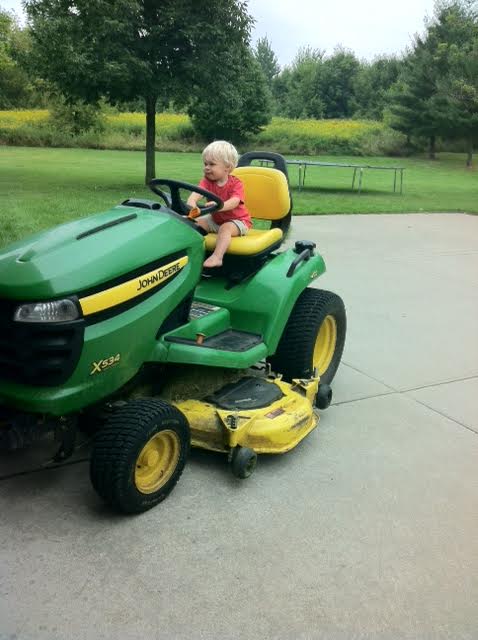
He was one and a half when he figured out how to climb up and get behind the wheel of the real John Deere lawn tractor all by himself.

unnamed-1

The four year olds, Brayden and Hudson are no longer contented with going to Lowes to sit still on floor model tractors. They want to drive the John Deere with Grandpa, or the neighbor Don Florea’s electric four wheelers. Clay and Emma have graduated to a different level of speed and excitement, but are still drawn to the moving and driving. It won’t be long before the teenage compulsion to get their driver’s licenses sets in.

unnamed-2

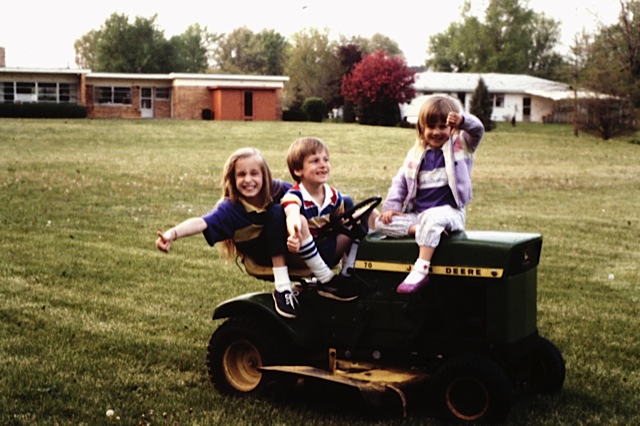
It goes back along time in the family. Adrienne, Austin and Amanda were also drawn to the the John Deere.

unnamed-3

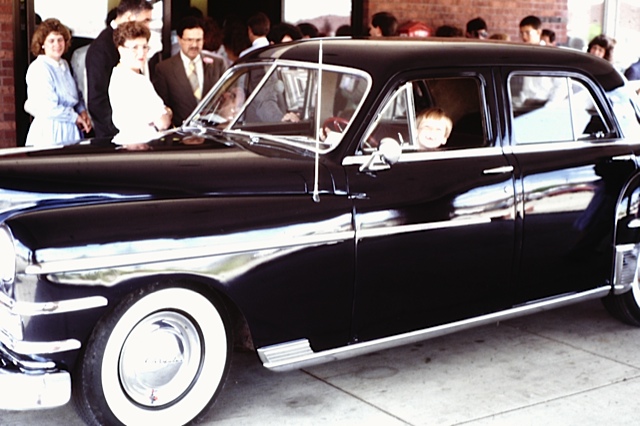
Austin couldn’t decide between classic automobiles and touring motorcycles. Here he is in Uncle Russ Liechty’s 1949 Midnight Blue Chrysler Windsor.

unnamed-15

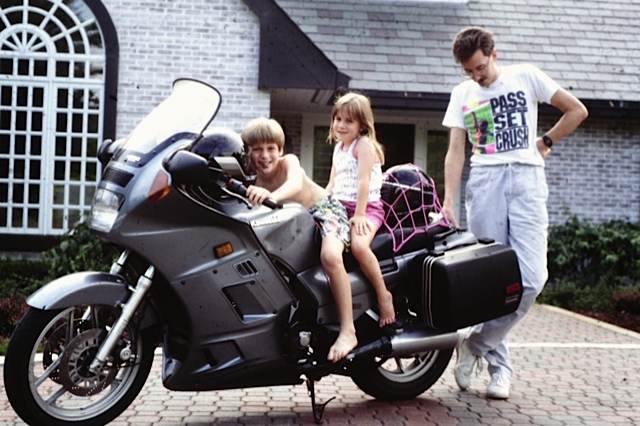
Here he is with Amanda on Dave Yoder’s motorcycle.

unnamed-4

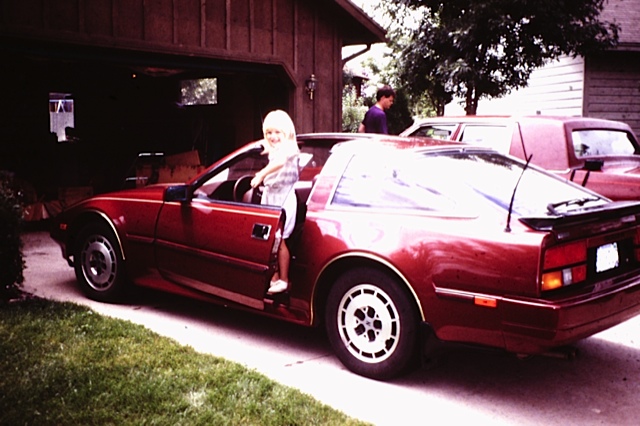
Audra was thinking more of the sports car variety for a driver’s seat.

unnamed-5

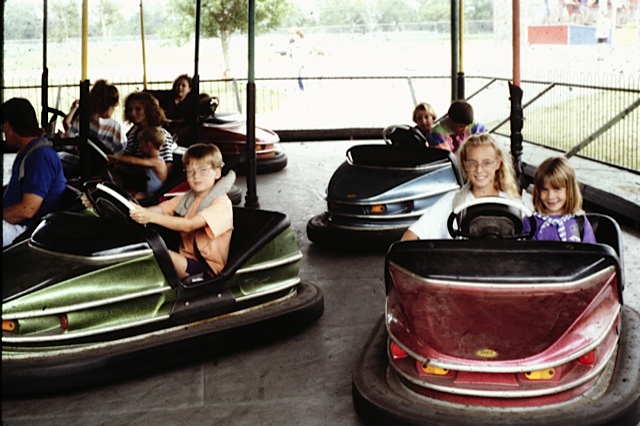
Then they graduated to bumper cars.

unnamed-6

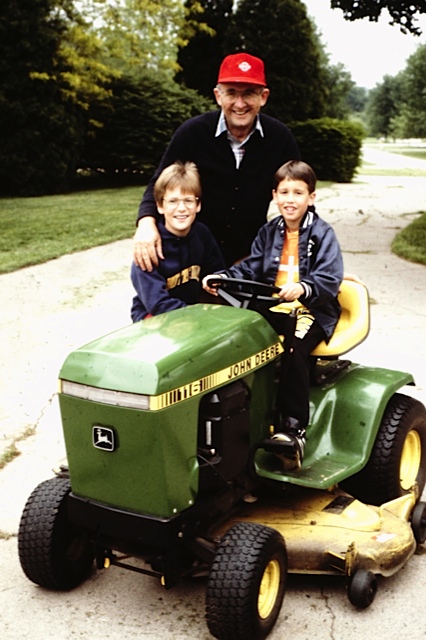
Grandpa Ed Neufeld loved driving also, and did lots of road trips to Indy and Nashville to see the grandchildren. Below he had a lot of help driving the tractor from Austin and Aaron.

unnamed-7

His daughters Jan, Martha and Patty want to get behind the wheel I think mostly so they can control the music. Oddly enough, even back seat driving is popular in our family.

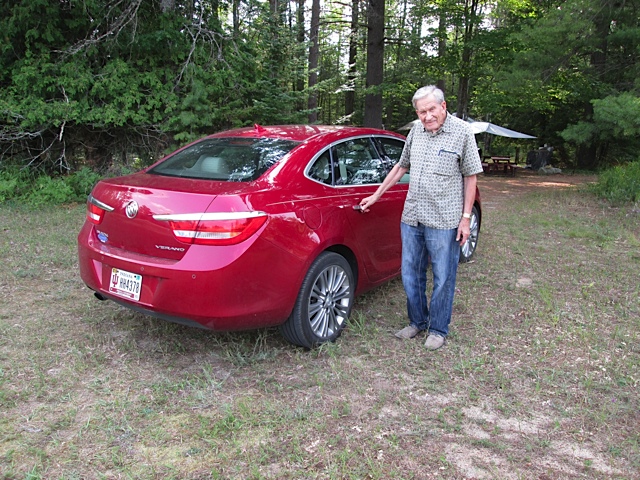
My dad is 88, and he still likes to take the familiar pilgrimage back to Fairview, Michigan, where he lived as a child. The pleasure of driving is one of the things older people are often most reluctant to give up. Here is Dad with his new Buick Verano.

unnamed-8

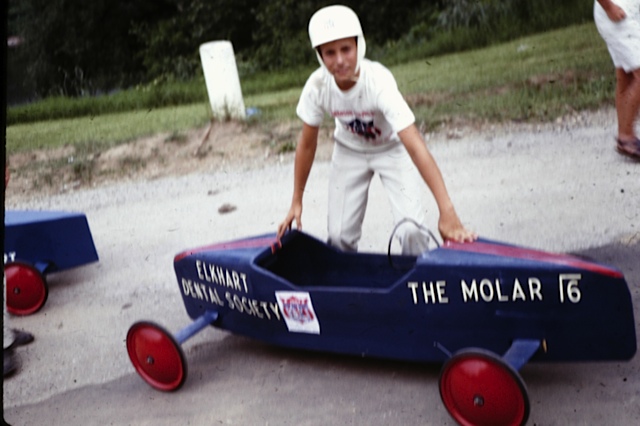
Growing up at an early age, I remember bugging him to let me sit in the front seat and steer the car. Then I wanted to drive by myself to the end of the drive. It seemed a shame that I had to push the lawn mower, but finally when I was twelve, I did get to race in the Soap Box Derby.

My dad took me to an introductory meeting where he bought a standard kit. It had four wheels, two axles, and a steering wheel, with some rules and instructions. I started with a 2 x 12 for the bottom, and used lathe strips which could be nailed and glued into the side form. Then I glued another 2 x 12 on the top. Then I had a lot of sanding before brushing on a coat of blue paint.

It did not compare so favorably to the elegant fiberglass and spray-painted cars built by the engineer and designer dads, but I might have won the “Build It Yourself” class if there was such a thing. My dad did jump back into the process to name it the “Molar 6” and show sponsorship. I raced twice and got beat two times, and then retired the racer to our home hill at 4333 (now 23905) Myers Avenue, Dunlap, Indiana.

unnamed-9

Around age 15, I bought a seriously used Go-Cart with a 5 Horsepower Briggs and Stratton four-cycle motor. Fortunately my neighbor, Jim Kuhn, was an expert fix-it man and he helped me with some basic welding and mechanics. It didn’t accelerate so well because of the gear ratio, but when the leaves were wet on the Concord Junior High parking lot in the fall, it was a high speed donut city.

About the same time, my sister Anne was learning to drive the car, and we started with the family blue VW bug. We both had our share of jerky starts and stalls, before mastering the German clutch.

Then, in college days I bought a used 1967 Datsun 2000 Roadster for $1300 which was the precursor of the Nissan 240Z. It was silver and had a convertible top. When the weather was good, and on the days it ran well, I felt pretty cool. The night I tried to change the water pump was not so fun though, as the small engine compartment always seemed to have other parts in the way of what ever bolt or nut I needed to get to. If you can imagine the following car, with rust and no roll bar, you have it.

unnamed-10

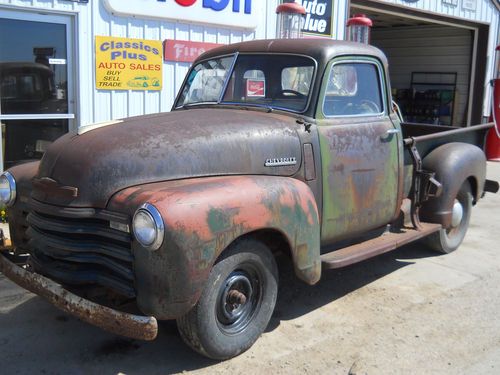
Then there was the ’49 Chevy Pickup I bought (used again) for $425 from a friend of Grandpa Frank Neufeld when we were in Inman, Kansas for Thanksgiving in 1983. It had the original blue paint, with much fade and a few dents, but what an attitude. I had to leave it at Wien’s Garage to have some repairs done, but the following spring, Jan and I went back to drive the truck home. This is also not the true original truck, but the degree of wear and tear is very accurate.

unnamed-11

That was another adventure, on par with the scooter trip. Play in the steering system, with old tires made for curvy tracking, especially on the rutted county roads of Kansas. Vacuum windshield wipers did not do much good for the rain either. I didn’t have the money or time to fix it up right those days, and sold it a few years later. I wish I had known what a regret it is now.

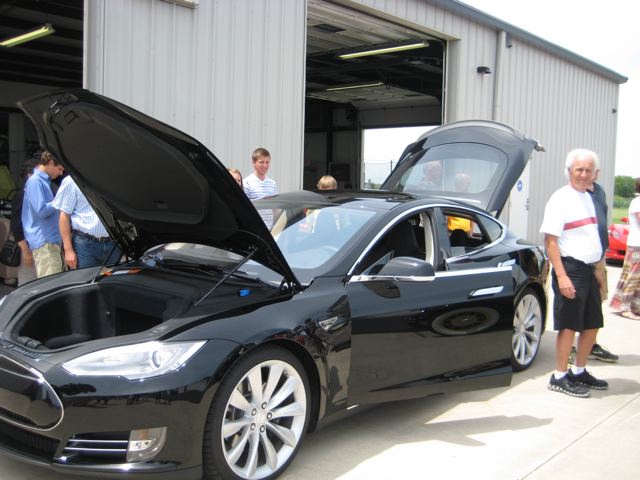
This summer at a Liechty family reunion in Archbold, Ohio, provided another driving experience. My cousin, Steve Wise, was showing us some of the Corvettes in his collection, and pointed out a black four-door sedan sitting out in front with the hood up. He said it was “running quietly’ and could be taken for a spin.

unnamed-12

I got in the electric-drive Tesla coupe behind Joe and Dan Liechty, and after a few miles headed out in the country, I asked if I could drive her on the way home. The Tesla was reported to go 0-60 mph, faster than a Corvette. Also, since it has a low center of gravity with the batteries under the floor, it was supposed to handle like a Porsche. Being a man of science, I am not one to idly accept assertion without the evidence from testing.

We quickly found out that the speedometer needle did indeed pass 60 mph right around 3.2 seconds, and in way less than a country mile, it crossed 100 mph. It stops really fast also. I feel comfortable reporting that the factory claims are accurate. Thanks for the ride, Steve. I hope to trade you for one in the boat someday.

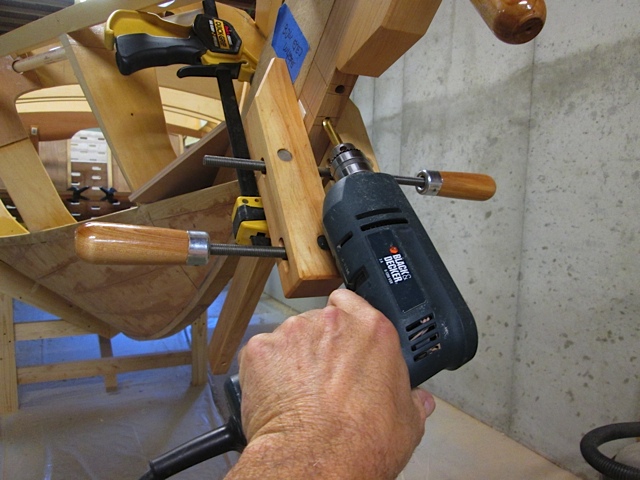
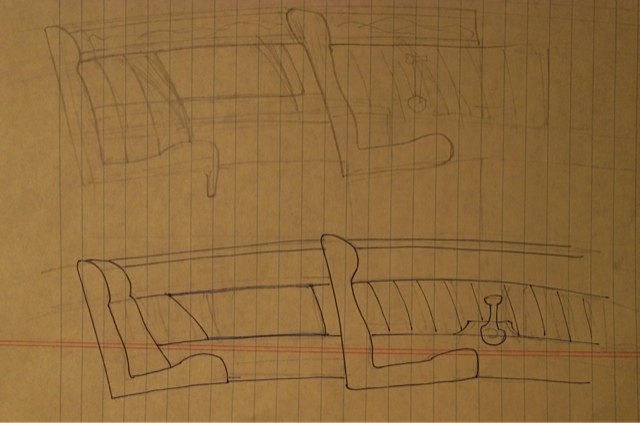
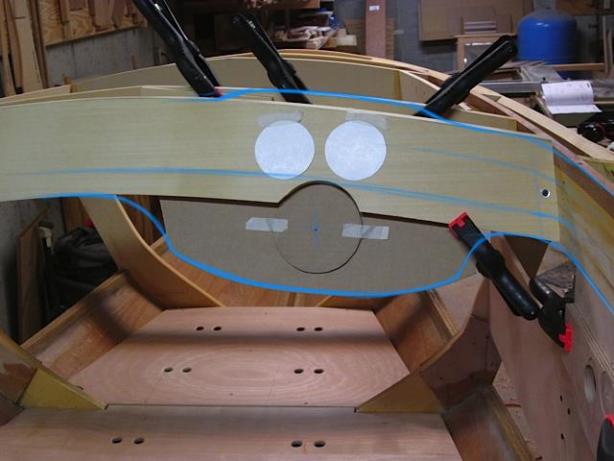
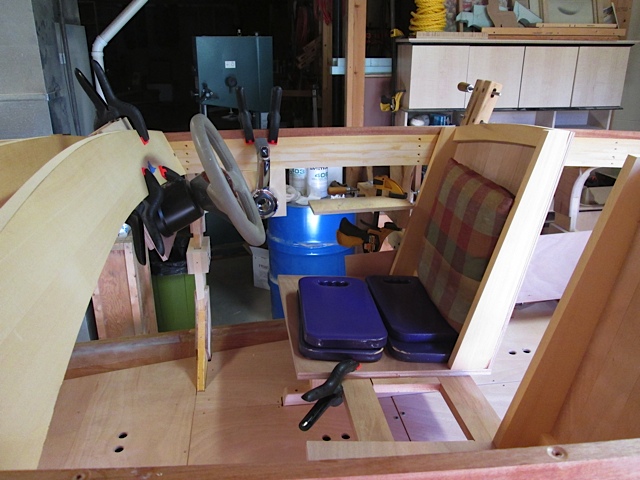
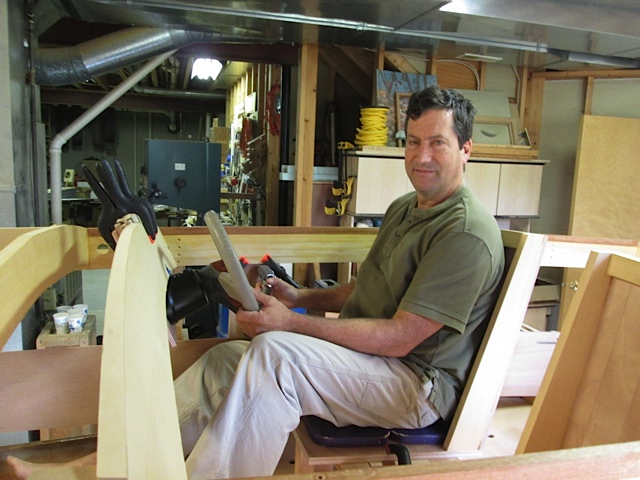
The driver’s seat in the modern car has to be comfortable for a wide variety of people, which is why there are an infinite number of settings. Building a wooden boat does not lend itself to such easy adjusting, so I am just making it to fit a generic adult man, and especially me. The actual mounting of the steering wheel and control lever is not so hard, but finding the perfect place is the challenge.

Below are shown several of the photos of mocking up the positions of the seat, wheel and throttle. Thanks goes to Brad Collins for loaning me a boat wheel, and shift levers to play with.

unnamed-13

The routine is to clamp or screw the wheel, shift and seat in place, look at it for balance and lines, and then get in. Yesterday, I climbed up three steps on the ladder, swung my left leg over the side and hurdled the right to get in the boat at least two dozen times. It is an inspiring place. Closing your eyes can take you to a warm sunny day on Portage Lake or out through the channel to see the sunset.

unnamed-14

Not every idea creates something great, but all great things start with an idea.

Back in the Saddle Again

Building a boat may not compare entirely to riding a bronco, but the truth is that you can get bucked off of either one, especially if it’s your first rodeo.  To get from dumb to smart or from rookie to pro, a certain amount of education is needed, in proportion to the complication of the task at hand.

Occasionally this comes from school, but much of life just grows out of the hard knocks that come along the way.  It has been said that to avoid mistakes, you need experience.  But to get experience you have to make mistakes.

Consequently, this reminds me that I will never take a fresh baked cookie from a countable row, throw rocks at a hornet’s nest, fail to mix gas and oil for a two stroke mower, cut toward my hand with a sharp knife, shift my ten speed with a frisbee in my hand, start slalom skiing with one foot out of the boot, or hitch hike on the interstate . . . ever again.

The pain makes those events memorable and instructive. There is a high cost of education, especially if you are inclined to reinvent the wheel.  But since not all interesting roads in life come with directions, sometimes we must just go exploring.

Below is the shelf of many hours of lost efforts, the painful falling off.  There are the front seat support frames that got shortened once too often because you are supposed to sit in a speed boat and not on it.  They became prototypes only to help the next parts.  This made the pretty mahogany curved parts not fit either. This is a small representation of the patterns, practice pieces and scraps that never made it on the boat.

noname

You can see the two blocks on the upper shelf that had to be cut out of the boat framework to lower the back seat.  Lots of time was spent fitting the parts, dowelling them together, and bonding them with epoxy.  The lost time is a regret, but the story they tell is still a thing of beauty with the white oak, yellow cedar and birch dowels.  Maybe I will finish them up as paper weights.

noname-1

So we carry on. The current assignment is to make places for all of the interior hardware and the wires, cables, and tubes to connect them.  Below is the battery box, mounted near the front to help solve the expected weight balance problem.

noname-2

Here is the channel carved out to hold the gas fill tube going from the port side deck down to the belly tank.  The tube is fairly rigid and must be allowed to take a long, gentle curve.

noname-3

Next is the new layout for the front seat, at the proper height, so I can soon fit the control box and throttle handle at elbow height.

noname-4

After abandoning the original support braces, I made these new ones.  They are shorter, stronger, and will allow easy removal for gas tank access and below floor repairs.  They are held down by the stainless steel bolts which go into brass threaded inserts drilled and screwed into the long frames.

noname-5

Commitment is what keeps a person successfully moving forward.  Dick and Vel Eiswalt have been inspirational examples of this style of living, as any couple celebrating 65 years of marriage must be.  From California to Indiana, Minnesota and back, they have faithfully followed God and lived the adventure.

noname-6

I would love to have taken a ride in the speedboat Dick built fifty years ago.  With a V-8 car engine, it was the fastest on the St. Joe River and capable of spraying a rooster tail from the dock onto the lawn.  Below is his son Don driving in front of the Eiswalt home.

Picture2

This last stretch of boat building has seemed like errors and trials, and doing interior work that is slow and will not be seen. But I am not lost anymore and I feel like I am back in the saddle again.

Life is like that too.  God promises to bless a life of faith, making a good path through sometimes difficult circumstances.  This is redemption, described in one of my favorite songs  “And Now My Lifesong Sings” by Casting Crowns.

Sitting Pretty

“Sitting pretty” is not so much a video as it is a snapshot, a moment of satisfaction, success or honor after a significant accomplishment. It is the County Fair Queen parading in the convertible, catching the big frog for the jumping contest, the robin preening on the branch, the sailboat tethered to the buoy at sunset, having a fresh box of Rise ‘n Roll donuts arrive unexpectedly at the office, the light bulb moment in math class, or graduation from dental school.

“Getting pretty,” on the other hand takes a lot of time and hard work, as seen in the mirror of a teenage girl preparing for school, studying for the Oral Pathology test, high school football preseason, designing a house, or working your way through college.

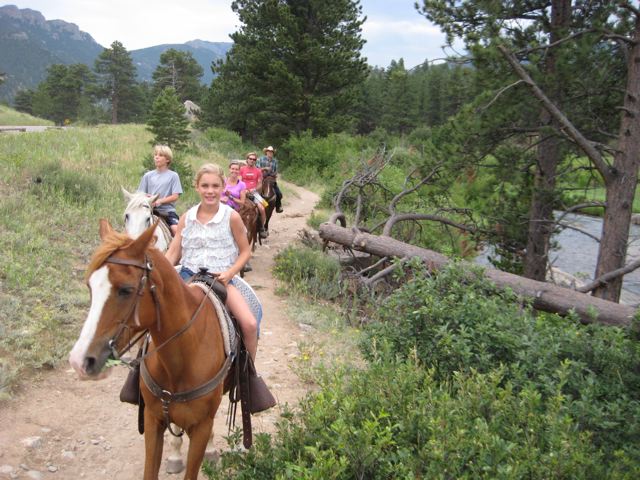
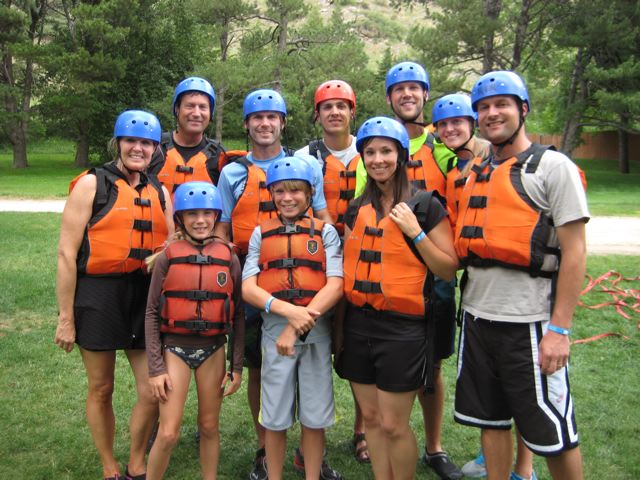
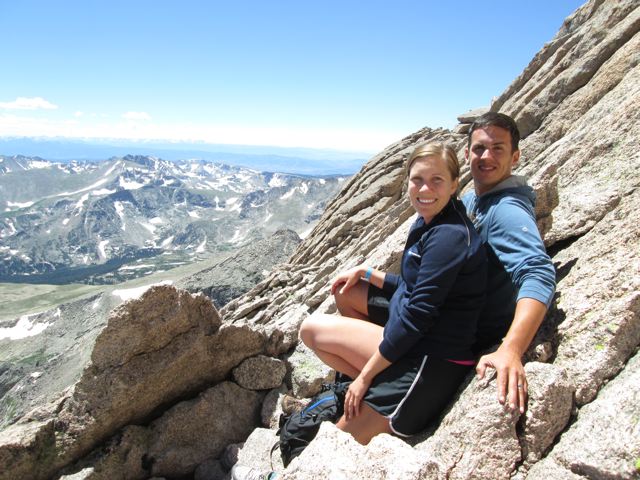
In July, our family went to Colorado to the YMCA of the Rockies, near Estes Park. It was full of “sitting pretty” moments like the family picture against the backdrop of Rocky Mountain National Park, riding horses along the mountain ridge, church under God’s cathedral, and cresting a wave on the raft trip.

IMG_3432

IMG_2552

IMG_2524

IMG_2575

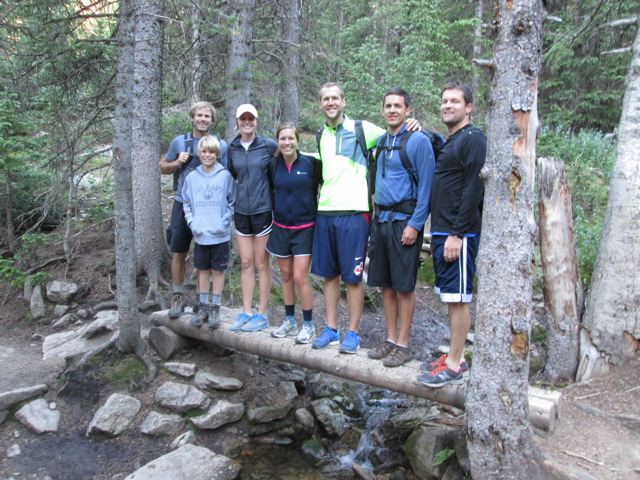
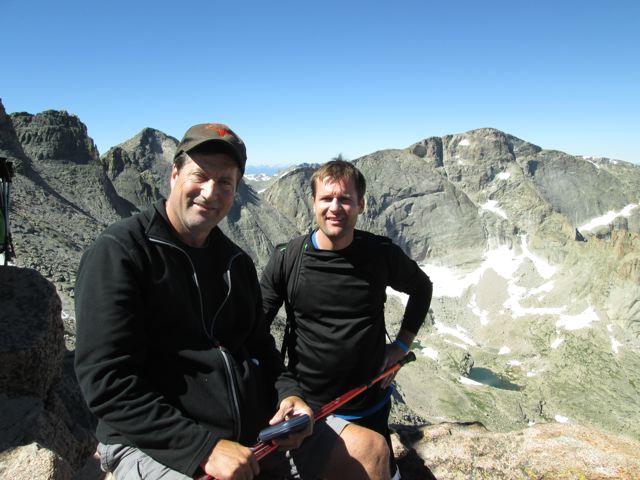
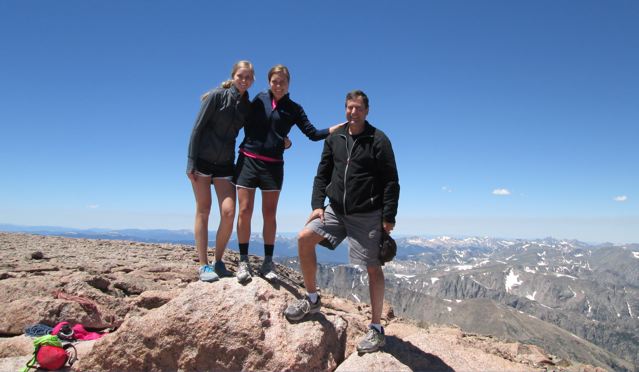
But the most anticipated event was the repeat climb up Long’s Peak. Austin and I had climbed the mountain 20 years before, when he was 12. We set out at 6:00 am up on the 15 mile round trip trail. Below is the crew soon after starting: Jeff and son Clayton, Audra, Amanda, LT, Danny and Austin.

IMG_1224

We hiked awhile to a rest stop where Jeff challenged us invite God to be part of the journey and to listen for His purpose. Then Audra prayed for our day, for encouragement and blessing. After a couple hours of hiking, we made it to tree line, and continued on through the alpine meadows with wild flowers like the Columbine, Colorado’s state flower.

IMG_1298

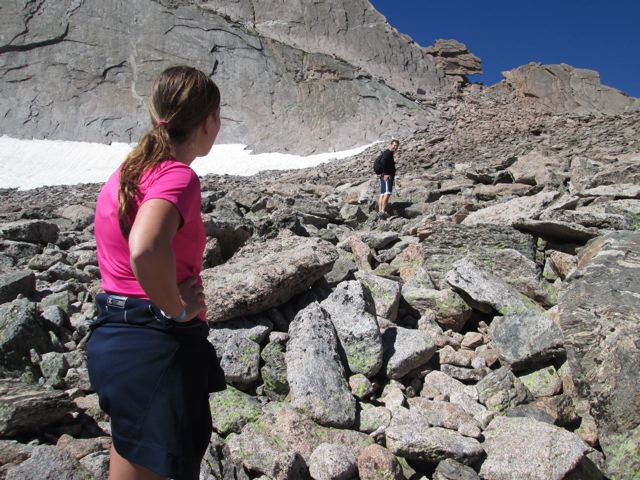
In a couple more hours, we were making our way across the Boulder Field on the way to the Keyhole.

IMG_1247

Beyond the Keyhole was another 1.5 miles of ledges, big rocks and steep inclines where the route was marked only by periodic bulls eyes. This was vertical scrambling that tested the edges of our concentration and endurance. Yes, it had elements of danger, a lot like every day living. One wrong decision and the consequences can be dire. Sitting pretty was seriously earned here.

IMG_1274

IMG_1279

Austin and I did some casual reminiscing about our previous trip 20 years earlier and were surprised that we did not remember how tough it was. We did not forget the beauty around us though.

IMG_1249

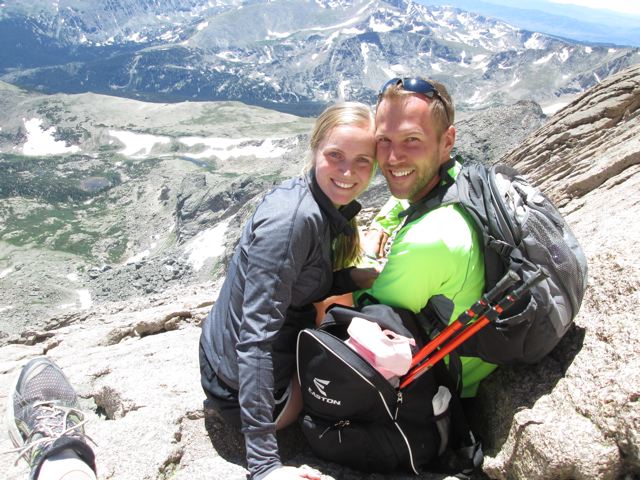
We eventually split up into two groups, and around noon, we climbed across the rim of the summit. At 14,265 feet, it seemed like the top of the world.

IMG_1265

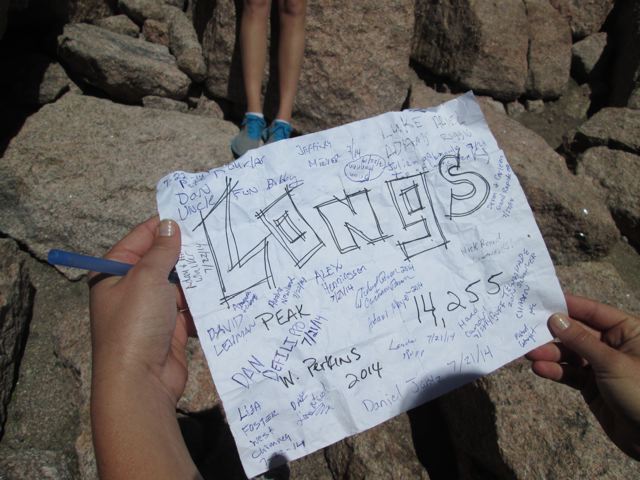
We signed the ledger and looked around a bit. There we felt the combined sense of euphoria from the beautiful distant views of snow capped mountain peaks, and the danger of exposure to the elements, the steep descent and thin air. We marveled at God’s creation for a short time and started back down.

IMG_1270

Currently, the boat is in the long, hard preparation stage for “sitting pretty.” At this point, I am working on the frame and support parts for the seats.

noname

Below are the base supports for the front seats. They wouldn’t have to be curved, but then it looks so sweet that way, and it is a boat…

noname-1

As usual, the next step is figuring out something, this time it’s the front seat shapes. Drawings on paper followed by full size patterns usually give the best design guidance.

noname-2

I am not on top of this boat building mountain yet, but the long view of the seats is starting to come into view. As Austin said during the climb, “Determination still counts for something.”

P.S. The old scooter that I abandoned at the beginning of my second “annual scooter trip,” stayed the week with the man who was mowing in his front yards. He turned out to be trustworthy, and I went back the next week to pick it up. It had moments of play, mostly in the yard over the next couple of years and then it disappeared…

Slow Motion

Some things are just best going slow: slow-set epoxy, stirring toffee, prime rib and slow-roasted coffee, slow motion video to diagnose volleyball technique, being slow to speak and slow to anger, allowing childhood to pass slowly, the bride walking down the aisle and maybe a lazy summer day. Corvettes and Teslas, not so much.

In August of 1975, I took a slow journey on a 1961 Lambretta Motor Scooter. I had been in Mennonite Voluntary Service in Colorado where I found the scooter in the back of a junk-filled garage. I adopted it, tracked down a title, and found a kind mechanic to help me get it running. When the end of the year came, I asked if I could have the money instead of the bus ticket they were going to give me, so I could ride the scooter to Indiana.

In 1975, apparently insurance policy did not dominate public decision making so they gave me the $168 and let me go. In addition, my mom had passed away the year before, so I guess there was no reasonable voice of restraint. Here is me loading up with Alex Pickering watching, one of the boys in my cabin at Frontier Boys Village.

SCAN0003

I was slightly embarrassed to ride a scooter designed to accommodate a woman with a skirt, but I had been making $15 a month in VS, and couldn’t be too picky with my transportation. I tied down my back pack, my sleeping bag, bed roll and pup tent, and the old helmet with the scratched and hazy shield. The day I left Frontier, it was hot with a decent tail wind, and I headed down Highway 24 East from the mountains onto the Colorado plains.

Late that afternoon, I couldn’t find any paved road where I wanted to go, so I took a 10 mile stretch on Interstate 70, hoping for no interference. Before long, four big motorcycles riding in a square passed me going something like 90 mph. They slowed down quickly, and moved over to the shoulder and stopped, looking back. I was getting nervous, but I had nowhere to go but ahead. When I got near, one of the riders stepped out and motioned me to stop. He had some colorful expletives to communicate that he was genuinely surprised I was out there, and admired my bravery.

They were riding Kawasaki 900’s and Honda 1000’s, the big bikes of the seventies, and asked if I would care to join them at the next camp site. I had no special plans for the night, so I agreed, and they let me ride in the middle of the formation for the next few miles. At this point we were going 36 mph, which was my maximum. In the evening, one of them took me along on his bike to eat, and then I set up my tent for the night. In the morning, they went their way fast, and I went my way slow.

That second day heading east on Highway 24, the 120 cc motor began acting up, and would only go 18 mph. At least it quit rattling and vibrating so much for awhile. Fortunately, the policeman who met me at the Kansas state line, did not give me a ticket for having my helmet off in the heat, and escorted me to a little repair shop in Kanarado. A couple hours and a few dollars later, I was on my way again at 36 mph, thanks to having the jets of the carburetor cleaned out.

On up Highway 383, that night I made it to the Harlan County Lake in Nebraska, and slept on a picnic table. A breeze finally came up around midnight which gave a small reprieve from the mosquitos. The next day was one of those twelve hour rides for about 300 miles, but at least I only used around three and a half gallons of gas. At 38.5 cents per gallon, I could go more than 200 miles for a dollar.

Most of the next day I rode east on Highway 136 past some of the most beautiful farmland in America. I remember the heat of the prairie and the cool along a river bottom, the smell of mowed hay, pigs and dairies. By nightfall I made it to Beatrice, NB where I met up with some GC friends. We went to Lincoln for a movie and pizza, and the Goosen family provided me a real bed to sleep in again. I was apparently real tired, and they didn’t wake me that Sunday morning, so I slept right on through church. I was a bit sheepish showing up for Sunday dinner, but they were hospitable and I ate more than my share of chicken, mashed potatoes and gravy.

The next morning, it was off toward eastern Iowa, where more friends lived. Going east on Highway 36, the scenery was also gorgeous, but mechanical troubles began again and now the scooter needed to be pushed to start most of the time. Something had damaged the magneto, and it was not keeping a good charge. When I finally got to Kalona, the trip was going from slow to tedious. I was sore from sitting on the vibrating scooter and running out of time to make it back for the fall semester at Goshen College. So I left the scooter there in the Miller barn, and joined a car pool headed to Indiana.

Surprisingly, I went back to pick up the scooter at Thanksgiving, intending to have it repaired for a second annual scooter trip. The next summer, I actually did start on a trip to Michigan’s UP, but twenty miles north of the Michigan state line I was already sick of it. I saw a old man out mowing who looked trustworthy and asked him if I could leave the scooter in his garage for a week or so. He agreed and I hitch hiked the rest of the way north to see my Handrich relatives in Grand Marais on Lake Superior…

I wouldn’t say that there is anything inherently good about my boat building process going so slowly, but if I remember correctly, the turtle eventually won the race, according to Aesop. The main reason for the slow motion on the boat is that I have to figure out how to do some new things as I go along.

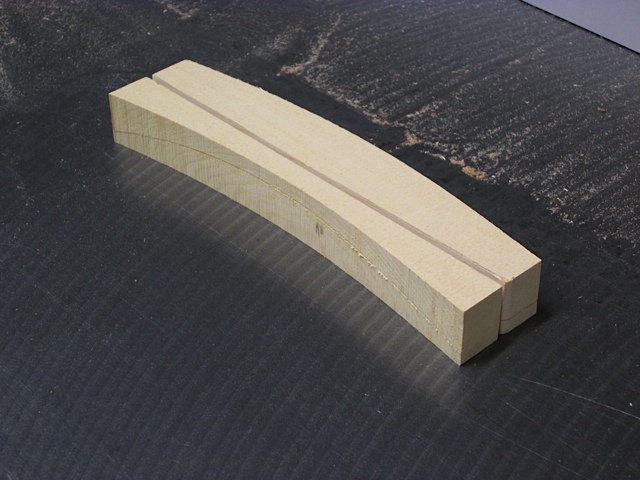
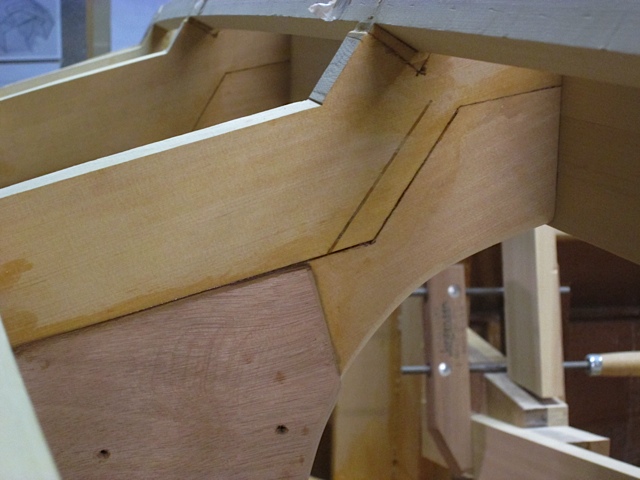
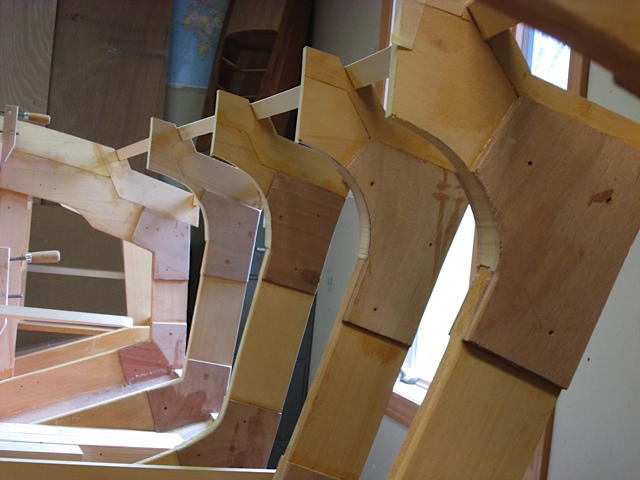
A continuing challenge is double curves, where the wood has to follow a beautifully rounded shape in both dimensions. For furniture and sculpture, is common to use a big enough piece of wood that you can simply cut away from two sides for both curved faces. This is how I made the transition curves of the stairway. But this process usually requires a piece of wood that is either too large or too heavy for a boat.

IMG_1212

Another way is to cut a curve in a block of wood and reverse the pieces for the first curve. Then the wood is rotated 90 degrees and a curve cut repeated, as shown below.

IMG_1163

IMG_1165

Except for small pieces on boats, this method is often too heavy or wastes too much wood. The inner curves are also hard to shape to a uniform curve.

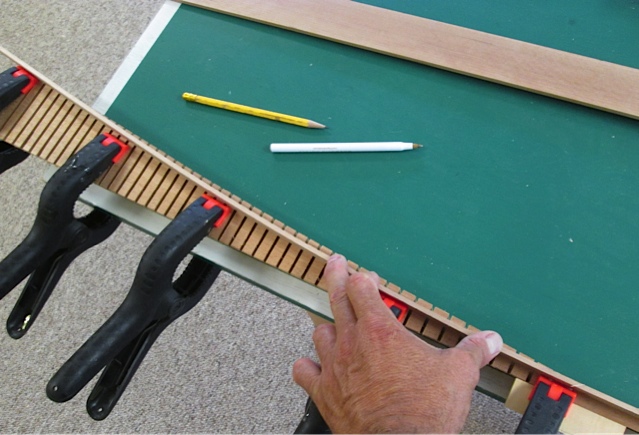
Another way of creating a double curve is to use saw kerfs on one face to allow the thin side to bend better. Then a curved profile can be cut in the other plane as shown below.

IMG_1167

IMG_1187

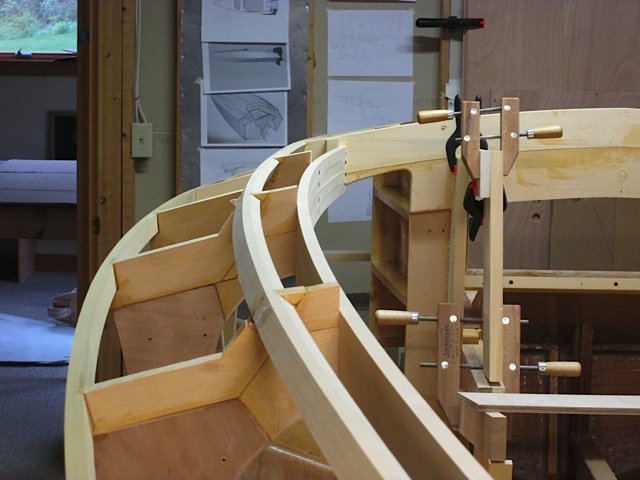
For some boat parts, the wood is steam bent. This is not my preferred method, as the steamed wood has to be formed over a pattern and sometimes takes irregular shapes. I like it better when the dry wood can be bent over the cross frames. If the grain is fairly straight, a long stringer will take a fair curve and establish the best lines.

IMG_1151

If a single piece of wood won’t bend well enough, it can be sliced into laminations and glued. This oak stringer below is made of three pieces epoxied together so it could bent bent and twisted also.

IMG_0187

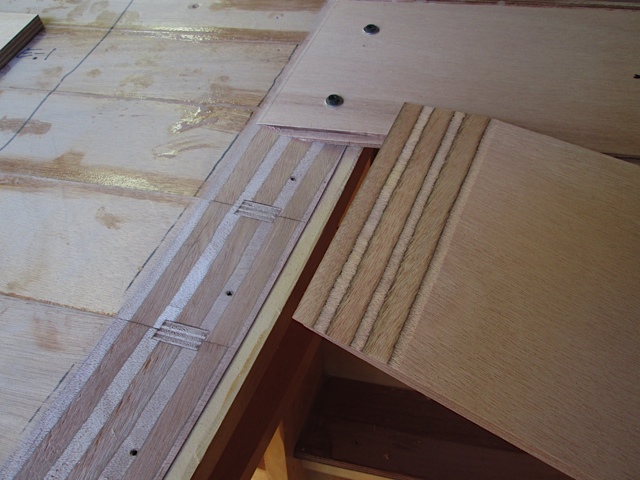
Another double curve area is on the hull surface. Even though my boat is designed with hard chines (line edges), some places, the surface curves in both dimensions. This was accomplished with tongue and groove plywood, thin enough to make the bend along its length and able to flex at the joint seam.

IMG_0337

A couple of weeks ago, my son-in-law LT Newland was here and helped epoxy the back seat framework and a moulding together. It was great to have some extra hands on a slippery, sticky task and for one day, it became not so slow.

IMG_1194

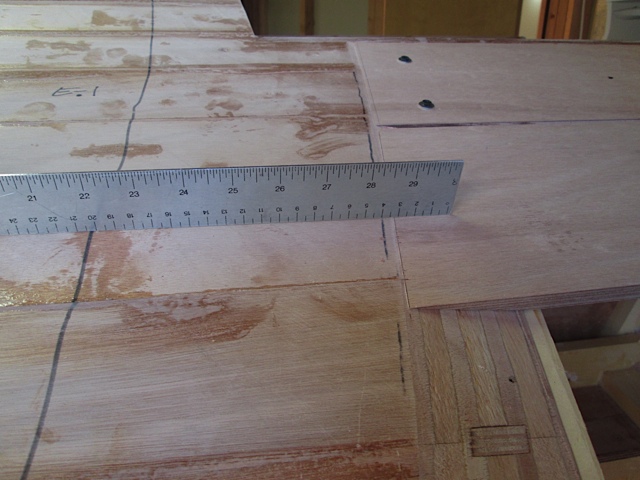
The current stage is putting the planking on the stern, using tongue and groove marine plywood for the base layer.

IMG_1209

It’s one thing to talk about a journey of a thousand miles beginning with one step, and another entirely to actually take the journey. The slow start of the boat building adventure turned into research delays, detours to figure out working methods, and much slower progress than I imagined. It now seems like a journey of two thousand miles.

For now, we just “Carry on.”

Second Chances

Another Saturday morning comes early.  The colors were not quite so brilliant as a couple of weeks ago, but the dawn is no less the start of a new day.  It might be the overflow of good days past, but it could be, just as easily, a new beginning, a page turned, or a second chance.

IMG_1140

Out the same east window where the sun rises is a Cleveland pear tree that I planted as a skinny sapling in 1996.  Around 2009, it apparently was hit by lightning and one of the large central branches was broken off.  The main trunk was split in two with a fist-sized crack at three feet off the ground and the conventional wisdom was to cut it down, or at least to cut one half away.  Instead, my son-in-law Jeff Reichanadter suggested that we try pulling the trunk parts back together.

We got some 2x4s and some pipe clamps and managed to close up the gap.  Then we drilled four holes with a long 3/8″ bit, that we tried to line up for two threaded 1/4″ rods.  It was close enough so we could hammer the rods into place, and we quickly got some large washers and double nuts tightened onto both ends of the rods.  When we sawed the rod ends off and took the clamps off, nothing happened so we gave each other high fives and went in.

Below is the tree up close, five years later:

IMG_1159
IMG_1098

Here is the happy tree this spring.  I guess you could call that a second chance.

IMG_1103

The boat has needed quite a few restarts and page turns also.  After the failure of the float test, we went back to the physics book.  That was described in the 9th post, “It’s Elementary, Watson.”  The progress of that story is shown below in the photos of rebuilding the cross frames.

They were originally constructed with dowel-reinforced corner joints and plywood supports, and then shaped according to the first design.  On the photo below you can see how the added piece made it around 3″ taller and was contour sanded for the best fit.

IMG_0758

Next the cross frames were cut to a new profile with the jigsaw and shaped smooth.

IMG_1063

In the case of the added piece below, it had its own second chance after it survived a wrong band saw cut.  After already having significant time into the piece, I decided to fill the cut with a thin piece of wood.  Then the shoulder cut need a second try with an added shim to make the stringer lay higher on that perfect line.

IMG_1147

Another of the repeats occurred to the cross frame shown below.  After I had installed the lower stringer, I had to recut the corner away and glue it again to allow the stringer to move in slightly.  Then it was right.

IMG_0197

It wouldn’t really be inappropriate for the whole boat to be named “Second Chance.”  But when the beauty of the corrected lines emerge, it becomes totally worth the extra effort.  Below are the reworked cross frames and the cockpit becoming defined by the side trim:

IMG_1068
IMG_1148

Here my grandsons, Clayton, Brayden, and Hudson, didn’t need the second try:

IMG_1121
IMG_1115
IMG_1112

But over the years, I did need second chances quite a few times.  One of those occasions, my sister Anne Crist pointed me to Joel 2:28.  It describes the devastation that the army of locusts did to the crops of Israel.  But God promised that if they repented, He would make up for the years the locusts had eaten.  He is still in the business of second chances for anyone who will seek Him with their whole heart.

The Next Step

Six o’clock on a Saturday morning in May is an unlikely time for me to be up with my wits about me, but it is one of those “wake up with an idea” days. I started by writing some notes for the blog entry on my yellow pad since the computer goes to sleep at 10:00 pm and does not wake up until at least 7:00 am.

There has to be some peaceful time that a screen does not beckon. If the screens don’t sleep, nobody sleeps. In an personal poll of kids at the office, I concluded that screens are the most common reason for daytime attention deficit. Now that’s disorder.

I planned to go back to sleep, but when I heard the birds singing, and looked out to see God’s salmon and slate backdrop, it seemed that an afternoon nap could correct any later energy deficiencies. Then the ball of fire lit up the small opening under the clouds. That was a bold welcome to the morning.

IMG_1056

It’s time to take a new step forward with the boat also, as the defining contour lines of the front end are now shaped and set in epoxy. This requires more creative planning, as I am at the end of my last list of things to do. For thinking, I sit on the old folding chair, which lost its back a few years ago, and has been useless for entertaining upstairs as long as I can remember. I have a yellow writing pad, and a piece of scrap plywood for a makeshift desk and start a new page for the instruction manual.

IMG_1083

Some of the big challenges to be done are the cockpit framing, dash and trim, interior epoxy and glass reinforcement to the bottom, creating the deck with the forward two-seat compartment, and building the transom side extensions. They each have their own special challenges, which are a little bit scary.

I am not sure which thing to do next, but in some ways it doesn’t matter. As the old Chinese proverb goes, “A journey of a thousand miles begins with a single step.” You can imagine that day 2, 3, or 28 or 137, for example, also begin with another single step.

Sometimes you just have to start moving, even if you’re not sure of the best path. There is learning in the mistakes, and many of my repeat parts served as patterns to improve on the next try. Just out of curiosity, I did a little figuring to see what step I am on. Here’s how the number of parts in the boat to date added up:

White Oak keel, runners, chine and transom                   22 parts
Yellow Cedar frames and stringers                                     130 parts
Marine plywood corner gussets and hull planks             168 parts
Dowels to reinforce cross frame joints                              170 parts

This 490 pieces does not include a couple of dozen failed first attempts. To complicate matters, only about 8 parts are square on all corners. Fortunately, I am not on someone else’s schedule, as you are never really lost if you’re not out of time.

So then, I decided to focus on finishing the transom framework. Each part has several angles needed to fit well on both ends. I start with oversized pieces, and gradually cut and sand to the best fit I can. Fortunately, epoxy is forgiving as it is good at gap filling, exceptionally strong and waterproof.

Below is the cardboard pattern to make the side of the motor well, and temporary stringers are extended back to create the lines of the stern.

IMG_0749

This photo shows the curved frames to support the side of the motor well.

IMG_1035

Below is a plywood side in place with a cardboard pattern to build the stern shape. The next photo shows the remaining extension frame parts.

IMG_1036

IMG_1037

Then, I notice the clutter of a group of tools getting in the way of progress. So for a few minutes, I clean and organize. For one thing, it is hard to make a mistake when you are cleaning up, and it can also be reflective.

IMG_1034

Most days, life is like that and needs a little clean up. Confession of sin is the broom for the soul.

The Big Test

I’ve taken some doozies in my life, from Mad Math Minutes, 3rd grade Spelling Bee, and Driver’s License to SAT, DAT (Dental Aptitude), Orthodontic Orals and Writtens, and Life After Mom Died.

Below is Mom as a college student on a boat headed for a study trip to Europe.

PICT0019

One of the most memorable was 29 years ago in my sophomore year of dental school. Oral Pathology was a required class, taught by Charles Tomich, who was an arrogant author of textbooks and a legend in his own mind. His primary motivator was fear and intimidation, with a little black box he kept at the front of the class. In it were note cards with each of our names, and every class he would pull one out to invite the student down to the front for a little chat.

For just a few minutes, what seemed like eternity, he would grill one of us on the pathology topic of the day. The math worked out that only one in three students would be called in the semester, and fortunately, I never did make it to the front. But it’s not like I slept through the first ten minutes of class, or ever missed one. That would have been intellectual and social suicide.

PICT0280

The inside report from the upper classmen was that you also didn’t want to miss his final exam because the only make-up was a personal oral exam with the General. As the semester came toward the end, I was studying hard to prepare for the Oral Path final. The night before, I was studying late and all of a sudden, I heard Jan say, “It broke,” and I was thinking, “Really it’s 2:00 am, maybe I can fix it tomorrow.”

Then she said, “My water broke and we have to get to the hospital.” Well, priorities are priorities, and we packed up to go. At Methodist Hospital in Indianapolis, she was admitted and we settled into the “count contractions and wait” routine. About 9:00 in the morning I was getting really antsy, but the baby did not seem to be in quite as big a rush.

I said that I needed to be gone for a couple of hours, so I hurried off. I got to the Dental School just before the 10:00 am test, and mentioned to Dr. Tomich that my wife was in labor. I asked if he would mind if I left the two-hour test early if I was finished. He agreed with a “We’ll see how that works out” kind of smile. Around 11:15, I packed up and left, just in time for the arrival of Amanda Jane.

PICT0052

PICT0070

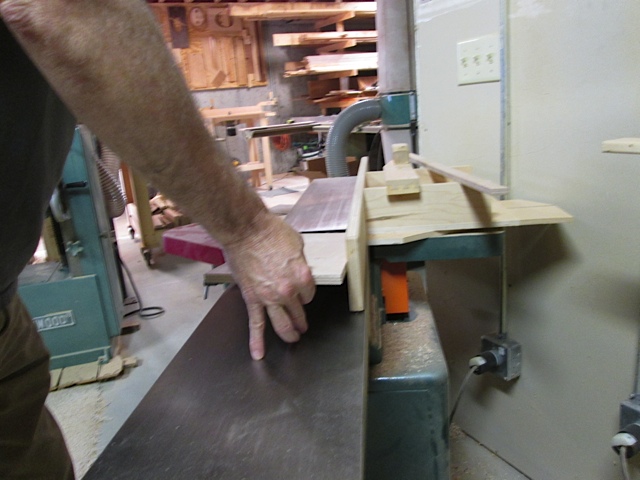
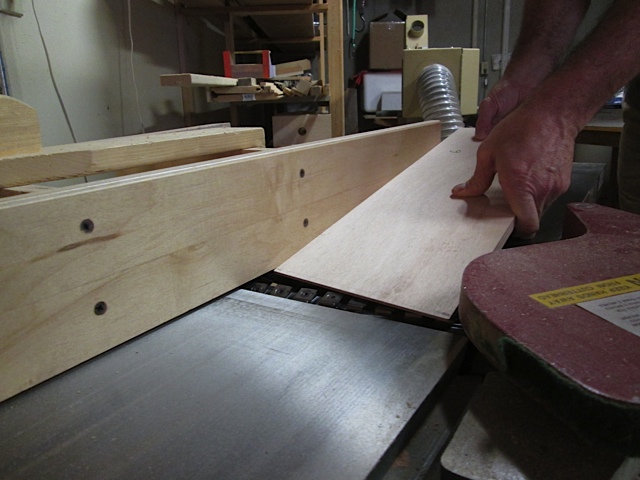
The most recent big test was the two long stringers that define the top edge and the deck moulding line. The first challenge was splicing two pieces to make a single 20 foot stringer, and making it as straight as possible to give the smoothest bending contour. I made repeated passes over the jointer in the high areas and eventually planed the opposite sides. Then I made the preliminary notches and attached the stringer with screws.

Inspector Jeff Margush came for a final check off, which turned into two hours with both of us looking from all the angles, making small adjustments and reevaluating.

IMG_0992

We never measured the angle of the trim moulding, but just clamped on two sticks to make sure it looked right and was perfectly symmetrical.

IMG_1029

A picture doesn’t fully show the 3D of the profile lines, but below is a photo of the shape that is developing.

IMG_1033

I don’t remember what grade I got on the Oral Path exam, and now it doesn’t seem so significant except as a part of our family memories. The Life After Mom Died test did turn out to be much harder to pass, but in it I learned an extremely valuable lesson. On the day she died, Mom reminded us one last time in a clear quiet way that all that really matters is your relationship with Jesus. That alone will get you through the Final.

Living on the Edge

A surface can be a thing of beauty, showing qualities like the texture of corduroy, the stripes of a zebra, the pattern of plaid, or color shading as the sun is going down over the North Dakota prairie valley.

Here are my sisters Anne and Jane with brother Joe.
IMG_0654

But it takes a line to really create focus, to draw attention, and define the situation. There are fine lines and bee lines, broad strokes and pin stripes, jet trails and meteors, power lines and skylines. There are frost lines and finish lines, guide lines and outlines, time lines and tag lines and lines not to cross. A line definitely lives on the edge.

Below you can see my grandson Clayton balancing on that fine line.

IMG_0833

Grandsons Brayden and Hudson are also living on the edge.
IMG_0521

My son Austin became an expert of the pickup line shortly after he canceled his membership in the “Bachelor to the Rapture” Club. Some of his favorites were: “Are you tired, because you have been running through my mind all day?” “Did you get hurt when you fell from heaven?” “Are you a parking ticket? Cause you have fine written all over you,” and “Kiss me if I am wrong, but is your name Matilda?”

We are just glad Kristina Freel didn’t think they were too corny, although she did successfully put an end to The Club for Austin.

OLYMPUS DIGITAL CAMERA

In the world of advertising, much effort goes into creating the sales power of just the right line. We now know where the beef is, how long a diamond is for, and what champions eat for breakfast. If you are old enough, you even remember what a little dab’ll do for ya’.

In the mass of entertainment chatter, there are some lines that stand alone and become memorable. Some classics include, “Toto, I don’t think we’re in Kansas anymore,” “Elementary, my dear Watson,” “Beam me up, Scotty,” and “Play it again, Sam.” A Pink Panther fan might remember, “That is not my dog!”

Design kind of lines are similar, defining the boundaries, taking center stage and drawing the eye along. Lines have beginnings and endings, go straight or follow curves with direction changes that might meander or be abrupt. They can communicate strength, balance, and drama, or can even evoke speed.

The boat building process is now in the stage where the line rules and the ruler takes second place, even though precise symmetry from left to right of the centerline is no longer spot on. The eye is the best measure of the perception of what is fair, or follows a regular curve. Possibly the most scrutinized line in a boat is the sheer line, the outline of the top side of the boat. It must be flow perfectly, without any area that looks flat or lumpy.

Most traditional sail or oar powered boats (that do not go fast enough to plane) have up-turned sheer lines at bow and stern. This is the best defense against the wind and waves. Slow-powered boats often are only turned up at the bow to face the waves forward. Contemporary boats often have more flat lines, with a downward curve at the stern.

But speed boats often have the reverse sheer curve, dropping at the bow slightly and the stern more dramatically. Their protection comes from planing higher on the water, and in this case, having more deck and a smaller set back cockpit.

IMG_0797

Close is good enough in horseshoes and hand grenades, but that won’t make the grade when inspector Jeff Margush comes and does his scrutiny. He will start at one end, eye level with the line, and track it slowly all the way to the other end and then repeat in reverse. It does not get glued with epoxy until the final “saw this, shim this, sand this” is done. The scale model I made did not really pass muster, but he let me go on for the purpose of float tests. Actually, I am the same way, and I appreciate his supplemental inspection and help.

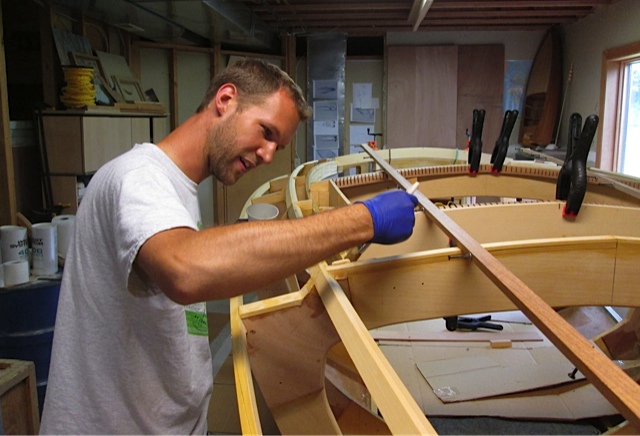
The following photos show the process of fitting the sheer stringer into the cross frames. Since all of the angles vary from square, they are best done at this step, with hand tools.

IMG_0816

IMG_0817

IMG_0825

I know my Liechty relatives would understand, since the perfection genes came through that side of the family.

PICT0575

Here is Uncle Russ and Aunt Marge just a few years back.

PICT0111-1

His son, my cousin Joe Liechty, and I also shared an affinity for finish lines in our distant past. This was the sectional meet at Memorial in 1973.

PICT0857

PICT0839

On the other hand, my nephew John Crist is just a bit confused at this point, not having been through home school yet. Eventually, he got the concept and became a master of the punch line.

PICT0055

The literary world is full of great lines also and these are just a few:

Two things are infinite: the universe and human stupidity; and I’m not sure about the universe. Albert Einstein

Be yourself, everyone else is already taken. Oscar Wilde

Don’t cry because its over, smile because it happened. Dr. Seuss

Go placidly among the noise and haste and remember what peace may be in silence. Desiderata

Truth stands the test of time, lies are soon exposed. Proverbs 12:19

Against the Wind

One of my most vivid memories happened when I was 10 years old.  We lived on Myers Avenue, a short one and a half block street, which stretched from the Dunlap Evangelical United Brethren Church where I went to kindergarten, to the woods in our back yard.  This day my family loaded up in our 1964 VW Bug, Dad driving, mom at co-pilot holding baby Joey, Anne, Margaret and me in the back seat, with Jane and Mary in the tiny compartment in front of the rear window.  At that time, car seats were the original seats that came in the car when you bought it.  We filled them up.

We were going to Belmont Mennonite Church that Sunday evening to see families like the Boyts, Ropps, Bontragers, Chupps, and Detwilers who we also joined to support the famous Softball Team.

PICT0358

This time though, we were watching the sky as it grew gray and turbulent.  In an uncharacteristic move, Dad turned around after crossing the railroad tracks in Dunlap, and headed back home.  He seemed to sense trouble in the air, and told Mom to take the other children inside and go to the basement.  For some reason, I tagged along with Dad out to the hill side where we could see the darkening southwestern sky.  Then for a short time, a quiet stillness settled in around us, with an eerie green glow.

The calm was soon broken by a whisper of wind, that gradually grew in intensity and volume.  Then in the western sky, the black tumbling clouds formed into a V-shape reaching to the horizon.  That’s when Dad said, “Let’s get in the house!”   We ran in, and the door slammed behind us, with the noise soon rising to the level of a jet engine.  The air was full of flying debris as the twister passed by two blocks away, but left our house generally unharmed.

PICT0388
PICT0383

The wind is a powerful force.  The Palm Sunday Tornado was not so kind to the Sunnyside neighborhood, as many homes there were wiped off their foundations, cars destroyed and trees uprooted.  The pick-up basketball game we played the night before at the Concord Junior High tennis court with my friends Steve and Mike Forsythe, would be the last, as Steve died in that storm on April 11, 1965.

PICT0382

On the other hand, the wind can be a comforting friend.  When a hot summer day is stifling, and the sweat keeps dripping, a gentle breeze is most welcome.  The same is true when on my bike rides, I would finally turn from the struggle against the wind, and become a human sail.  This was such a compelling feeling, that I invited my daughters to join me on a “One-Way-With-the-Wind” bike ride.  We talked my wife Jan into coming to pick us up at the end of our journey.

PICT0064

We tried to pick a windy day in the fall, for six or eight times in the growing up years.  The trips began by going to the end of the driveway, putting up a wet finger, or throwing a leaf up in the air, and following it.  Every corner, it was the same, cruising down the path of least resistance.  Many times, we would be peddling with little effort, in quiet, about the speed of the wind.

PICT0072
PICT0078

Destinations for the day trips included Plymouth, Shipshewana, Mendon, Michigan, etc.  When we got “there,” which meant we were tired of siting on bikes and we happened to find a nice restaurant, we would go inside and call for Jan to come.  These were pre-cell phone days, and allowed the unhurried waiting of an hour or so to discuss the day.  Then we would eat together, load up the bikes and head home, retracing the route and checking the mileage.

PICT0550

Sometimes, as a family, we had no one to pick us up but we went anyway.

PICT1115

Other times, the wind is just a mild annoyance, like the afternoon I took the sailboat out at Little Eden Camp, and had to tack a headwind home which made me late for supper.  On our travels, the wind seemed to have more influence on our old Toyota van than the steering wheel, and it made paddling across that Wilderness lake feel endless.

Some days it’s like there is a headwind in the shop.  Today I wanted to finish the framework of the back seat while it is still easy to reach in through the side.  Unfortunately, the rear cross frame needed to be reinforced first, and that piece logically should tee into the cockpit side moulding.  But to really get the moulding lines to look good related to the top edge (sheer) stringer, I need to have the outside edge in place first.

So, the side stringer will be an obstacle making construction more difficult, but it leads to the best result in the end. Some days, the forward progress is just figuring out what to do next, and creating a list of things to do.

IMG_0802

Before starting the side, I decided to do one last detail to the back seat, routing the angle for the seat bottom.  I set the roller bearing cutter to follow the angle pattern, and routed two passes, getting most of the way through.  To finish off, I used my best Japanese hand chisel and made the first cut.  This is the peaceful time, when the ear protectors and the mask come off, and the dust collector goes silent.  The first cut produced a curl so captivating, I had to leave it while I made some more of them.

IMG_0792

It was like fresh wind in the sails.  Below are Austin, and his cousins Andy, Alyssa and Luke.

sailing

Against the wind
I’m still running against the wind
I’m older now but still running
Against the wind

– Pete Seger 1980

The value of a prize and the satisfaction of its accomplishment is tied directly to the effort required and the obstacles overcome.  Carry on.

Waiting for the World to Change

Dedicated to the FBI (Fixers, Builders and Instructor) of River Oaks Community Church.
We recently returned from a mission trip to Children’s Lifeline in Haiti. That kind of an experience can have a way of taking over the top shelf in your mind at least for awhile, and I thought it might be a good blog topic. When I mentioned this to Sue Shetler, who got Lori Abney’s well-deserved nomination for employee of the day on Monday, she expressed the valid concern that the topic did not have enough to do with building a boat.
This caused a moment of painful reflection about the fact that the boat is moving so slow as to not have enough interesting material for a weekly commentary. Then I thought, with a blog title like Building Redemption, maybe I will just carry on. Look for boats along the way!

Our group was mostly comprised of guys from the River Oaks Community Church FBI (Fixers, Builders and Instructors). International travel can be difficult, and this was no exception as one passport was not accepted because of “water damage.” This caused two of our group to be left behind. One of the international rookies, Rick Frey, almost got lost going through security, Jake Showalter had to prove the beeping was not caused by a weapon in his hip and John Geisler had a frantic search for his passport, which was ultimately successful. Jan and I gave an unintended “gift” of $150 in a baggage swap to a random Haitian “TSA” agent. In Haiti, this must stand for “Thieves, Swindlers & Associates”.

Somewhere, John Peeble’s iPad got up and took an unsupervised walk away (refer to “TSA”, above), and a lunch delay just about left a few more of us in Miami. After all, most of us besides Jon Kauffman, do have figures we have to maintain, and who could be sure that the rice and beans coming up would sustain us. Eventually we were united in the friendly skies of a One-World American Alliance airplane. Just another day at the office. Below are all of the FBI guys at the airport.

IMG_2001

It was only a three hour flight from Chicago to Miami, and two hours more to Port Au Prince. We ended up in our same time zone, but no mistaking that it was a world away. From Indiana to Haiti in February 2014, there was nearly one hundred degrees of temperature swing. English is not so helpful there, as Creole is a curious mix of French and as many languages as the places people in Haiti came from. These journeys were unfortunately often without their permission, and now the trap of poverty makes it nearly impossible to leave.

IMG_2354

Below are the types of boats desperate refugees have taken on ocean journeys.

IMG_0291

IMG_1984

Even my own children were trying to escape on a raft.

PICT0435

We were given the task to be builders of the wall for a new orphanage, but it turns out the first test occurred walking to work. As we left the mission compound into the village on the way to the work site, we were mobbed by children who wanted to hold a hand and come along. Of course, they really wanted to know if our hearts were as big as our hands. Here is Wayne Loucks’ hand held fast.

IMG_1633

My first clue that this test would be passed was when Jake Showalter had told about his last trip with a few tears in his eyes. The big heart of our Heavenly Father was obvious in each of the men.

Here is Jake Showalter driving with Daniel.

IMG_1605

Thumbs up for Mike Sherer, John Peebles, Wayne Loucks, Mike Gingerich, Rick Frey and the children.

IMG_1636

John Geisler with two new friends.

IMG_1770

Rick Frey with his sponsored daughter.

IMG_1800

Mike Gingerich has his lap full.

IMG_1742Five boys and fun with Jon Kauffman.

IMG_1606

John Peebles and my sister Anne Crist at the work site with three boys.

IMG_1500

Me with a boy on my shoulder at an orphanage.

IMG_1709

The FBI group with the ones that came along.

IMG_1966

The next test was figuring out what to do at the job site. Among us were all sorts of craftsmen, an engineer, business and organizational leaders, managers, and possibly the most complete collection of Fix-it knowledge ever assembled for an international trip. We even had a professional mason, which fueled our aspirations of tackling a big project with the will to “get ‘er done.”

But the FBI are men of prayer, and go forward with humility. Mike Gingerich, the brick mason, saw that the Haitian men were already started and he respected their right and responsibility to take ownership of their project. What they needed was for us to move some huge piles of rock. We got in a line and passed them along, to the places where Joubert, Oskah, Wohb, Pierre, Edmond, Djimi, William, Imaniel etc. were working. Here are some of the crew.

IMG_1765

Some of us began mixing mortar, carrying it to the masons, and bringing them rocks for the wall. Over a day or so, the respect of working hard shoulder to shoulder began to be felt, and communication became more expressive. It started with stares, pointing and other hand signals, and moved on to approving nods, smiles and the occasional fist bump for exceptional service. This might be for bringing an extra bucket of mud, a big rock, or finding just the perfect size rock for the next spot.

IMG_1621

In this process, and without much verbal exchange, we became brothers. By the week’s end, we had visited some of their houses, and shared their concerns for their families. We went to Haiti to build a wall and instead we built a bridge.

One man told me recently of a get rich quick scheme that I was not able to dispute. He said he went to Haiti years ago as a young man, and he has been rich ever since. It kinda makes my current boat delays seem like not so much of a problem. Below you can see the back end extensions and the sheer and trim lines developing.

IMG_0755

Wayne Loucks summed the trip up well when he said, “We changed Haiti a little. Haiti changed us a lot.”

“Whatever you have done for the least of these you have done unto me.” Mt. 25:40