
If I had planned ahead better, I would have installed the Ignition and Emergency Switches before the dash was permanently mounted in place. But I did not. So I had to devise a method of fitting them without drilling access from the back side.
The first problem was that the rectangular switch plate did not fit on the dash below the other gauges. It was too large and squarish to be pleasing esthetically with all of the other round bases.
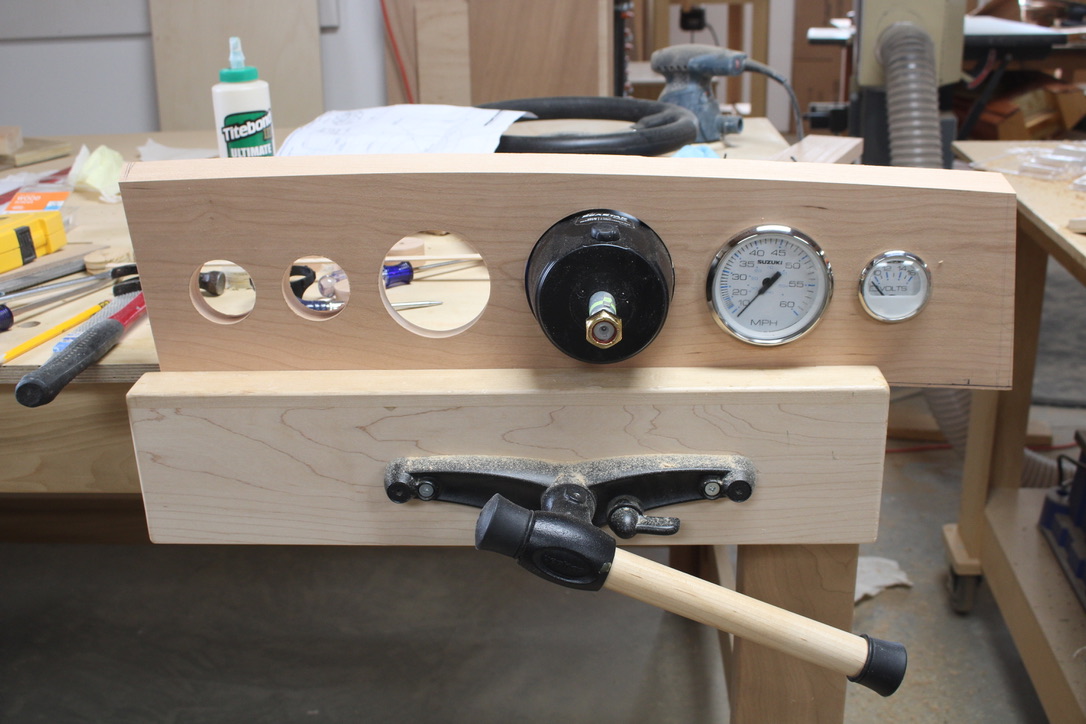
The second problem was that gauges and switches usually need a larger hole on the back side of the dash and a smaller opening in the front for the dial and bezel rim to cover. The dash was already fixed, and I couldn’t get access to the back side.
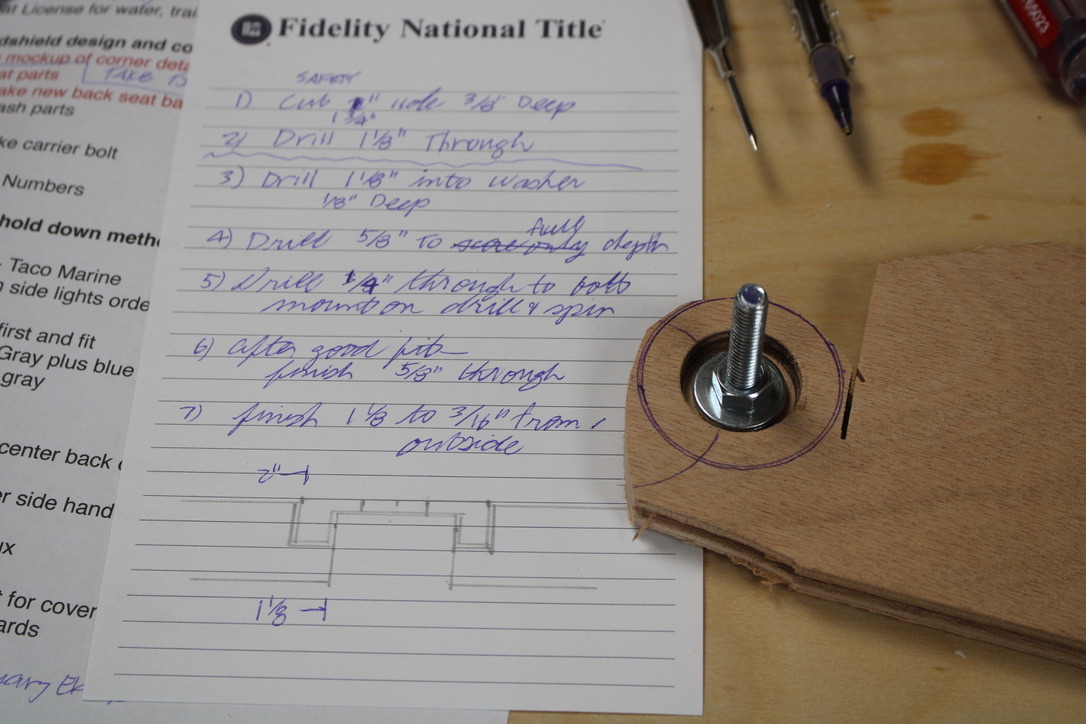
So, I needed to make a wood washer to insert from the outside with the shape drawn on the paper below. The paper lists a sequence that was supposed to get me successfully through the process. That may not have been the final list!
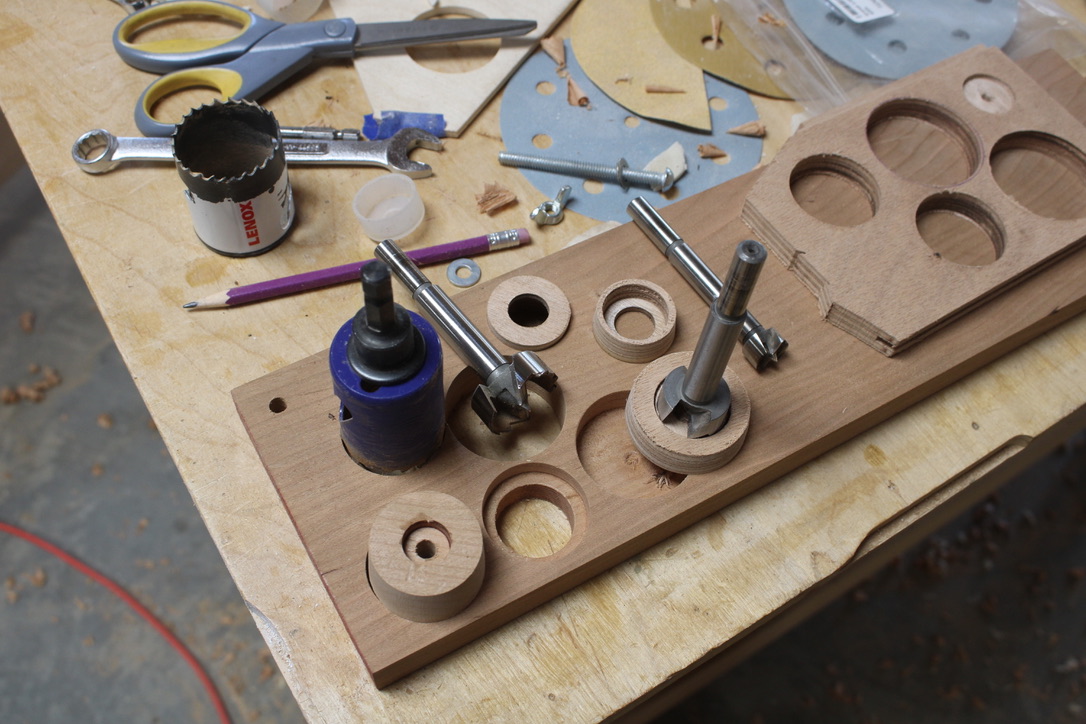
Here is some experimenting, with hole saws, Forstner bits, and a bit of tune up sanding. The two wood washers getting close are between the blue hole saw and the standing Forstner bit. One is laying on the surface and the other is partly pressed into a suitable hole.
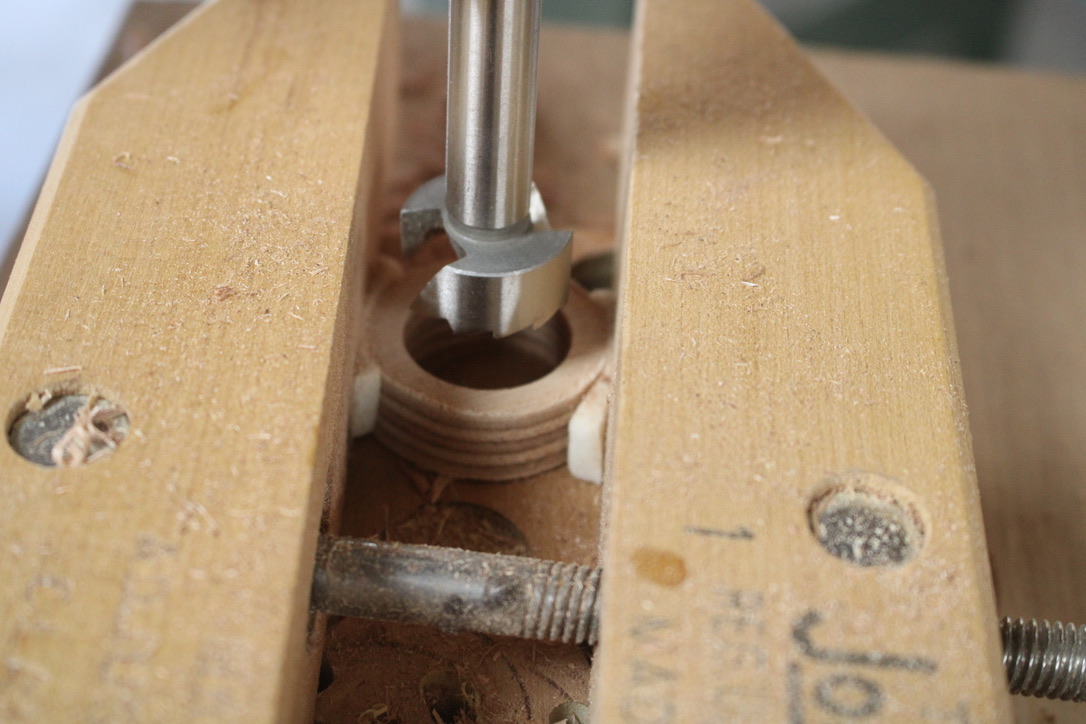
A last step in the process was finishing the middle hole with the Forstner bit, and finding a way to hold it for drilling on the press.
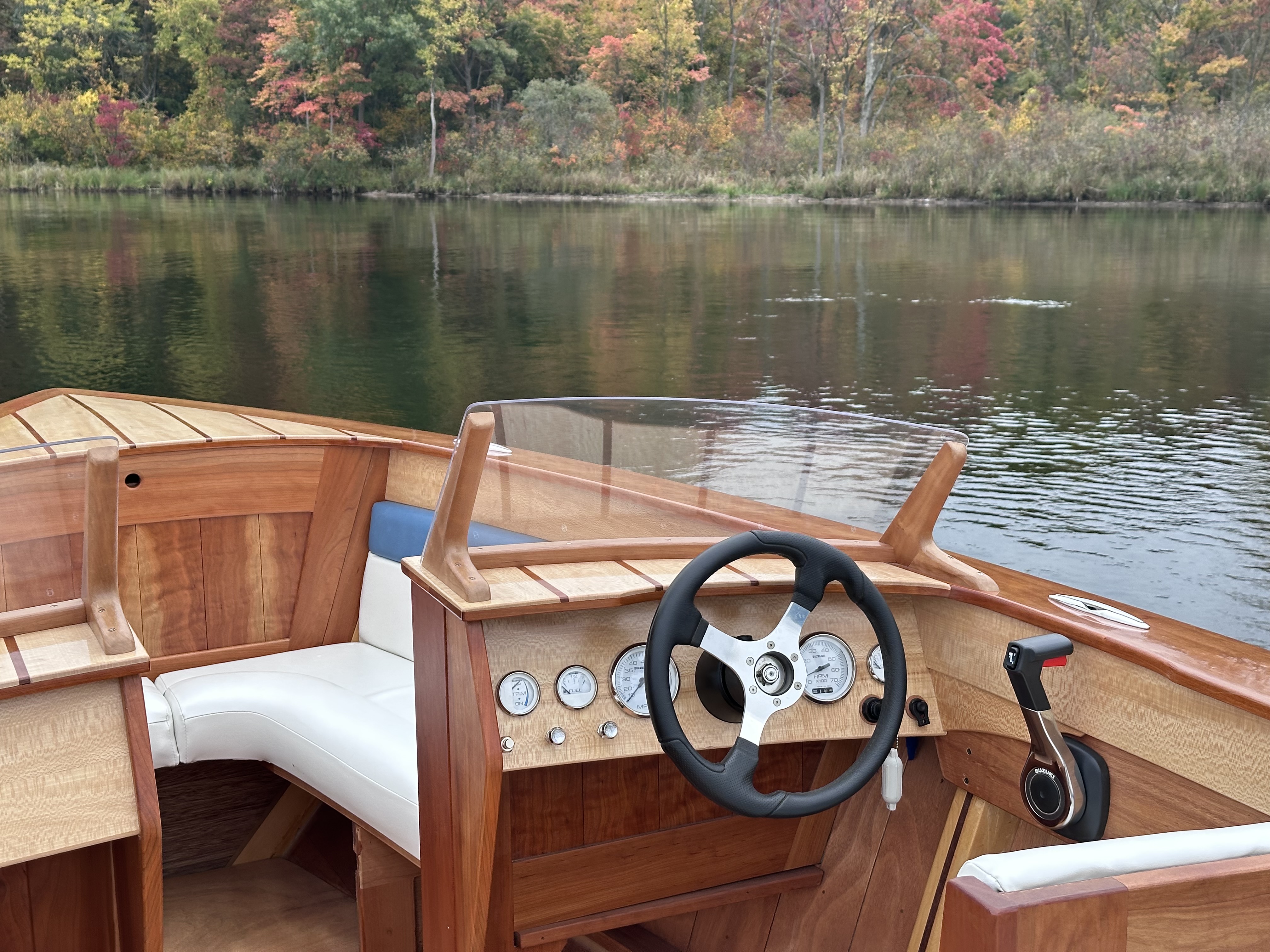
It eventually worked out, after more hours than should have been spent. Below is the dash on a pretty day in the fall in southern Michigan. And that is book matched Cherry in the foward panel.
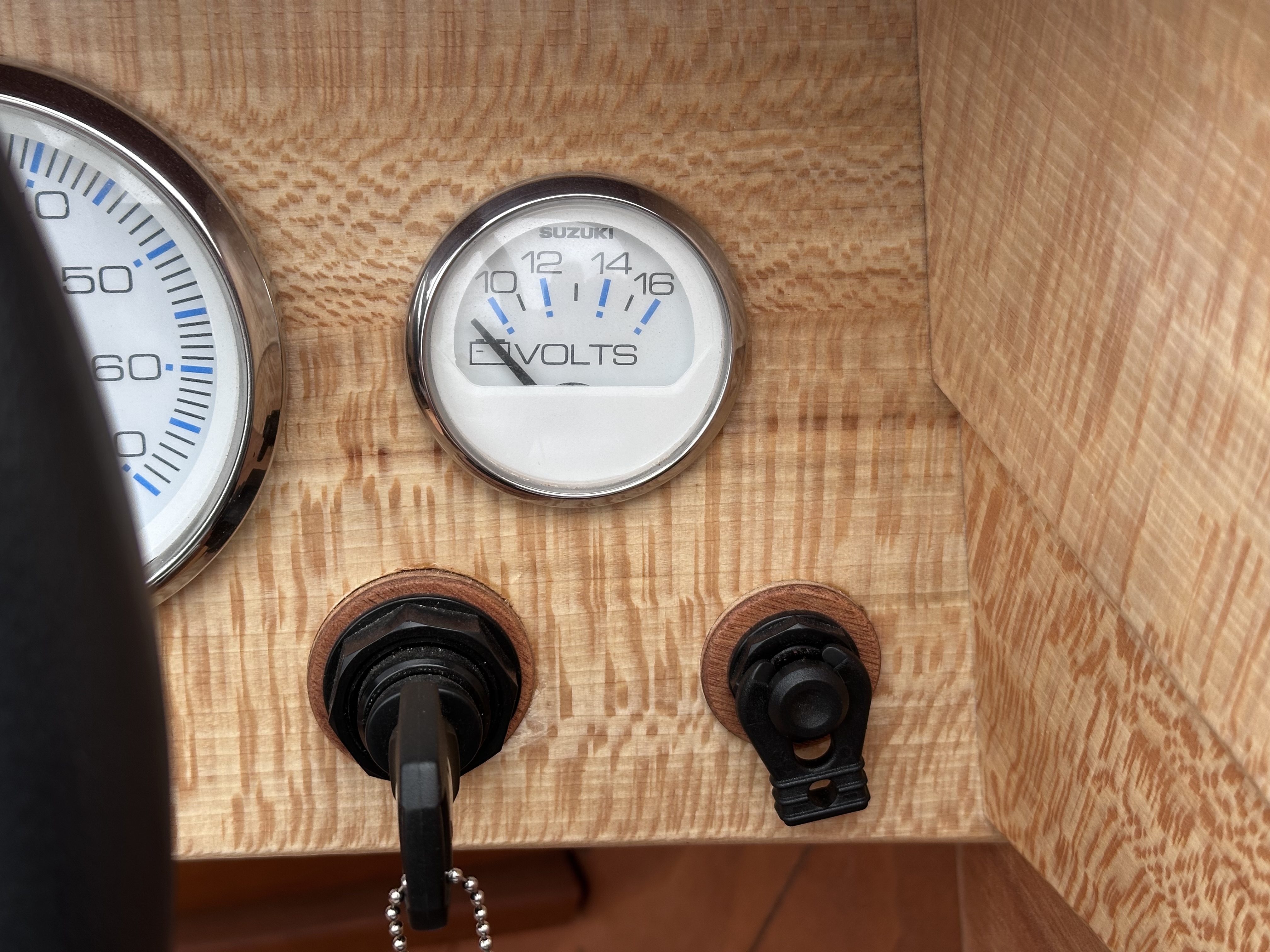
Here is a detail photo of the end result, with the washers holding the rims of the switches, and glued into the dash. Incidentally, they were made of Okume marine plywood for strength in all directions, and blend just fine with the Sycamore.
A boat is full of surprises, and fortunately by now, I am forgetting many of the detours that took so much time and creative energy to solve. I am finishing three years work on this boat, averaging 10-15 hours a week, which is around two thousand hours. . .

