Tough Transom

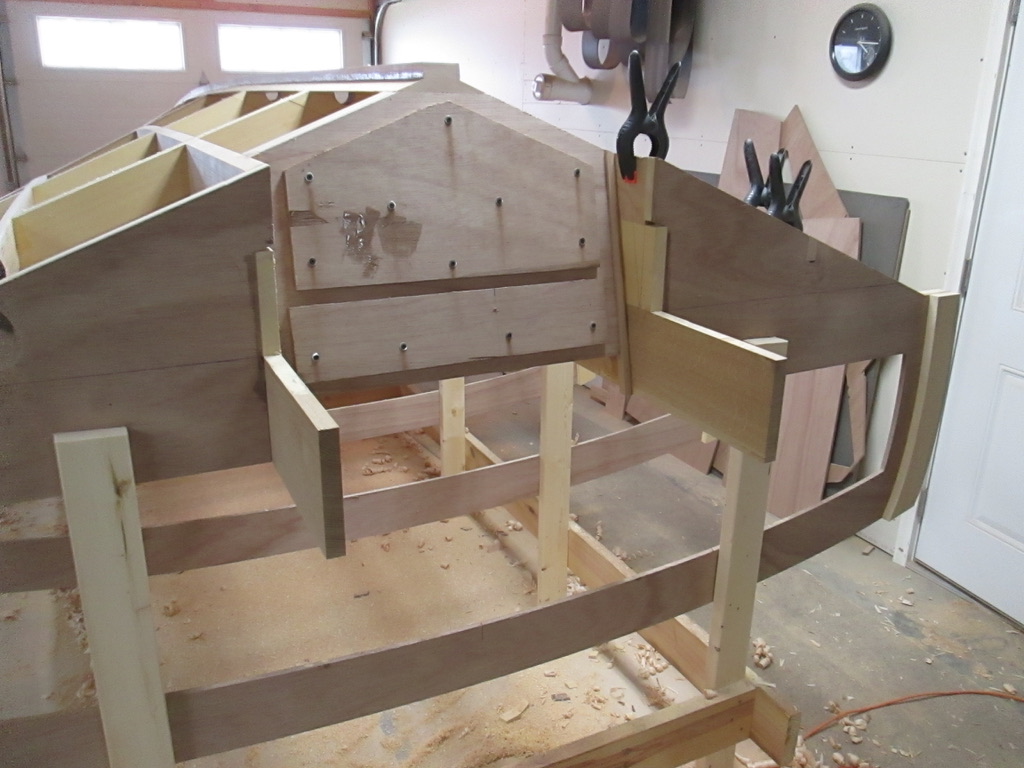
The next up assignment is making sure the transom is strong enough to hold a 500 pound outboard motor under working conditions. That also means all of the railroad crossings and the normal Indiana roads. The transom itself (taped off) was made of 5 parts of 1/2″ marine plywood, laminated with epoxy.
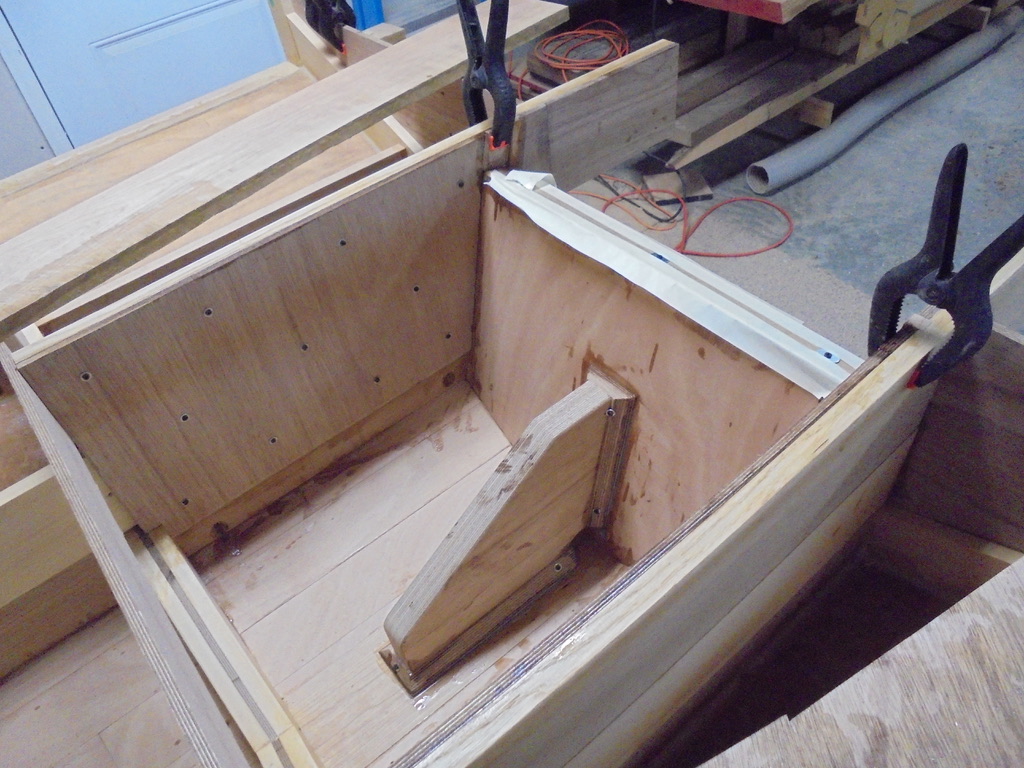
Next, an inside corner brace was added, made of four laminations of marine plywood. The outer trim edge was dowelled and epoxied to the core.

Then I epoxied the triangle to the boat keel and the transom. On the surface, I added fiberglass fabric, embedded in more epoxy, which connected it all together with much more strength. Notice the gray corners which are epoxy fillets, for even more durability.

Some times I try to imagine what kind of stress or blow could actually do harm the the part I am working on. I would love to see some strength testing on this piece of work, but rather than waste the time and wood, I go on with confidence. The last boat is seven years and still floating . . .
Wooden Boat Transom

The transom leads the pack of all of the engineering challenges presented in boat building. In my case, it will need to be strong enough to hold the weight of a 500 plus pound outboard motor, with all of the rotational forces of acceleration and turning. Last, but not least, the transom will need to stay intact in the bounce of choppy water, and the serious bumps from road pot holes and railroad crossings.

The keel stem and long boards are looking strong enough to bear up to normal water pressure forces and the forward pressure from the motor. Next, in order to model where the transom would go, I cut a pattern out of cardboard to visually evaluate the best place. The tip approximates the mounting angle for an outboard motor.

I picked a location inside the first cross frame and screwed a slat at the recommended 13 degree angle to act as a guide for the router. Then, I routed a 3/16″ deep groove, 3/4″ wide for the end blocks on both sides. Much greater strength is gained with a cross grain stop.

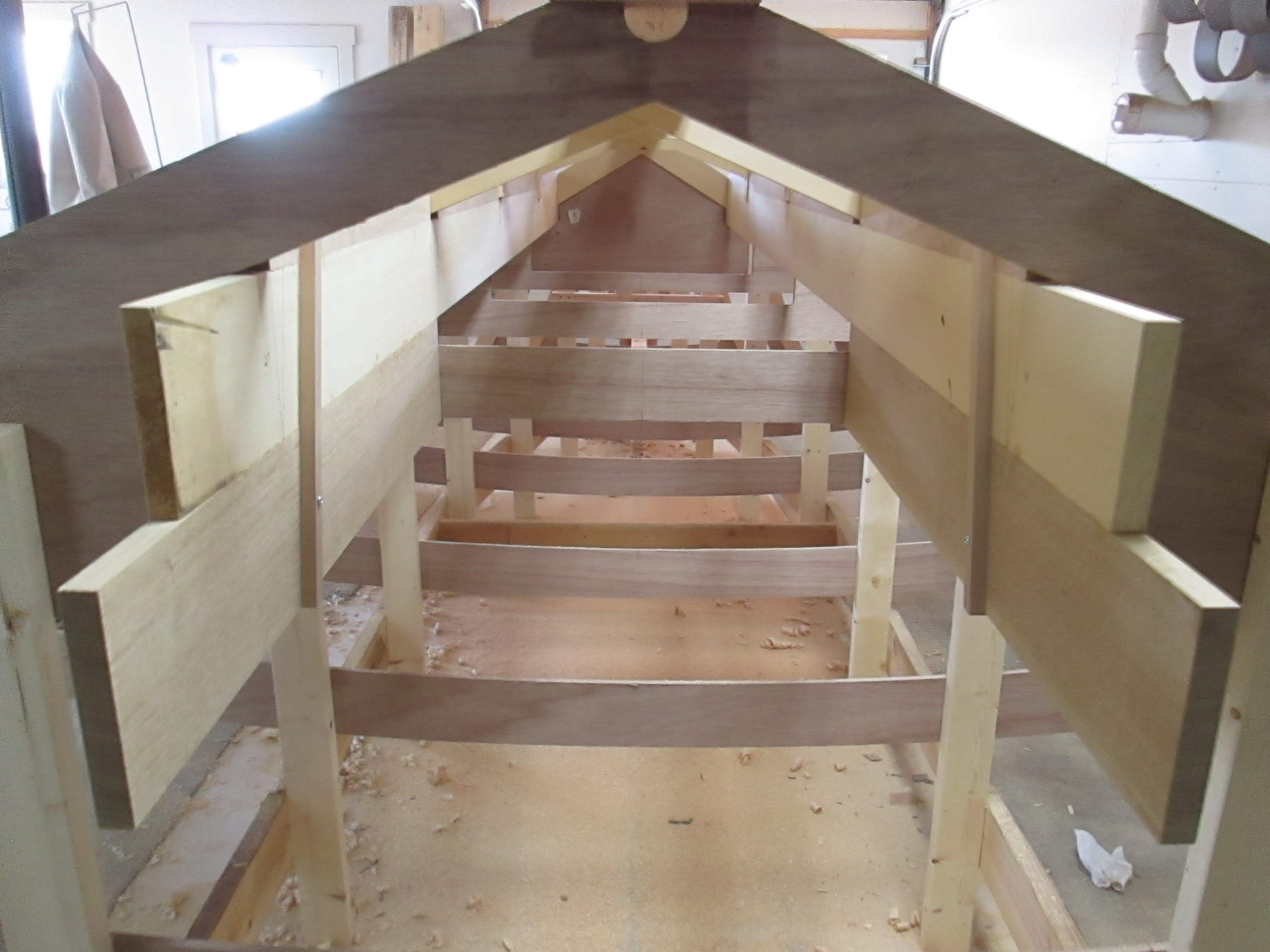
Here are the stop blocks in place, and a temporary view through the sub floor transom and fuel tank space.

The transom was laminated from four pieces of 1/2″ marine plywood with epoxy. One more 1/2″ ply will be added to make a strong motor mount plate.

Once the transom blank was adjusted to fit the keel, and inside the runners, it was epoxied in place, against the cross stops.

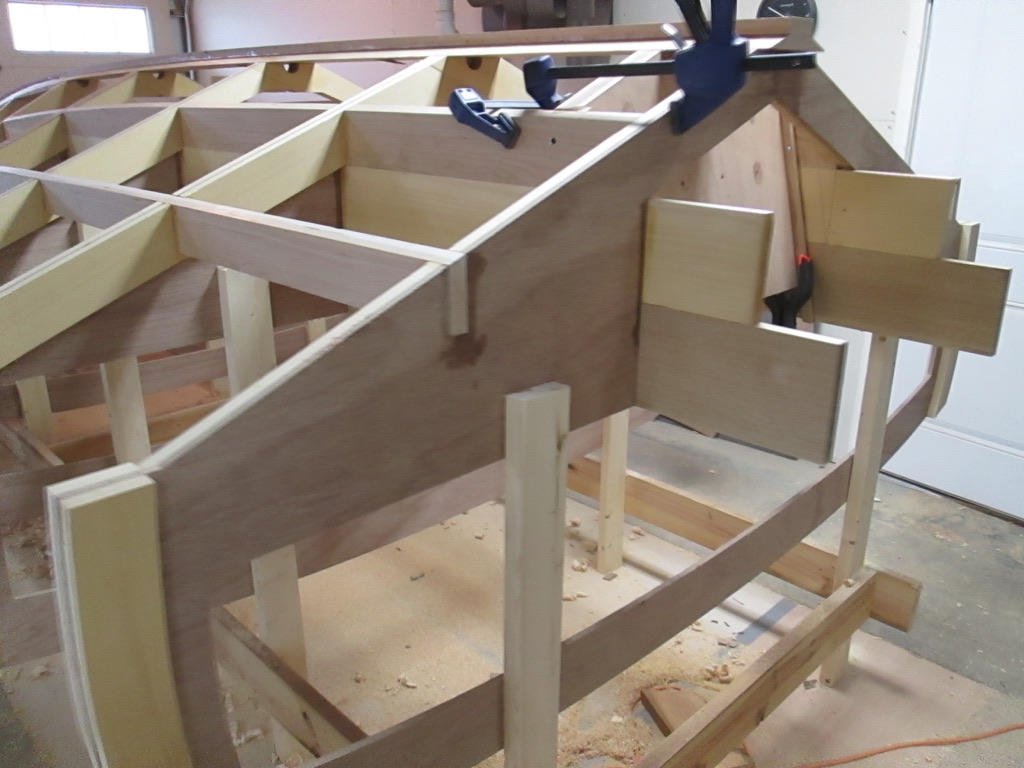
Below, the keel has been cut shorter, and the first frame partly cut out to reveal the motor mount area. The scrap pieces are temporarily used on the transom help to spread pressure evenly as the fifth and last lamination is epoxied in place.

The rest of the stern will be built out when the boat is turned over, adding more transom support structure, but that’s for another day.