Uncategorized
The Next Step
Six o’clock on a Saturday morning in May is an unlikely time for me to be up with my wits about me, but it is one of those “wake up with an idea” days. I started by writing some notes for the blog entry on my yellow pad since the computer goes to sleep at 10:00 pm and does not wake up until at least 7:00 am.
There has to be some peaceful time that a screen does not beckon. If the screens don’t sleep, nobody sleeps. In an personal poll of kids at the office, I concluded that screens are the most common reason for daytime attention deficit. Now that’s disorder.
I planned to go back to sleep, but when I heard the birds singing, and looked out to see God’s salmon and slate backdrop, it seemed that an afternoon nap could correct any later energy deficiencies. Then the ball of fire lit up the small opening under the clouds. That was a bold welcome to the morning.
It’s time to take a new step forward with the boat also, as the defining contour lines of the front end are now shaped and set in epoxy. This requires more creative planning, as I am at the end of my last list of things to do. For thinking, I sit on the old folding chair, which lost its back a few years ago, and has been useless for entertaining upstairs as long as I can remember. I have a yellow writing pad, and a piece of scrap plywood for a makeshift desk and start a new page for the instruction manual.
Some of the big challenges to be done are the cockpit framing, dash and trim, interior epoxy and glass reinforcement to the bottom, creating the deck with the forward two-seat compartment, and building the transom side extensions. They each have their own special challenges, which are a little bit scary.
I am not sure which thing to do next, but in some ways it doesn’t matter. As the old Chinese proverb goes, “A journey of a thousand miles begins with a single step.” You can imagine that day 2, 3, or 28 or 137, for example, also begin with another single step.
Sometimes you just have to start moving, even if you’re not sure of the best path. There is learning in the mistakes, and many of my repeat parts served as patterns to improve on the next try. Just out of curiosity, I did a little figuring to see what step I am on. Here’s how the number of parts in the boat to date added up:
White Oak keel, runners, chine and transom 22 parts
Yellow Cedar frames and stringers 130 parts
Marine plywood corner gussets and hull planks 168 parts
Dowels to reinforce cross frame joints 170 parts
This 490 pieces does not include a couple of dozen failed first attempts. To complicate matters, only about 8 parts are square on all corners. Fortunately, I am not on someone else’s schedule, as you are never really lost if you’re not out of time.
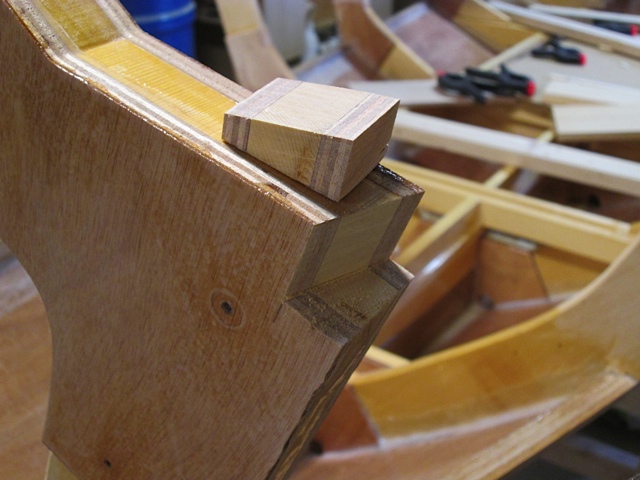
So then, I decided to focus on finishing the transom framework. Each part has several angles needed to fit well on both ends. I start with oversized pieces, and gradually cut and sand to the best fit I can. Fortunately, epoxy is forgiving as it is good at gap filling, exceptionally strong and waterproof.
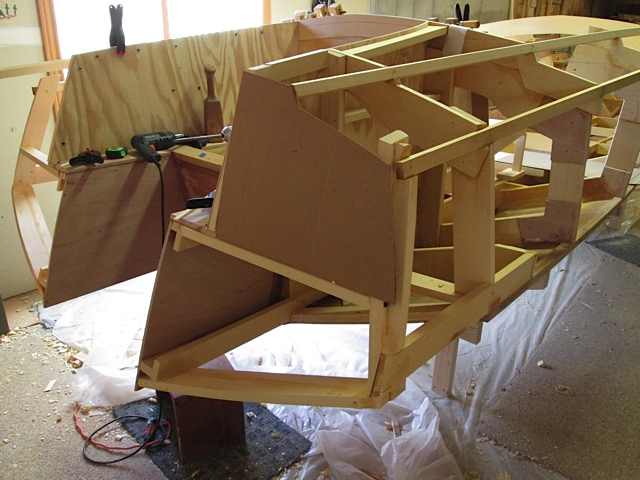
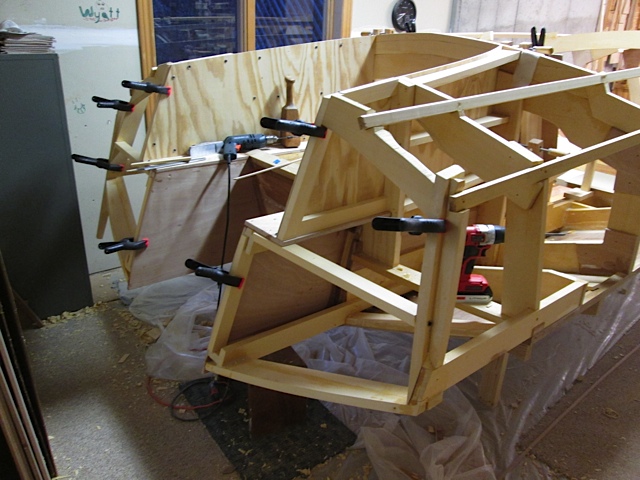
Below is the cardboard pattern to make the side of the motor well, and temporary stringers are extended back to create the lines of the stern.
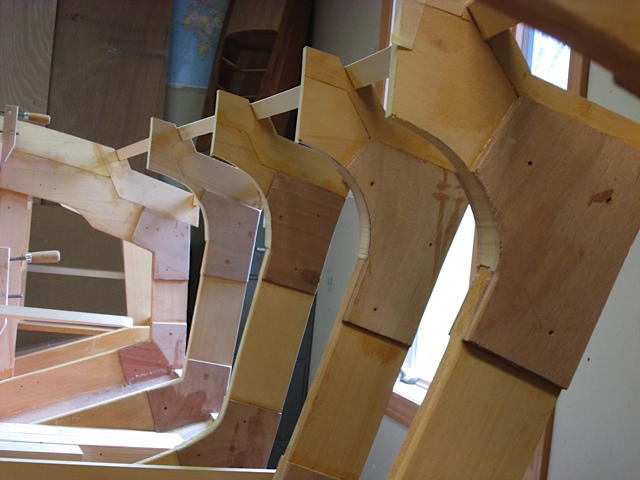
This photo shows the curved frames to support the side of the motor well.
Below is a plywood side in place with a cardboard pattern to build the stern shape. The next photo shows the remaining extension frame parts.
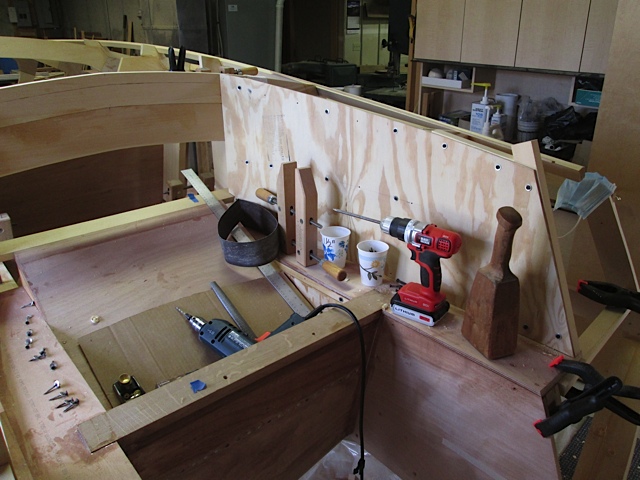
Then, I notice the clutter of a group of tools getting in the way of progress. So for a few minutes, I clean and organize. For one thing, it is hard to make a mistake when you are cleaning up, and it can also be reflective.
Most days, life is like that and needs a little clean up. Confession of sin is the broom for the soul.
The Big Test
I’ve taken some doozies in my life, from Mad Math Minutes, 3rd grade Spelling Bee, and Driver’s License to SAT, DAT (Dental Aptitude), Orthodontic Orals and Writtens, and Life After Mom Died.
Below is Mom as a college student on a boat headed for a study trip to Europe.
One of the most memorable was 29 years ago in my sophomore year of dental school. Oral Pathology was a required class, taught by Charles Tomich, who was an arrogant author of textbooks and a legend in his own mind. His primary motivator was fear and intimidation, with a little black box he kept at the front of the class. In it were note cards with each of our names, and every class he would pull one out to invite the student down to the front for a little chat.
For just a few minutes, what seemed like eternity, he would grill one of us on the pathology topic of the day. The math worked out that only one in three students would be called in the semester, and fortunately, I never did make it to the front. But it’s not like I slept through the first ten minutes of class, or ever missed one. That would have been intellectual and social suicide.
The inside report from the upper classmen was that you also didn’t want to miss his final exam because the only make-up was a personal oral exam with the General. As the semester came toward the end, I was studying hard to prepare for the Oral Path final. The night before, I was studying late and all of a sudden, I heard Jan say, “It broke,” and I was thinking, “Really it’s 2:00 am, maybe I can fix it tomorrow.”
Then she said, “My water broke and we have to get to the hospital.” Well, priorities are priorities, and we packed up to go. At Methodist Hospital in Indianapolis, she was admitted and we settled into the “count contractions and wait” routine. About 9:00 in the morning I was getting really antsy, but the baby did not seem to be in quite as big a rush.
I said that I needed to be gone for a couple of hours, so I hurried off. I got to the Dental School just before the 10:00 am test, and mentioned to Dr. Tomich that my wife was in labor. I asked if he would mind if I left the two-hour test early if I was finished. He agreed with a “We’ll see how that works out” kind of smile. Around 11:15, I packed up and left, just in time for the arrival of Amanda Jane.
The most recent big test was the two long stringers that define the top edge and the deck moulding line. The first challenge was splicing two pieces to make a single 20 foot stringer, and making it as straight as possible to give the smoothest bending contour. I made repeated passes over the jointer in the high areas and eventually planed the opposite sides. Then I made the preliminary notches and attached the stringer with screws.
Inspector Jeff Margush came for a final check off, which turned into two hours with both of us looking from all the angles, making small adjustments and reevaluating.
We never measured the angle of the trim moulding, but just clamped on two sticks to make sure it looked right and was perfectly symmetrical.
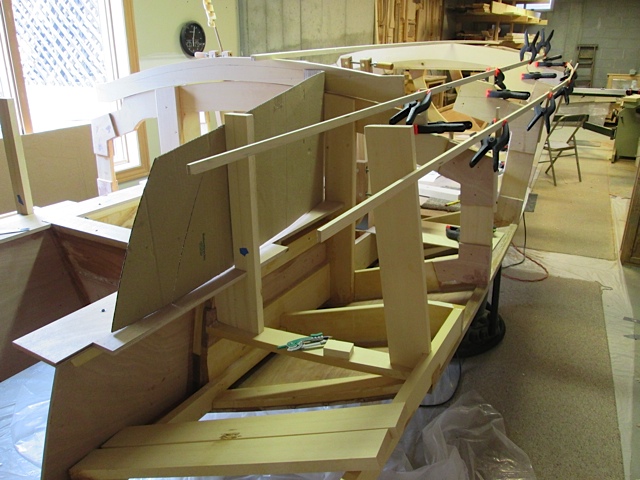
A picture doesn’t fully show the 3D of the profile lines, but below is a photo of the shape that is developing.
I don’t remember what grade I got on the Oral Path exam, and now it doesn’t seem so significant except as a part of our family memories. The Life After Mom Died test did turn out to be much harder to pass, but in it I learned an extremely valuable lesson. On the day she died, Mom reminded us one last time in a clear quiet way that all that really matters is your relationship with Jesus. That alone will get you through the Final.
Living on the Edge
A surface can be a thing of beauty, showing qualities like the texture of corduroy, the stripes of a zebra, the pattern of plaid, or color shading as the sun is going down over the North Dakota prairie valley.
Here are my sisters Anne and Jane with brother Joe.

But it takes a line to really create focus, to draw attention, and define the situation. There are fine lines and bee lines, broad strokes and pin stripes, jet trails and meteors, power lines and skylines. There are frost lines and finish lines, guide lines and outlines, time lines and tag lines and lines not to cross. A line definitely lives on the edge.
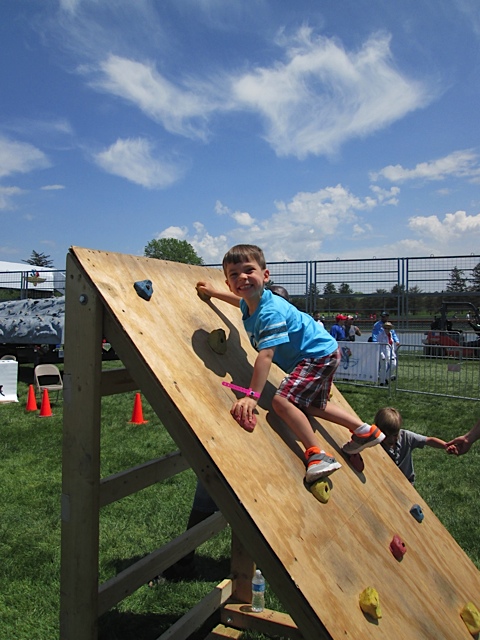
Below you can see my grandson Clayton balancing on that fine line.
Grandsons Brayden and Hudson are also living on the edge.

My son Austin became an expert of the pickup line shortly after he canceled his membership in the “Bachelor to the Rapture” Club. Some of his favorites were: “Are you tired, because you have been running through my mind all day?” “Did you get hurt when you fell from heaven?” “Are you a parking ticket? Cause you have fine written all over you,” and “Kiss me if I am wrong, but is your name Matilda?”
We are just glad Kristina Freel didn’t think they were too corny, although she did successfully put an end to The Club for Austin.
In the world of advertising, much effort goes into creating the sales power of just the right line. We now know where the beef is, how long a diamond is for, and what champions eat for breakfast. If you are old enough, you even remember what a little dab’ll do for ya’.
In the mass of entertainment chatter, there are some lines that stand alone and become memorable. Some classics include, “Toto, I don’t think we’re in Kansas anymore,” “Elementary, my dear Watson,” “Beam me up, Scotty,” and “Play it again, Sam.” A Pink Panther fan might remember, “That is not my dog!”
Design kind of lines are similar, defining the boundaries, taking center stage and drawing the eye along. Lines have beginnings and endings, go straight or follow curves with direction changes that might meander or be abrupt. They can communicate strength, balance, and drama, or can even evoke speed.
The boat building process is now in the stage where the line rules and the ruler takes second place, even though precise symmetry from left to right of the centerline is no longer spot on. The eye is the best measure of the perception of what is fair, or follows a regular curve. Possibly the most scrutinized line in a boat is the sheer line, the outline of the top side of the boat. It must be flow perfectly, without any area that looks flat or lumpy.
Most traditional sail or oar powered boats (that do not go fast enough to plane) have up-turned sheer lines at bow and stern. This is the best defense against the wind and waves. Slow-powered boats often are only turned up at the bow to face the waves forward. Contemporary boats often have more flat lines, with a downward curve at the stern.
But speed boats often have the reverse sheer curve, dropping at the bow slightly and the stern more dramatically. Their protection comes from planing higher on the water, and in this case, having more deck and a smaller set back cockpit.
Close is good enough in horseshoes and hand grenades, but that won’t make the grade when inspector Jeff Margush comes and does his scrutiny. He will start at one end, eye level with the line, and track it slowly all the way to the other end and then repeat in reverse. It does not get glued with epoxy until the final “saw this, shim this, sand this” is done. The scale model I made did not really pass muster, but he let me go on for the purpose of float tests. Actually, I am the same way, and I appreciate his supplemental inspection and help.
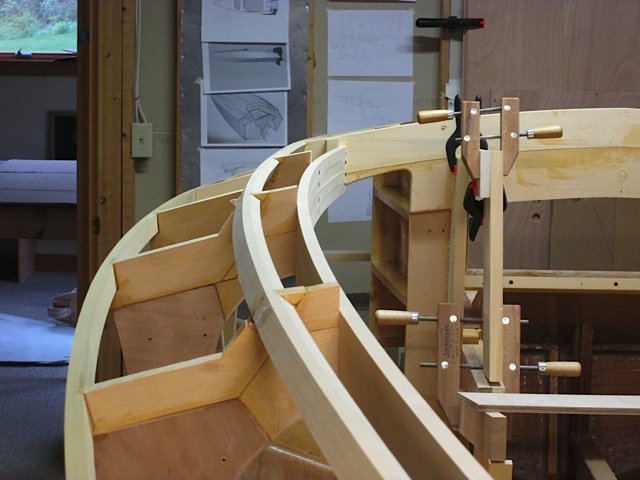
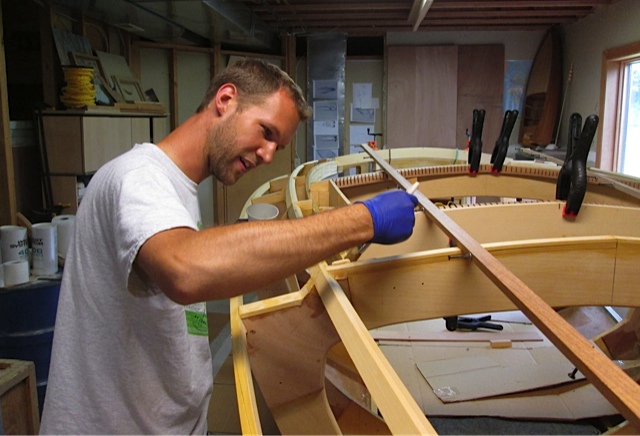
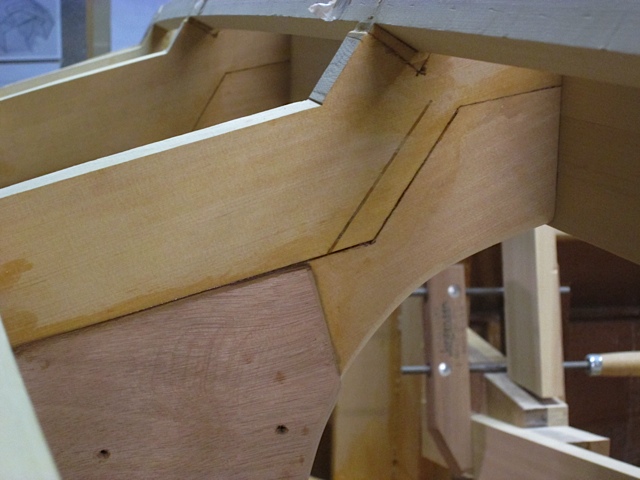
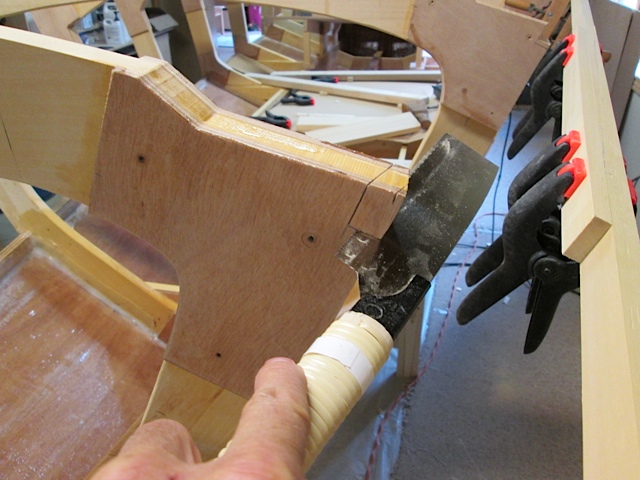
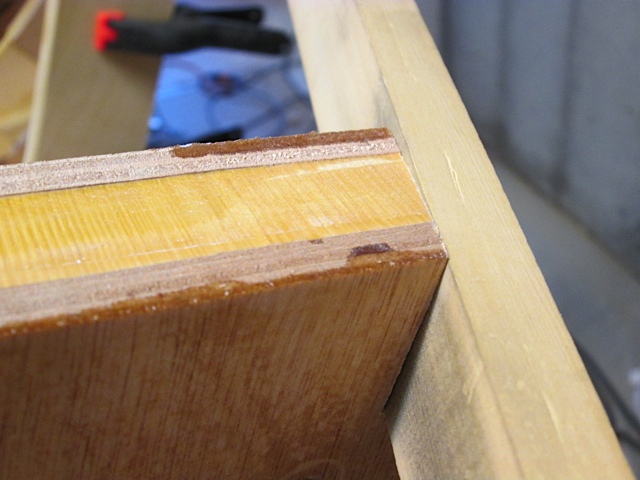
The following photos show the process of fitting the sheer stringer into the cross frames. Since all of the angles vary from square, they are best done at this step, with hand tools.
I know my Liechty relatives would understand, since the perfection genes came through that side of the family.
Here is Uncle Russ and Aunt Marge just a few years back.
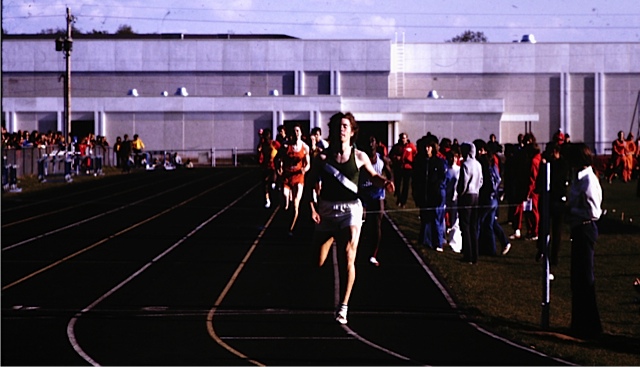
His son, my cousin Joe Liechty, and I also shared an affinity for finish lines in our distant past. This was the sectional meet at Memorial in 1973.
On the other hand, my nephew John Crist is just a bit confused at this point, not having been through home school yet. Eventually, he got the concept and became a master of the punch line.
The literary world is full of great lines also and these are just a few:
Two things are infinite: the universe and human stupidity; and I’m not sure about the universe. Albert Einstein
Be yourself, everyone else is already taken. Oscar Wilde
Don’t cry because its over, smile because it happened. Dr. Seuss
Go placidly among the noise and haste and remember what peace may be in silence. Desiderata
Truth stands the test of time, lies are soon exposed. Proverbs 12:19
Against the Wind
Waiting for the World to Change
Dedicated to the FBI (Fixers, Builders and Instructor) of River Oaks Community Church.
We recently returned from a mission trip to Children’s Lifeline in Haiti. That kind of an experience can have a way of taking over the top shelf in your mind at least for awhile, and I thought it might be a good blog topic. When I mentioned this to Sue Shetler, who got Lori Abney’s well-deserved nomination for employee of the day on Monday, she expressed the valid concern that the topic did not have enough to do with building a boat.
This caused a moment of painful reflection about the fact that the boat is moving so slow as to not have enough interesting material for a weekly commentary. Then I thought, with a blog title like Building Redemption, maybe I will just carry on. Look for boats along the way!
Our group was mostly comprised of guys from the River Oaks Community Church FBI (Fixers, Builders and Instructors). International travel can be difficult, and this was no exception as one passport was not accepted because of “water damage.” This caused two of our group to be left behind. One of the international rookies, Rick Frey, almost got lost going through security, Jake Showalter had to prove the beeping was not caused by a weapon in his hip and John Geisler had a frantic search for his passport, which was ultimately successful. Jan and I gave an unintended “gift” of $150 in a baggage swap to a random Haitian “TSA” agent. In Haiti, this must stand for “Thieves, Swindlers & Associates”.
Somewhere, John Peeble’s iPad got up and took an unsupervised walk away (refer to “TSA”, above), and a lunch delay just about left a few more of us in Miami. After all, most of us besides Jon Kauffman, do have figures we have to maintain, and who could be sure that the rice and beans coming up would sustain us. Eventually we were united in the friendly skies of a One-World American Alliance airplane. Just another day at the office. Below are all of the FBI guys at the airport.
It was only a three hour flight from Chicago to Miami, and two hours more to Port Au Prince. We ended up in our same time zone, but no mistaking that it was a world away. From Indiana to Haiti in February 2014, there was nearly one hundred degrees of temperature swing. English is not so helpful there, as Creole is a curious mix of French and as many languages as the places people in Haiti came from. These journeys were unfortunately often without their permission, and now the trap of poverty makes it nearly impossible to leave.
Below are the types of boats desperate refugees have taken on ocean journeys.
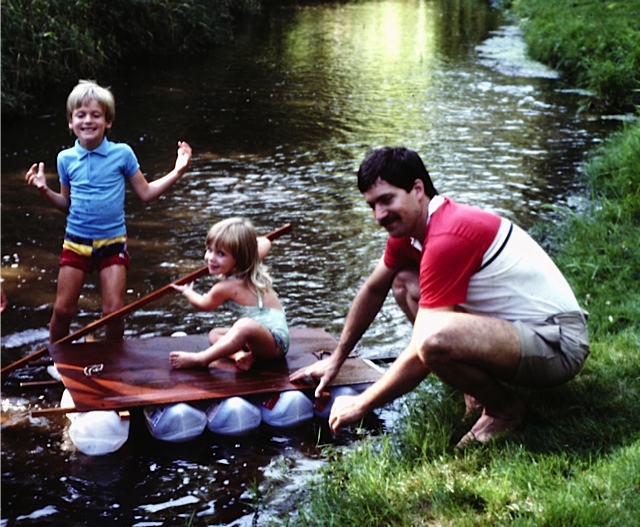
Even my own children were trying to escape on a raft.
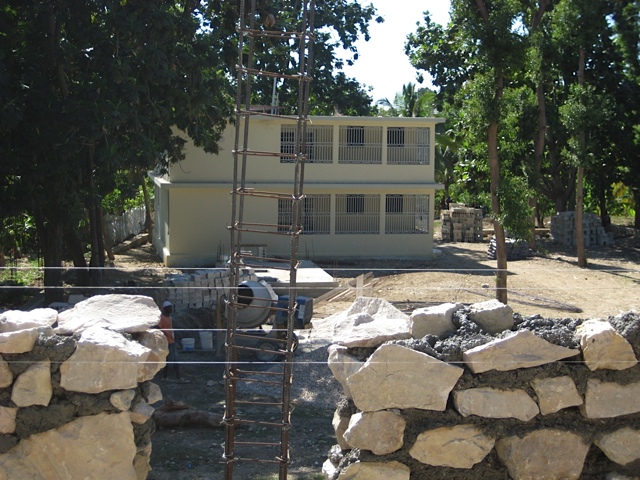
We were given the task to be builders of the wall for a new orphanage, but it turns out the first test occurred walking to work. As we left the mission compound into the village on the way to the work site, we were mobbed by children who wanted to hold a hand and come along. Of course, they really wanted to know if our hearts were as big as our hands. Here is Wayne Loucks’ hand held fast.
My first clue that this test would be passed was when Jake Showalter had told about his last trip with a few tears in his eyes. The big heart of our Heavenly Father was obvious in each of the men.
Here is Jake Showalter driving with Daniel.
Thumbs up for Mike Sherer, John Peebles, Wayne Loucks, Mike Gingerich, Rick Frey and the children.
John Geisler with two new friends.
Rick Frey with his sponsored daughter.
Mike Gingerich has his lap full.
Five boys and fun with Jon Kauffman.
John Peebles and my sister Anne Crist at the work site with three boys.
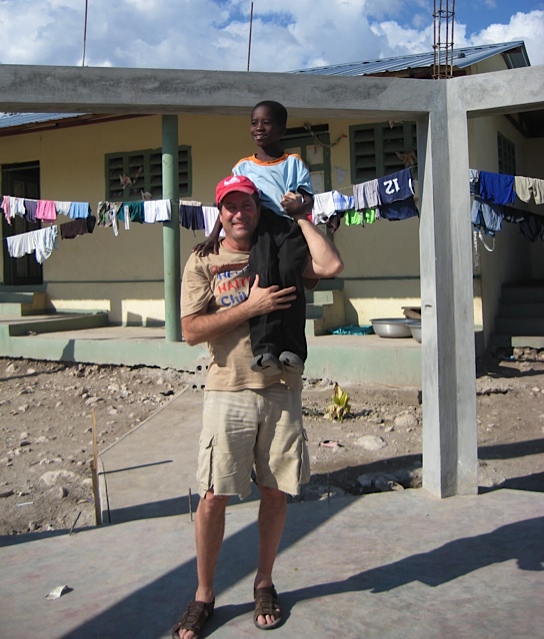
Me with a boy on my shoulder at an orphanage.
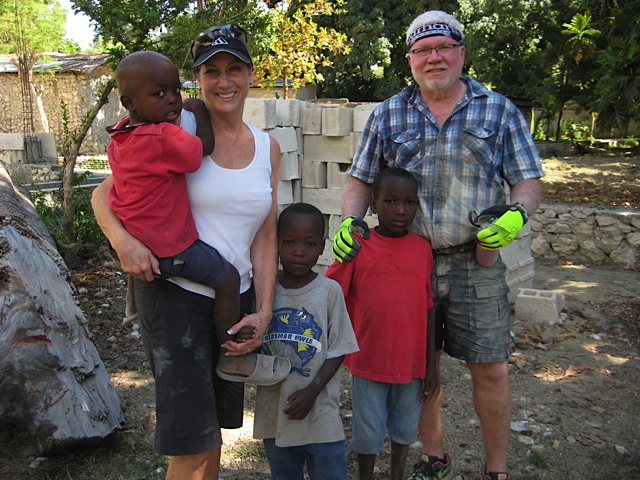
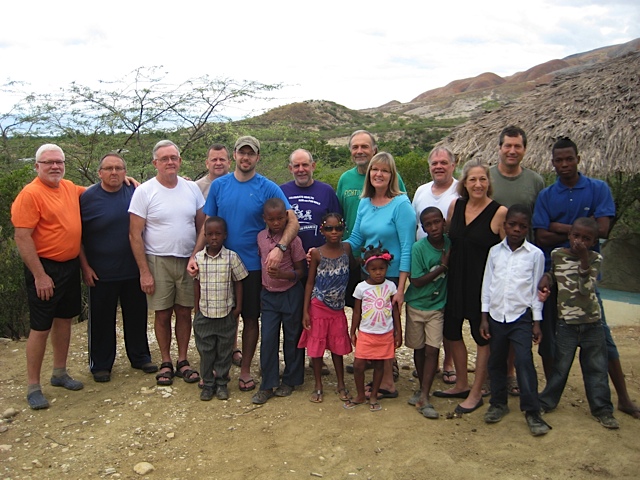
The FBI group with the ones that came along.
The next test was figuring out what to do at the job site. Among us were all sorts of craftsmen, an engineer, business and organizational leaders, managers, and possibly the most complete collection of Fix-it knowledge ever assembled for an international trip. We even had a professional mason, which fueled our aspirations of tackling a big project with the will to “get ‘er done.”
But the FBI are men of prayer, and go forward with humility. Mike Gingerich, the brick mason, saw that the Haitian men were already started and he respected their right and responsibility to take ownership of their project. What they needed was for us to move some huge piles of rock. We got in a line and passed them along, to the places where Joubert, Oskah, Wohb, Pierre, Edmond, Djimi, William, Imaniel etc. were working. Here are some of the crew.
Some of us began mixing mortar, carrying it to the masons, and bringing them rocks for the wall. Over a day or so, the respect of working hard shoulder to shoulder began to be felt, and communication became more expressive. It started with stares, pointing and other hand signals, and moved on to approving nods, smiles and the occasional fist bump for exceptional service. This might be for bringing an extra bucket of mud, a big rock, or finding just the perfect size rock for the next spot.
In this process, and without much verbal exchange, we became brothers. By the week’s end, we had visited some of their houses, and shared their concerns for their families. We went to Haiti to build a wall and instead we built a bridge.
One man told me recently of a get rich quick scheme that I was not able to dispute. He said he went to Haiti years ago as a young man, and he has been rich ever since. It kinda makes my current boat delays seem like not so much of a problem. Below you can see the back end extensions and the sheer and trim lines developing.
Wayne Loucks summed the trip up well when he said, “We changed Haiti a little. Haiti changed us a lot.”
“Whatever you have done for the least of these you have done unto me.” Mt. 25:40
Winter of the Soul
There are those few hearty ones who love winter. Having grown up in North Dakota and northern Michigan, my dad is one of those winter enthusiasts. In his childhood, the winter was for ice hockey and later on, he added skiing to his list of cold fun. On January 25th, it was his big day to have a big party and take some of the family skiing for his 88th birthday…
Nearly everyone loves the beginning of winter, hoping for that first pretty white snow blanket for Christmas. As a child, I couldn’t wait for the snow to cover the hill beside our house at 4333 Myers Avenue. The days were long growing up at our house, with no TV or video games, and a cello needing to be practiced, so inside created little attraction.
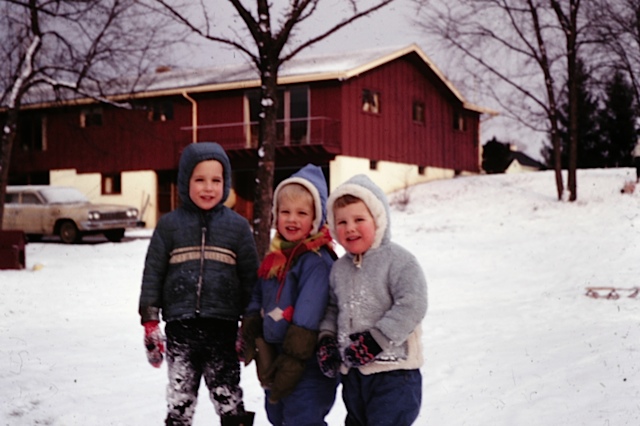
The neighbor kids, along with any number of other friends would come over to share the sleds and toboggans, and sometimes dad would ice the runway for a speed rush. Of course, we had to make nice jumps also to teach my nine-year-younger brother Joe how to fly. He is shown below with some neighbor friends.
Here, Margaret, Jane and I are getting ready to slide!
An extra big thrill occurred when dad and mom packed us up to go to Harrison Hill for the great long runs on our toboggan.
When the creek froze, we skated. My first pair of skates (age two) were the double bladed strap-ons that kept getting passed down, and I kept working my way up through the series of old skates in the family skate box. Once in a while the creek would flood and the ice would freeze so we had our own skating rink in the back yard.
Eventually I my feet grew to the size that inherited mom’s white figure skates. They were past their prime with knotted laces and floppy ankles. This was embarrassing when we went over to the Concord Junior High tennis court, which the fire department flooded in the winter for ice skating.
Finally, I appealed to my dad and I got my very own pair of brown leather hockey skates just like his. He was the only dad around who could skate backwards in fast circles. For the decade ending in 1973 with my high school graduation, we were a pretty much an unstoppable pair on the neighborhood hockey scene.
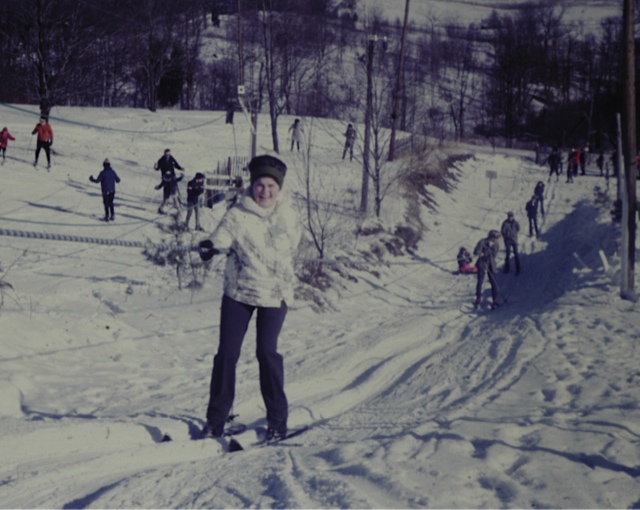
Then there was the Christmas of 1963, when dad got ski equipment for the whole family. The boots were more like heavy leather hiking shoes, with inner and outer tie strings that took what seemed like eternity to put on. The skis had a toe holder with an adjustable cable to hold the heel forward. These did not meet any particular safety standard, but that was a fine time when people accepted the risks and responsibilities of living freely. Personally, I was immediately bound and determined to qualify for the ’76 Olympics downhill.
Mom joined right in and quickly got the hang of the old rope tow which was the only way to the top, and no small accomplishment. Although, once at the Broadmoor in Colorado Springs, legend has it that she was going a little out of control and didn’t stop before taking out a whole row of neatly stood-up skis.
My sisters got into the spirit also, but more on the fashion end. They designed and sewed their own ski suits and were an automatic sensation from Swiss Valley to Bittersweet, and even in Colorado.
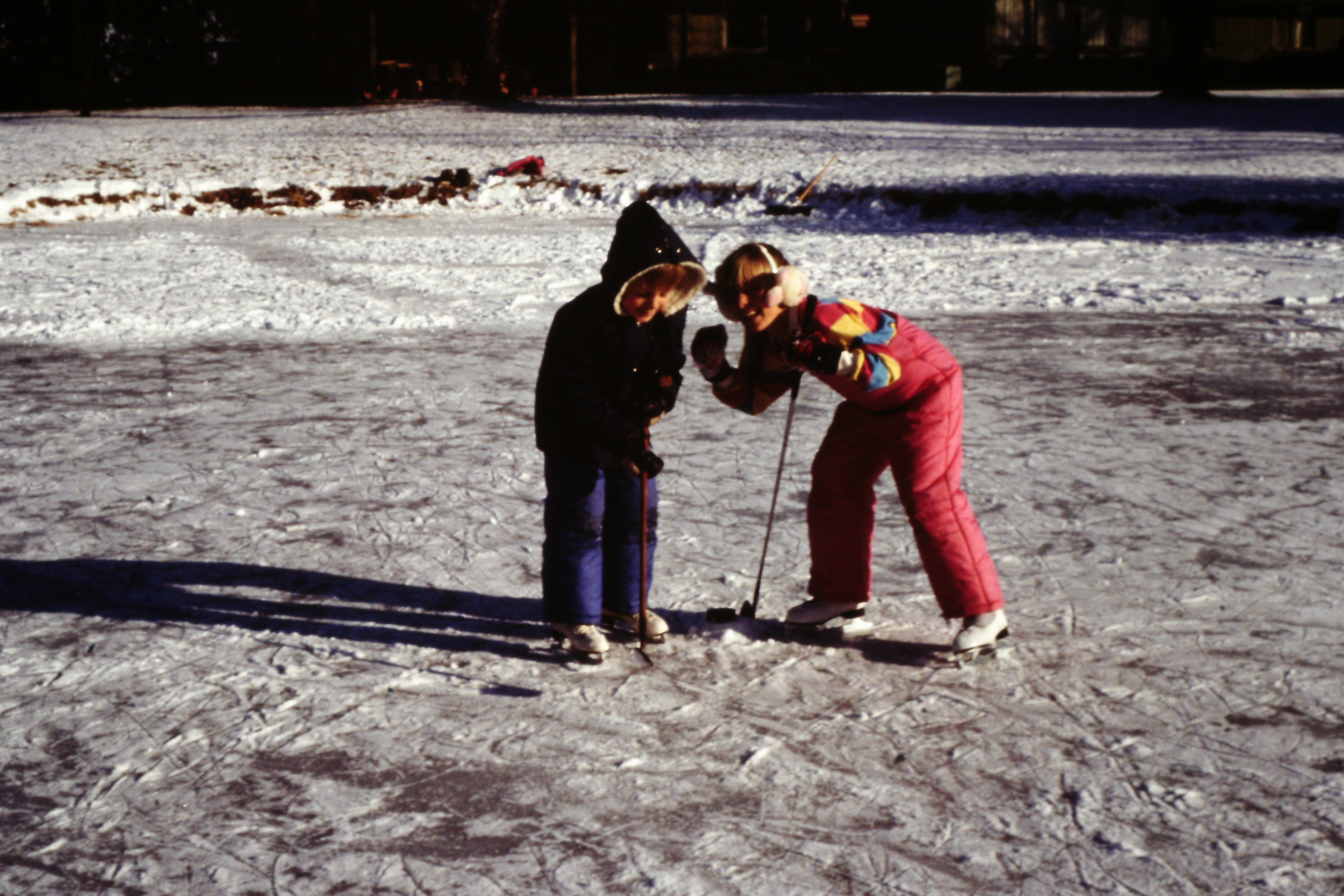
Generations pass and traditions tend to recycle making new winter memories. When our children were young, we inherited some old skates and found some more in Grandpa Ed and Grandma Marge’s closet and restarted the skating tradition on Neufeld’s pond. This was the site of Jan’s training as she practiced after school in seventh grade, aspiring to be the next Peggy Fleming. As you can see below, Austin also had to endure the white skate stage as he and Adrienne plan the hockey strategy.
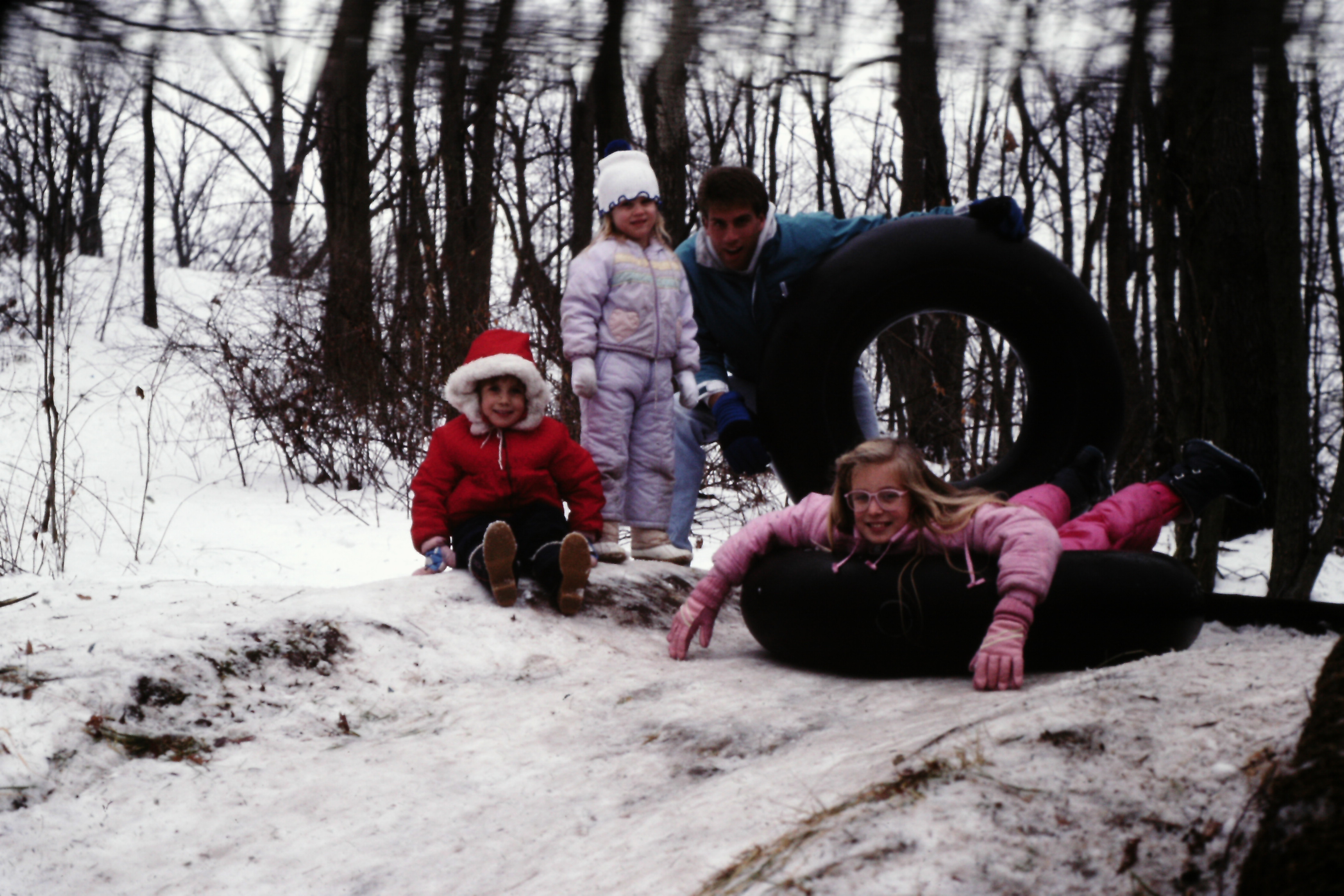
It was always a highlight when Uncle Joe came around for tubing.
. . . But on that 25th day of January, the temperature and wind chill finally exceeded Dad’s will to face the elements and he changed his mind. This made for the first time in 50 years that he did not grace the ski slopes of Swiss Valley. Eventually, the thrills and pleasures of the mind and body go away. Fortunately, our knowing God can sustain the joy of the spirit.
Sometimes, like 2014, the cold goes on and there are still 12 foot piles of dirty snow in the Wal-Mart parking lot. When the spring only teases and refuses to come there can be a season of winter of the soul.
The boat is in such a state. My neighbor Don came over yesterday and said, “I thought it would be almost done by now!” So little forward motion has been accomplished over the last three months that the goal of getting it in the water this year seems only possible if the basement floods. When the project intended for a year still has a year to go after the turning of four seasons, discouragement can descend into the shop.
Fortunately, my neighbor Mike Perron was listening to my woes and he responded, “If you want a boat this spring, you can go buy one. Where’s the journey in that?”
Well, . . . yeah.
Thanks, Mike.
Tools of the Trade
Sharp Stuff
There are only about two things I don’t like sharp: opera sopranos and cheese. I do, however, like a sharp wit, a sharp shaver, sharp saw blades, chisels, and knives, not to mention sharp dressers and hairstyles…
My appreciation for sharpness goes back a long way, as does most of what I write about it seems. In fourth grade, we discovered that the roots of some Indiana-lowland reeds are heavy enough to make the shaft fly straight for use as a spear. It was also sharp enough to hurt if you were hit.
Soon after that, I found out that the balsa wood I bought was light and strong but required a sharp pen knife to cut it well. Someone gave me a set of Exacto Knives with replaceable blades, and they served me well for the couple of decades that I built models.
A few years later, when I was in seventh grade, I developed an interest in Medieval crossbows, and more sophisticated flying projectiles. First, I made a six inch handle of balsa with two side guides at the front. They also anchored the rubber band which provided the power for the balsa darts. But when I shot them, they took all sorts of erratic flight patterns before I figured out that they needed a heavy point like the spears.
After some experimentation, I perfected the technique of inserting a needle into the front of the dart, and wrapping it with thread which I glued to hold tight. I knew it was good when a practice shot went across the living room and stuck in the wall. With mom’s extreme disapproval of my new indoor sport, I had to take the dart shooter outside. Then the problem became trying to avoid losing the darts.
So one day, I put the dart gun in my book bag to show a couple of my most loyal friends. Right after school, we were sitting on the edge of the Concord Junior High gym stage, and I pulled out the little weapon. They were disbelieving of my reports how far it would shoot and insisted on some evidence. So I put a dart in the shooter, and pulled back the rubber band. A quiet zing followed by a tick had us running to the other side of the gym, and there we found the needle dart stuck in the floor.
Of course, we had to try again to see if we could set a distance record, and so I aimed a bit higher. Another zing but this time there was no tick. We looked around for a few minutes before finding it out of reach, securely stuck in a ceiling acoustic tile. That left one more dart, which before too long was stuck in the ceiling also. The last time I saw those darts was around ten years later, stuck in the same place.
The quality of furniture and boat building has a very direct relationship to how sharp the tools are. A dull blade heats up more, bends slightly and wanders from the straight path. A dull router bit burns the wood and is hard to sand out without losing the shape of the profile.
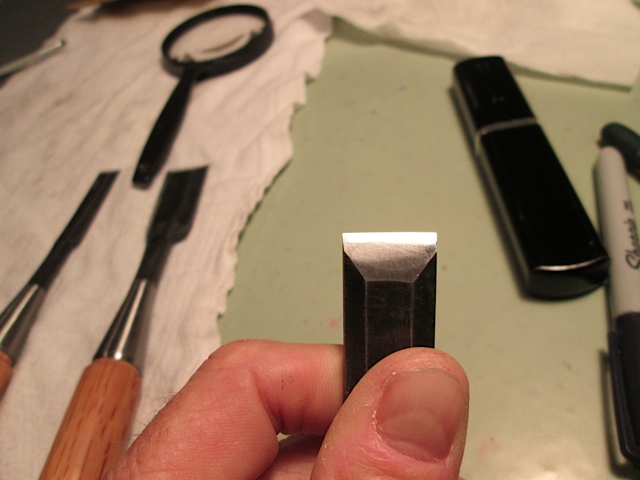
Several different methods are used to sharpen woodworking tools including coarse and fine stones, diamond covered metal blocks, and the one I use most often: sandpaper on glass. I start with 360 grit paper if general contouring is needed, and then go on to 600, 1000 and 2000 grit paper. For anyone wanting to try it, the paper is available at auto body shops.
The first key to success is going through each grit, and eliminating the scratches from the last grit before going on. The second key is to use some holder to keep the orientation of the blade exactly the same. Again, many sharpening jigs are available but I decided to make my own. It references the tool to the top surface, and is held by screw friction.
Below is a sharp boat, the 16 foot Marlin Scorpion my dad bought in 1971, when I was in high school. Uncle Johnny is driving, with Ben and John Crist, Lane Hartman, and Austin Lehman.
For the word of God is living and active, sharper than any two-edged sword, piercing to the division of soul and of spirit, of joints and of marrow, and discerning the thoughts and intentions of the heart.
Hebrews 4:12
Starbucks and Steinways
Repeated exposure to any variety of things eventually enables a person to differentiate between very small differences. My assistant Nicole has handled thin orthodontic wire so much that she can sort 0.012 wire from 0.014, which is only two thousandths of an inch apart. My wife Jan’s pecan pie is top-ranked in the world, and I could tell it, eyes closed, from Cracker Barrel, or the best at the World Missionary Press yearly pot-luck fundraiser. Maybe you know about Stradivarius, Steinway, the twelve Eskimo words for snow, or the forty shades of Irish green.
If you ever served coffee at River Oaks Church, you have heard the discussion about the favorite brands like Starbucks, Seattle Blend, and how they compare to McDonald’s, or the Cadillac coffee at Essenhaus. Terms like robust, acidic, bold, weak, sweet, bitter, nutty, fruity, etc. float around along with the whisper of tales of Kenyan, Columbian, or that favorite place in Jamaica, the Blue Mountain. Personally, I have never developed the habit as I have not been able to connect the wonderful aroma of the bean to its bitter taste.
Chocolate, on the other hand, is something I can relate to. It’s easy for me to rank in ascending order: Nestles Crunch, Toblerone, Hersheys with Almonds, Lindt (Swiss), Verkade with Hazelnuts (Dutch), Ghiradelli Fudge (Sundae), and finally at the top, Olympia Candy Kitchen Turtles.
In the same way, wood is wood unless you hang around wood workers or boat builders. During my days working at Swartzendruber Hardwood Creations with furniture woods, I could probably have identified a dozen species by how they smelled being cut. I love working with the American hardwoods, the beauty of book-matched cherry, dark walnut and maple with its curly variations. Below are two rolling pins of cherry, maple and walnut from my long ago craft show days.
Woods are separated by many physical properties including density, shrinkage, hardness, stiffness, tensile and compressive strength. Imagine someone in my family getting to do a wood hardness science project!
The main characteristics that matter to boat parts are simply weight, strength, fastening ability, and rot resistance. Over the years, popular boat building woods have included Mahogany, White Oak, Teak, Alaska Yellow Cedar, Douglas Fir, Western Red Cedar, Sitka Spruce, Cypress, Spanish Cedar.
For my boat, I chose White Oak for the keel and the key stringers. It meets the criteria as a tough, strong wood, but its tendency to split into sharp fibers makes it not so friendly. The worst splinters of the whole process come from handling this wood.
For frames and other parts, I chose Alaska Yellow Cedar, which was also straight grained with no knots in 12-16 ft lengths. It is among the leaders for stiffness, light weight and rot resistance. One surprise was the pungent aroma when machining the wood. It reminds me of Grandma’s cedar chest, but a bit more spicy and intense. I do like how it cuts with chisels and planes, and almost never cuts me back.
I also considered trying Sitka Spruce which was the gold standard in the early part of the last century. It was used in early airplanes for its long straight grain and extreme stiffness. When compared by weight, it actually is stiffer than metal, which helps make it great for piano and guitar soundboards. The Sopwith Camel was a British First World War Biplane introduced in 1917.
People are also uniquely made. When we recognize these special characteristics in each other, we best fulfill our common purposes given by the Creator.