
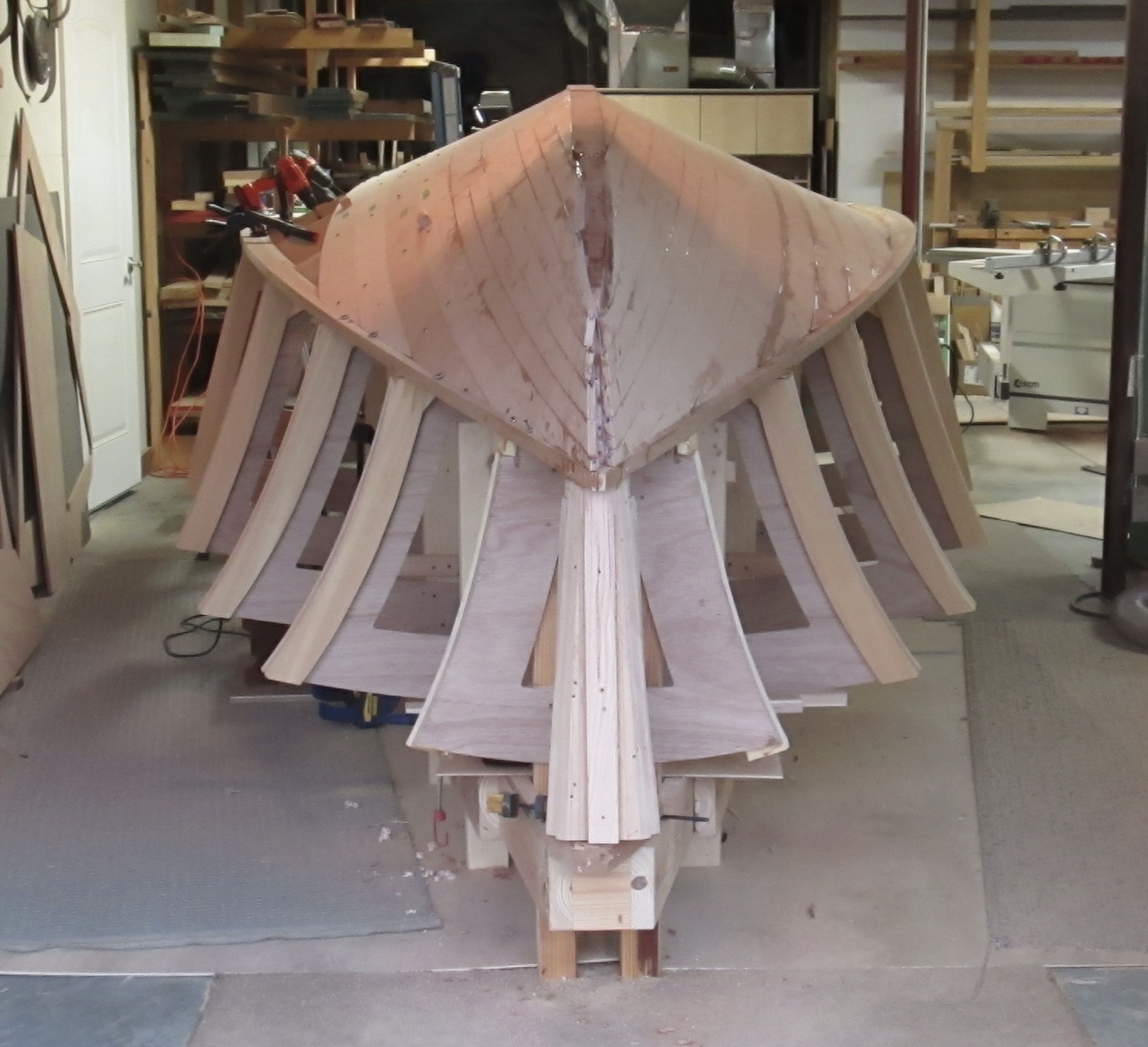
With the boat turned right side up, it is time to strengthen the joint between the cross frames and the hull planks. Epoxy is a wonderful sculptural and structural adhesive, and can be mixed with a variety of fillers to make more of a paste consistency. This can be a sticky mess, difficult to make it go where I want.
So, I put the thickened mixed mess in a Ziploc bag, and cut a small corner cut on one end. As far as I remember, this is similar to how my mom used to do some special decorative frosting on the cakes of our childhood birthdays. By the way, sister Anne reported that mom would have been 95 yesterday, had she not passed away at age 45. I think she would have liked to see my boat frosting.
Then, I inject a bead into the corners, as consistently as possible. When shaped with a round nosed plastic tool, it hardens without drifting into a reinforced epoxy fillet.

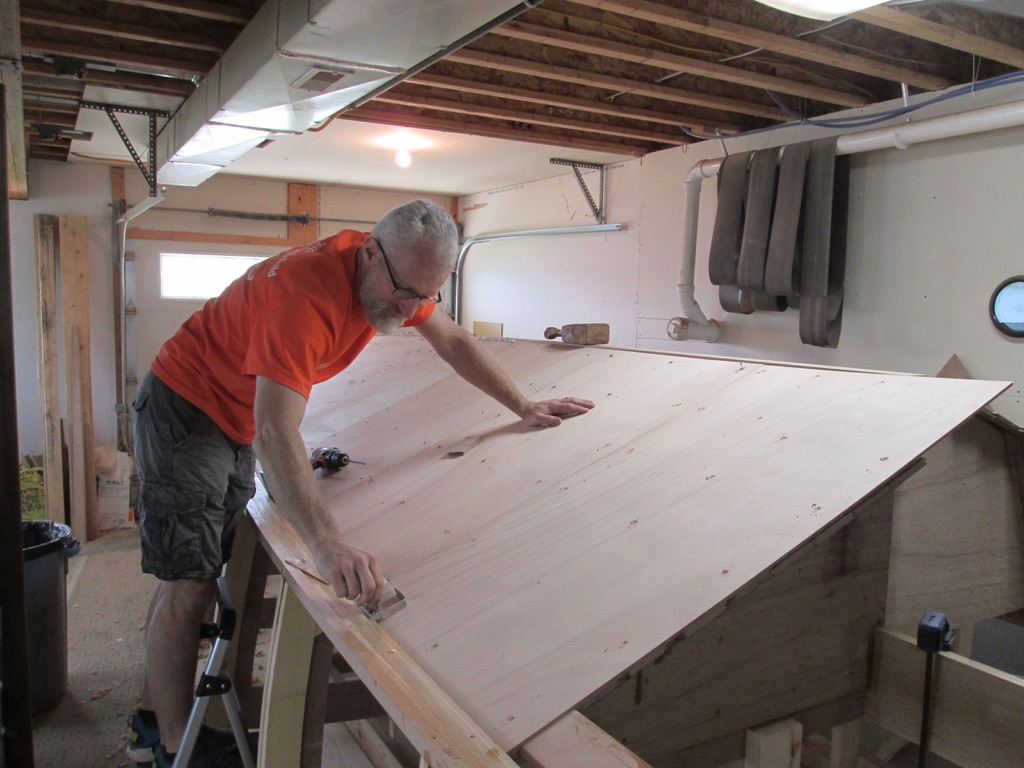
The next reinforcement to the hull is to add fiberglass fabric into each of the bottom sections. When possible, the pieces are cut to wrap slightly up the sides, covering the epoxy fillets. This serves to further strengthen the frame to hull joint, but also stiffen the tongue and groove plank layer of Okume marine plywood.
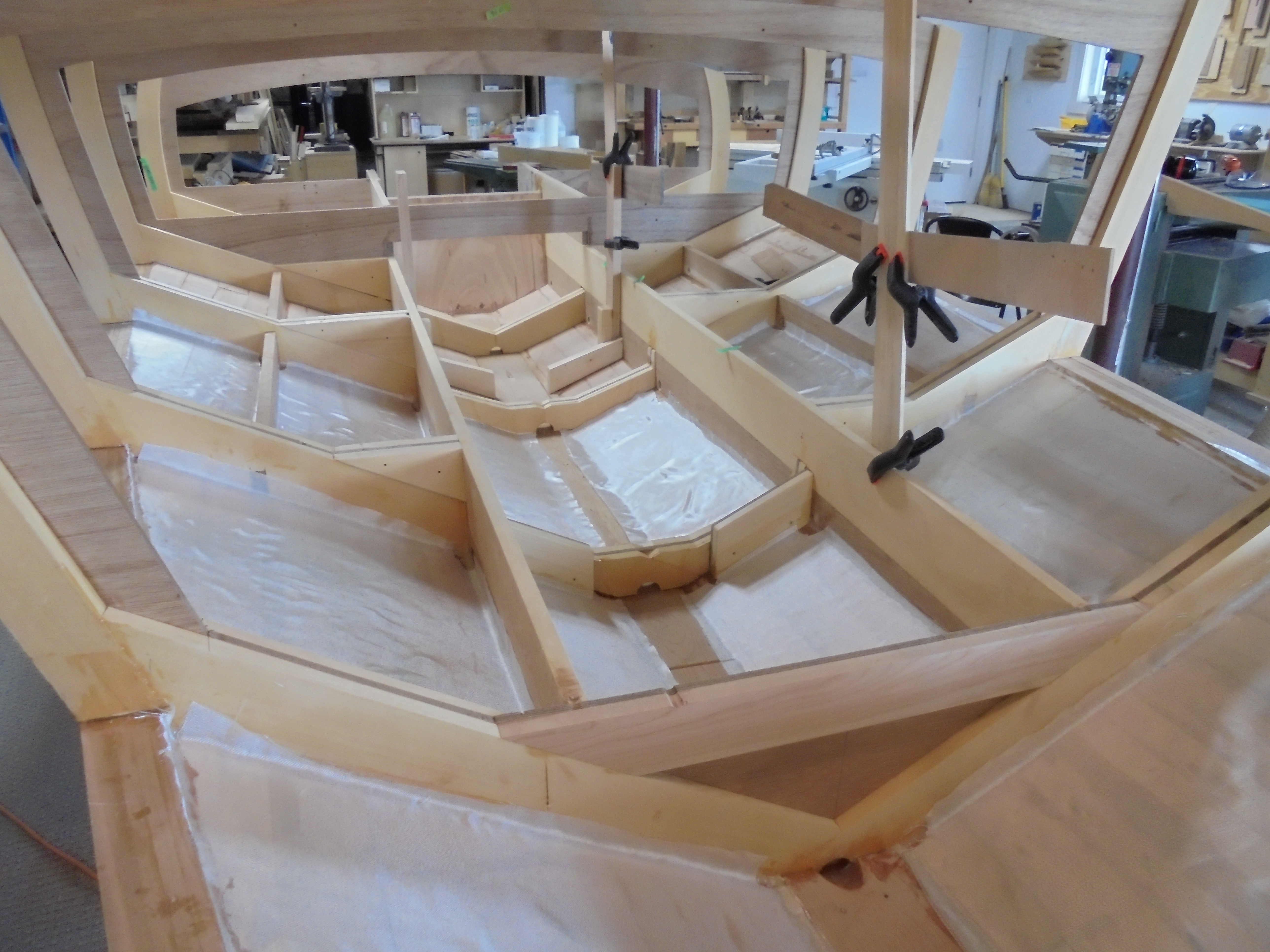
When a coat of epoxy is applied to the fabric, it wets out nearly clear, and becomes a strong, durable, scratch resistant surface. As the glass fabric and epoxy are added to the outer surface, the hull will be a super strong composite of the plywood core between the E-glass layers.

The boat is making forward progress but the amount left to do is sobering. This must be like hiking a middle section of the Appalachian trail, where you have gone too far to turn back, but still an unimaginably long way from the end.
However, Aunt Marge Liechty recently sent a particularly encouraging note, which was a kind wake up, keep moving call. It is time to make another detailed list of little things to do, step forward to do them, and mark them off the list . .






















 Building Redemption