
With the boat upside down, it was time to put the outer covering of fiberglass fabric over the marine plywood hull planks. Glass fibers are very strong in tension and resistant to abrasion. When embedded in epoxy on the inside and outside surfaces, it creates a strong, stiff and relatively light weight composite structure.
The photo below shows the hull bottom after placement of the glass fabric. The corners have been filled with a thickened two part epoxy filler that were sanded to shape. The back edge of the bottom surface was left as square as practical, for the most efficient water cutoff at planing speeds.
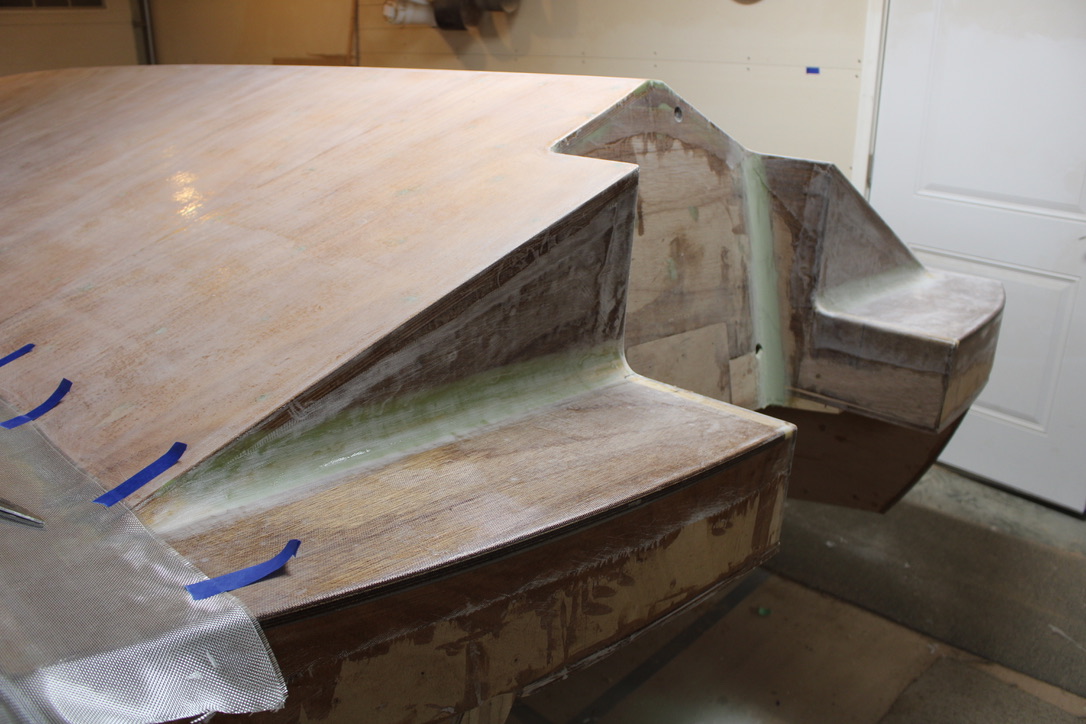
Experts disagree on two main methods of adding the glass fabric: laying out the fabric and then applying the epoxy or brushing a coat of epoxy on the wood first. Since the fabric catches on sharp or sticky things and deforms easily, I prefer to carefully lay it out over dry, sanded surfaces, primarily in one plane, as shown below.
A 36″ wide layer was rolled out and taped, overlapping the previous finished areas. With a smooth under surface, small changes can be made to smooth out wrinkles for the best possible fit.

The downside to this method is that the epoxy must penetrate the fabric, and fully bond to the wood underneath, or risk delamination later. The surface needs to be fully wetted and transparent, but not so much extra that would make epoxy flow zones. The application begins, rolling epoxy from top down, working out wrinkles as we go.

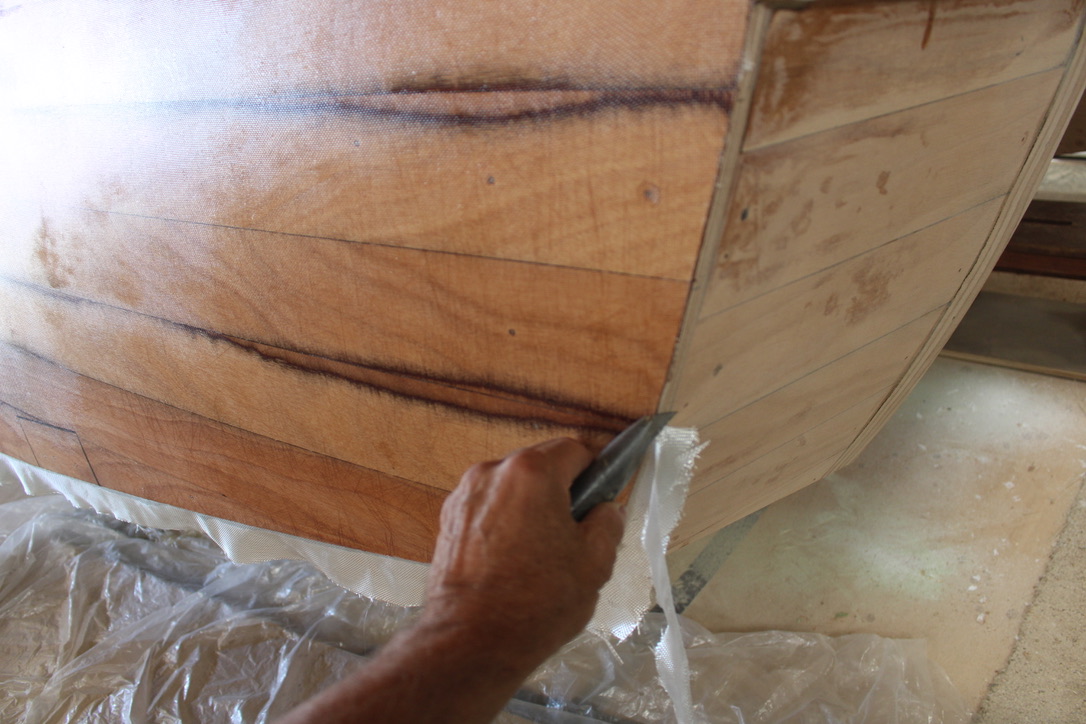
When the epoxy has set up to the stiff, not sticky stage, before it gets hard, the edges can be trimmed with a sharp knife.
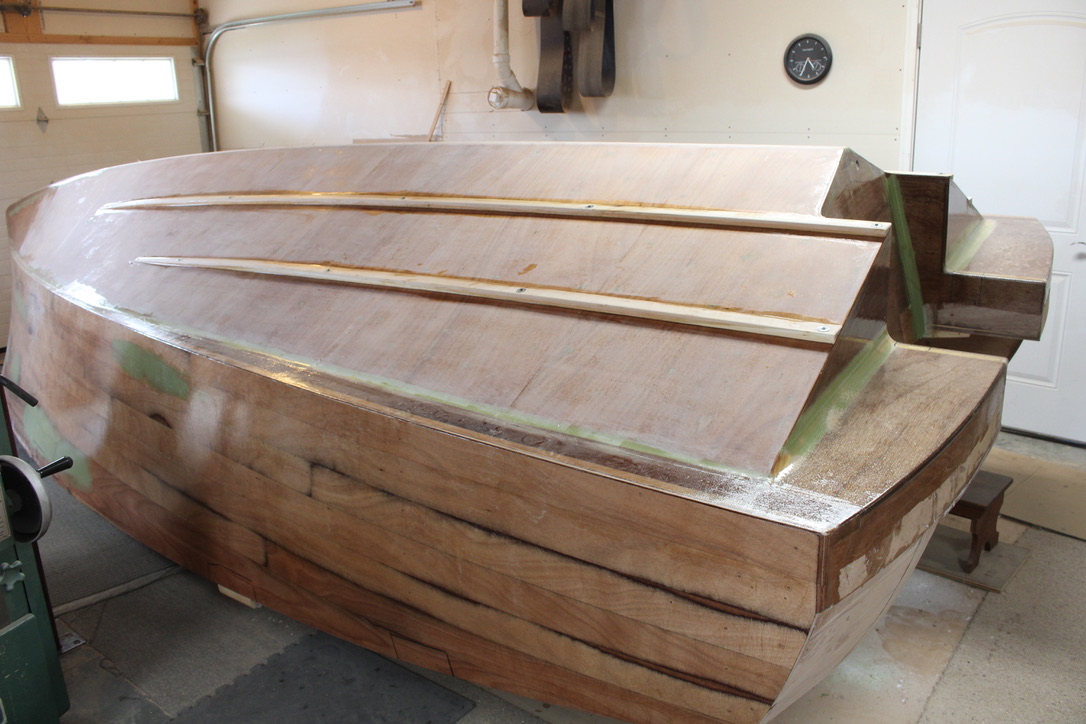
Next strakes were added, and rough sanding all over with 80 grit to allow best primer and paint adhesion. The hull planks of 4″ tongue and groove marine plywood show through on the sides. The dark lines show where the top ply layer was sanded through, and the green where low spots had been filled for final fairing.
My shop is not equipped to spray paint , so the boat was loaded on a flat bed trailer and slowly hauled five miles to get professionally painted. This is on the return trip, preparing to lift the boat with the four heavy duty winches mounted on the temporary posts.
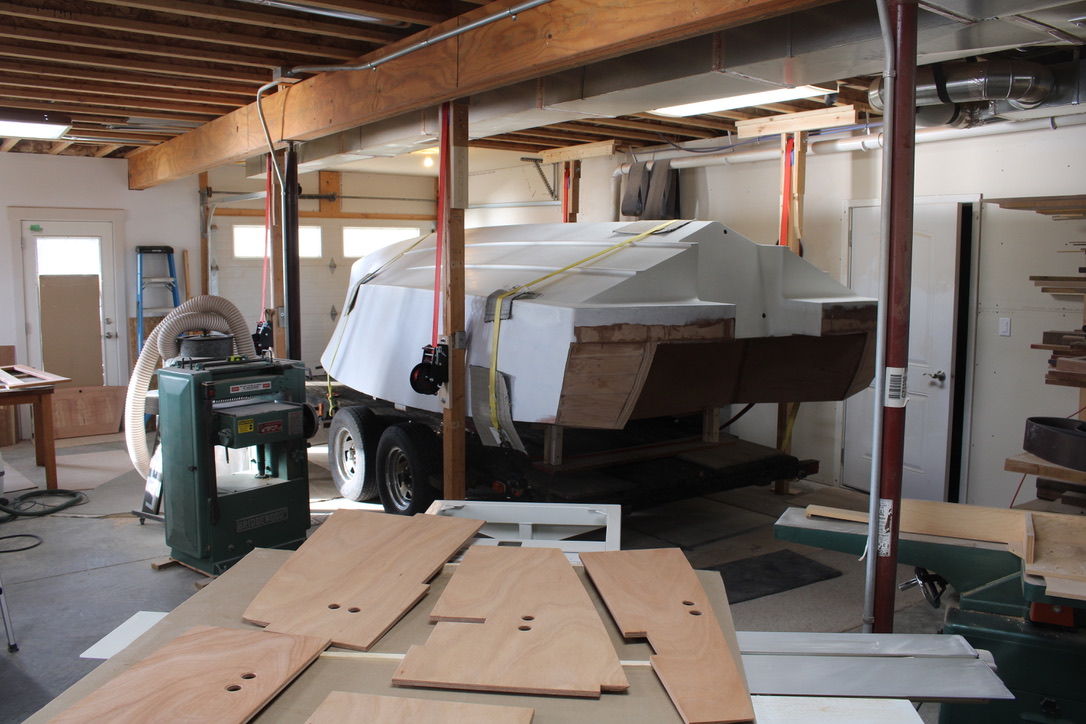
There are many ways to slow down a big project like building a boat, which happened but it is off and rolling again, passing this significant milestone. Work on the bottom is completed and following a final flip, this boat is intended never to be upside down again.
 Building Redemption