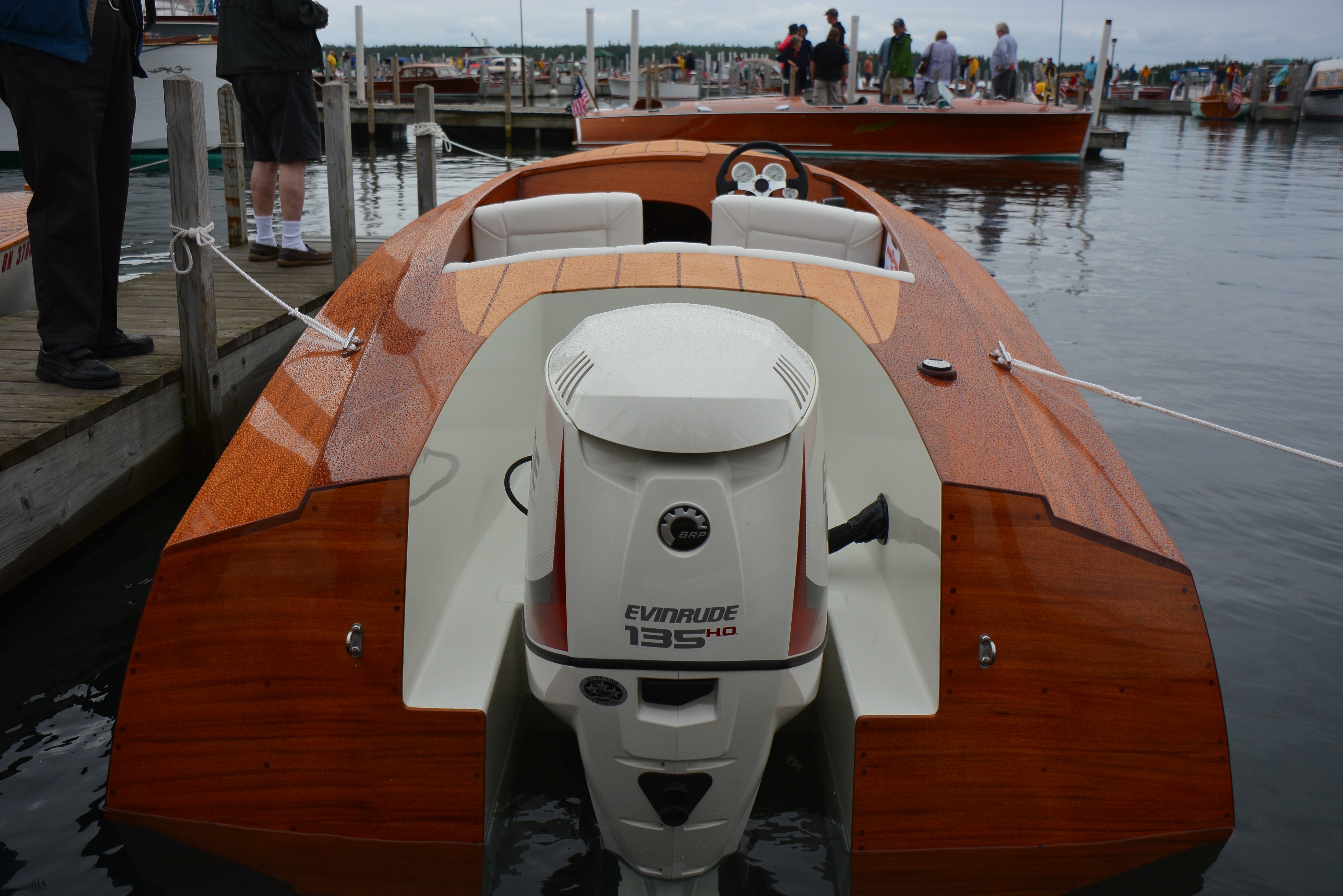
Boat Turning Redefined

In the nearly five years of having a couple of boats in progress, the times to turn it over have occasionally gone smoothly, with a few scary moments. This was the first turn of the smaller boat when the framework was lightest. I just got some heavy duty nylon rope and attached some T-bar 2 x 4s to the rafters to hang it.
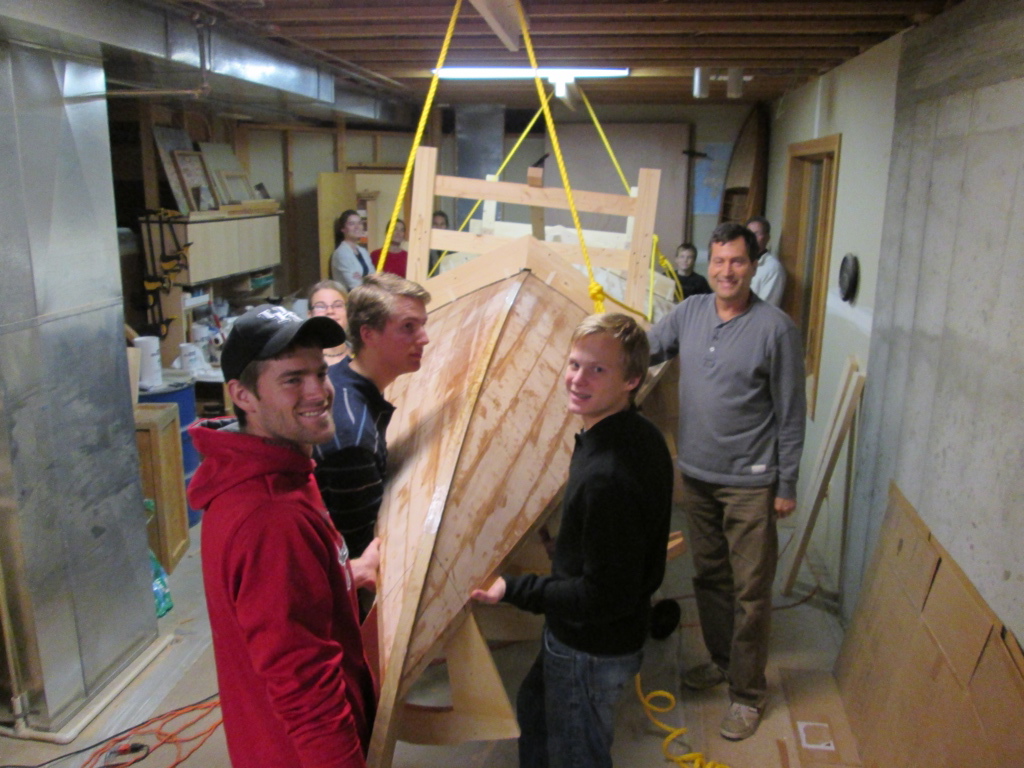
Light weight first boat turn

The next time had more oops and inefficiency spreading of the lifting power. The ropes did not behave as well as expected and a little floor bump occurred . . .
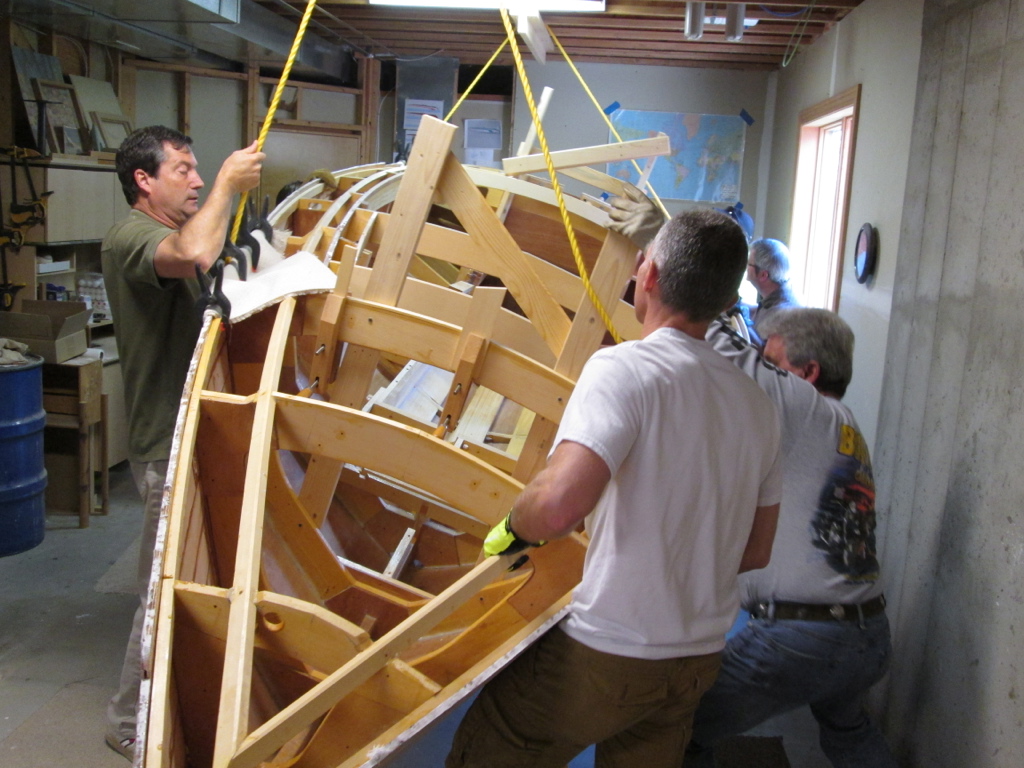
Heavier and more muscle needed.

But apparently all’s well that ends well.
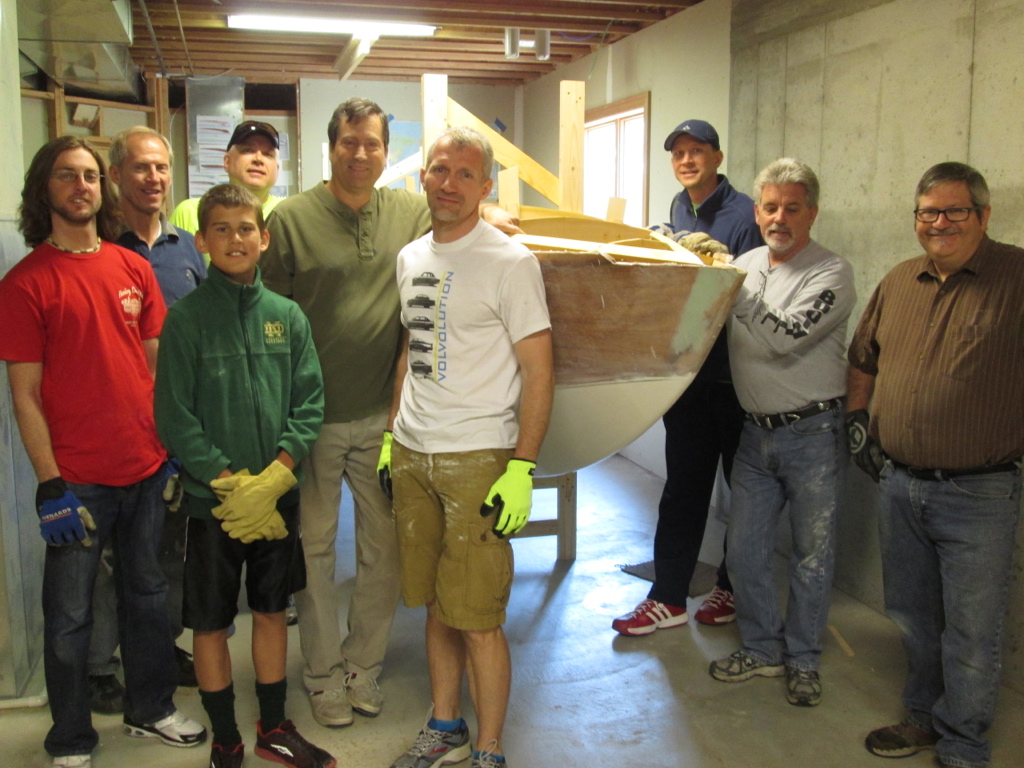
Getting the boat out of the basement was a pretty tight challenge, but finally made it.

A couple of inches top and bottom.

And eventually it floated.

Les Chenoix Boat Show

The second boat, currently under construction is larger and made the first turn with a bit more muscle and finesse. We just about took out the light at one point.
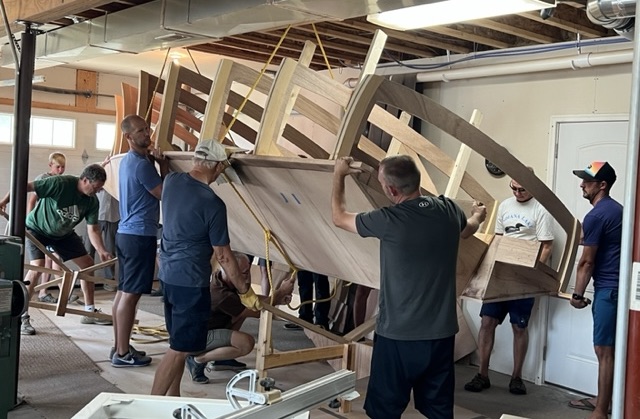
Second boat, more weight and muscle, narrow miss.

The next turn got more complicated with a tangle of ropes that were difficult to adjust, and left a few guys holding the proverbial bag. This time we had trouble clearing the heat duct because the front pulley system failed and left it hanging down.

Front Pulley broken. . .

So, in the garden, look for help from someone with green thumbs. In the shop, look the guy in the green gloves, like Andrew Alger NEI above. NEI may not be a Purdue degree, but It stands for Natural Engineering Intelligence, and he has solved more than a few of our “make-something-work” crises.

Andrew came up with a new plan, as the boat needs a few more turns, and is getting heavier all the time. He suggested getting four reversible winches, to hang on support poles, with heavy duty nylon strap. I dutifully followed his plan and voila’ it became quite easy.

Two of us turned the winches to pull up on one side, and the other two released the strap to lower. A few adjustments of height and soon it was sitting right side up on the cradles.

All smiles for the success!

But for the two minute trip of the whole drama, check out the link below.

https://drive.google.com/file/d/1XqXfoPG8oKQIbxiQyNWPUzMbbIv_okh-/view?usp=drivesdk

Hull Planks and Contours

With the boat turned upside down the last time, the side planks need to be installed. They are made of 1/2″ marine plywood, cut into 4″ planks and routed with a tongue and groove to fit the best side by side. I alway start dry fitting a group, to see if the underlying cross frames are supporting fair curves.

In this case, I will not be doing the last few rows until the boat is flipped over and I can make sure the shape at the top line is good. But most of the side needed to be done in preparation for final painting of the bottom. Jeff Margush lends a hand, actually you could probably make the case that he might be doing the work mostly by himself.

After the epoxy dried, I needed to shape the plywood plank down to meet the longitudinal corner molding, called the chine. This Okume Marine plywood is the best plywood I have ever worked with, being almost as easily planed as solid wood. It is a woodworkers delight to have these wood curls roll up from a sharp blade in a good plane, especially the ribbons below.

After doing whatever wood removal is needed, then it was time to add some epoxy fairing compound to smooth gaps and add nice fillets to the corners. Between a rasp, a scraper, coarse sandpaper with flat or rounded blocks, and a dust brush, slow progress can be made. The proof will be in the pudding of a shiny paint job, to see if the contours are good.

A bit more fairing on the sides, finishing the bow and stern contours, and it will be ready for the next nerve racking step: putting a huge sheet of the glass fabric on and trying not to repeat the snafu that happened last time. Too much epoxy over a complicated surface ran and pooled in an ugly mess, that required many hours of scraping and sanding. This time I know what I am doing?

Building a boat seems like a continual learning project, and hoping not to have to repeat too many steps. Sounds like life . . .