
The hull sides are now complete, with the outer planks of 1/2″ tongue and groove marine plywood running horizontally, and the the inner strips 1/4″ marine plywood , crossing vertically. It is now time to finish the seat framework. The two jump seats have base structures joined to the divider wall, and anchored to the bottom planks.

The next step is figuring out where the seat back should go, and these pillows serve as a 3D examples to see how it might work. As I looked at them, it crossed my mind that I could save some money and bother, and use pillows just like that throughout the boat. After all, the boat is not an historic replica. Then I imagined what might happen after they got good and soaked a few times. . .

I started by gluing a runner against the divider wall at a back angle set by imitating a comfortable chair. There was not great place to attach the freestanding post.
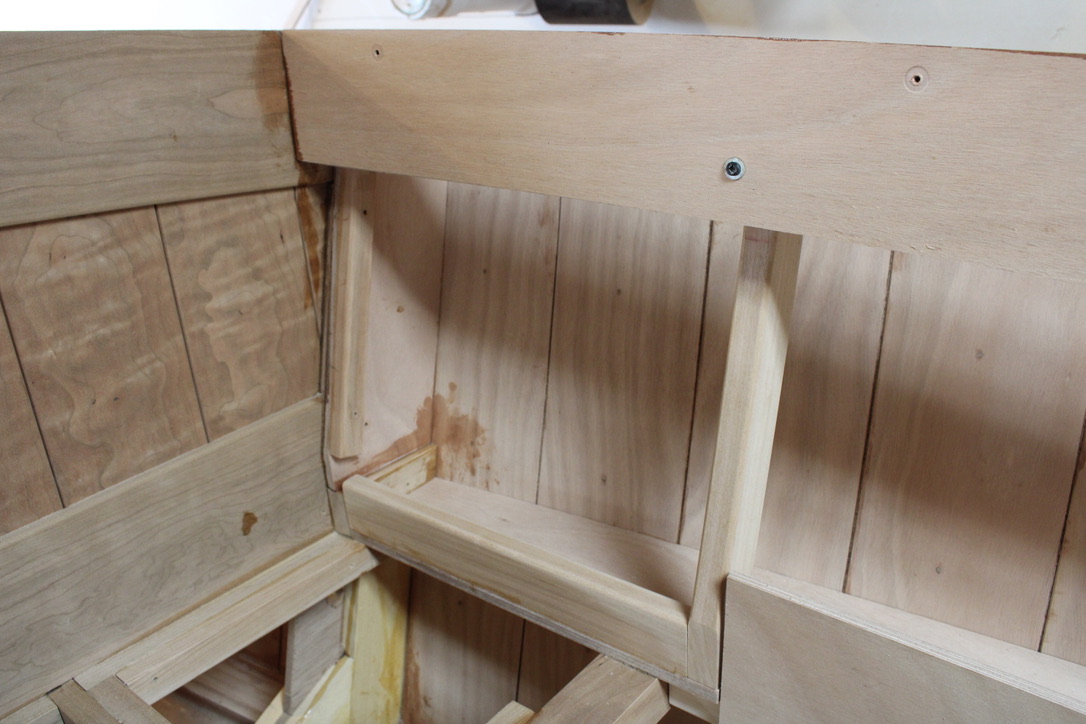
I added a spacer in front of the post to hold it at the same angle as the side runner. Then, the triangle block connects the inner face to the outer hull wall, and stabilizes to the whole frame assembly.
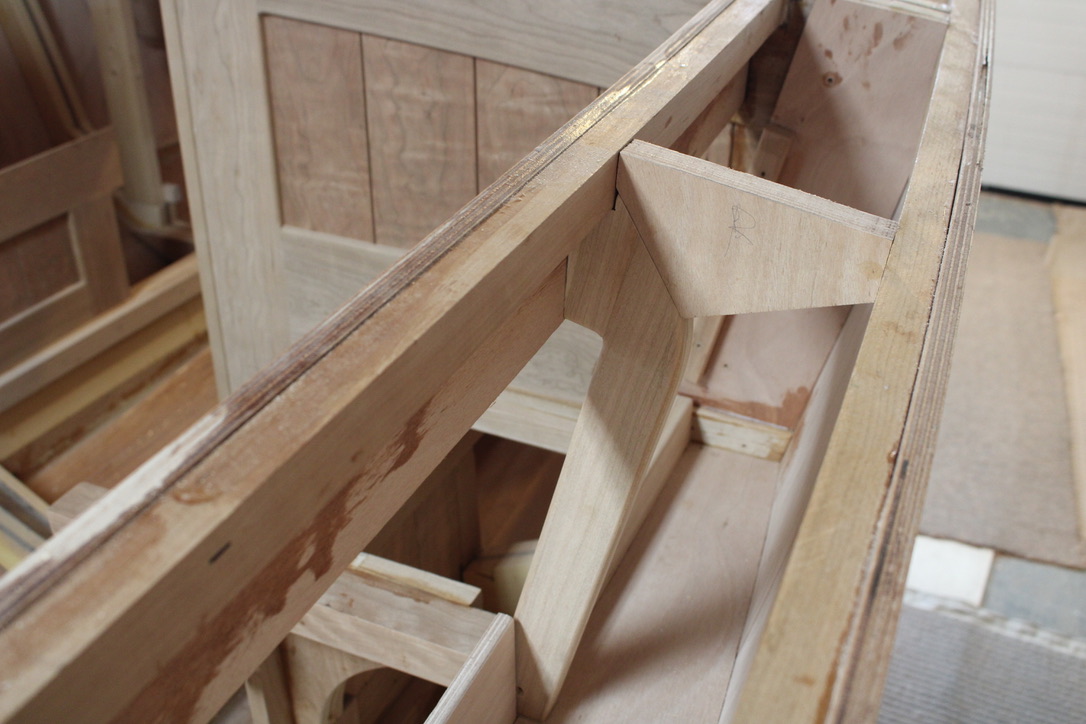
A second overlay plywood gusset ties it all together and the engineering questions are laid to rest. When that assembly is epoxied together, it will be strong enough for the wave bumps that will come.

 Building Redemption