
The end of the story from the last post is shown below, as I am tuning up the final angle where the sheer log meets the bow. It may look simple enough, but hanging on to a screaming body grinder at a precise angle with 36 grit paper is no casual task. I could have used a saw and a file, but, if the edge is visible and there is room to move, it is the fastest and most direct path toward completion.
I have long wondered what built by hand means, but if it is anything beyond shaping something strictly with your fingers, then this concentrated, practiced effort has to qualify also. Taming the body grinder is on par with training our Boxer dog Buck.
He never was fond of the leash, and pulled continually toward the next interesting scent or dead treasure. We always had to be prepared for the surprising and potentially injurious jerk, should any rabbit or any other animal jump to flee.

The grinder can be a lot like that dog. It pulls, it whines, it catches and jerks, all the time requiring it be handled with gentle pressure. But if it is mastered, it pulls as hard and fast as an Iditarod sled dog.

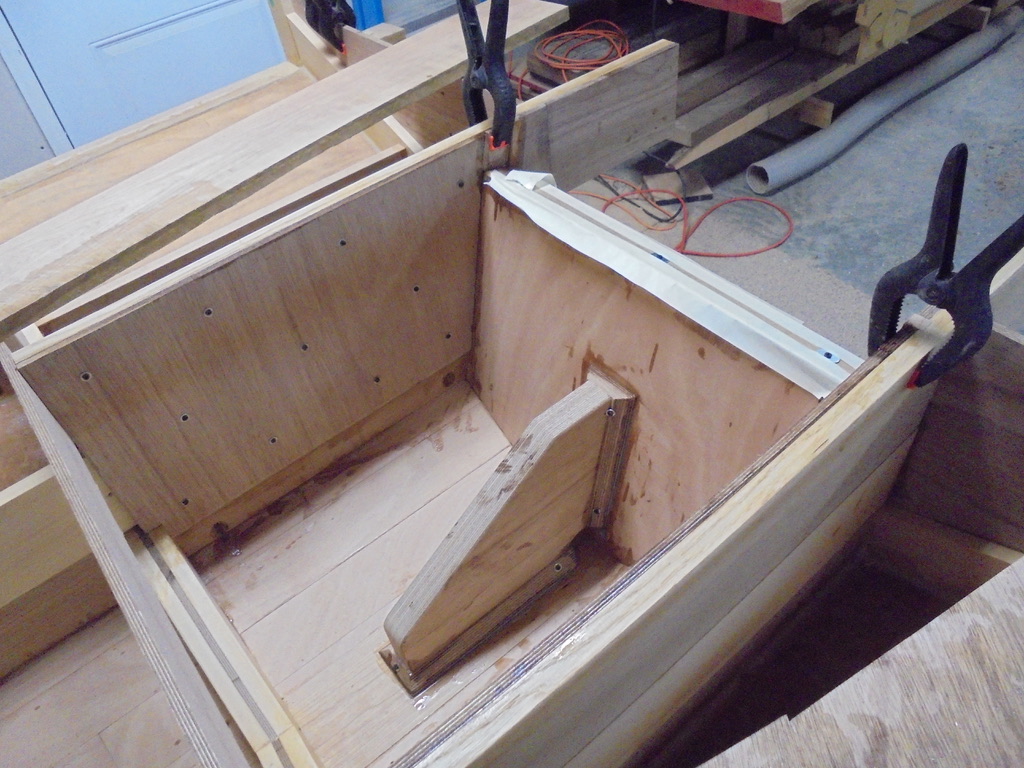
Those long sheer logs or moldings are now faired, and assembled into the framework of the boat. Now, it allows the imagination to go down the road a ways, as the 3D shape is coming into view.


 Building Redemption