
The hull inside is now strengthened with epoxy fillets and fiber glass cloth, and it is time to start building the seat framework. To give room for the motor well, I started the back seat one foot ahead of the second cross frame.
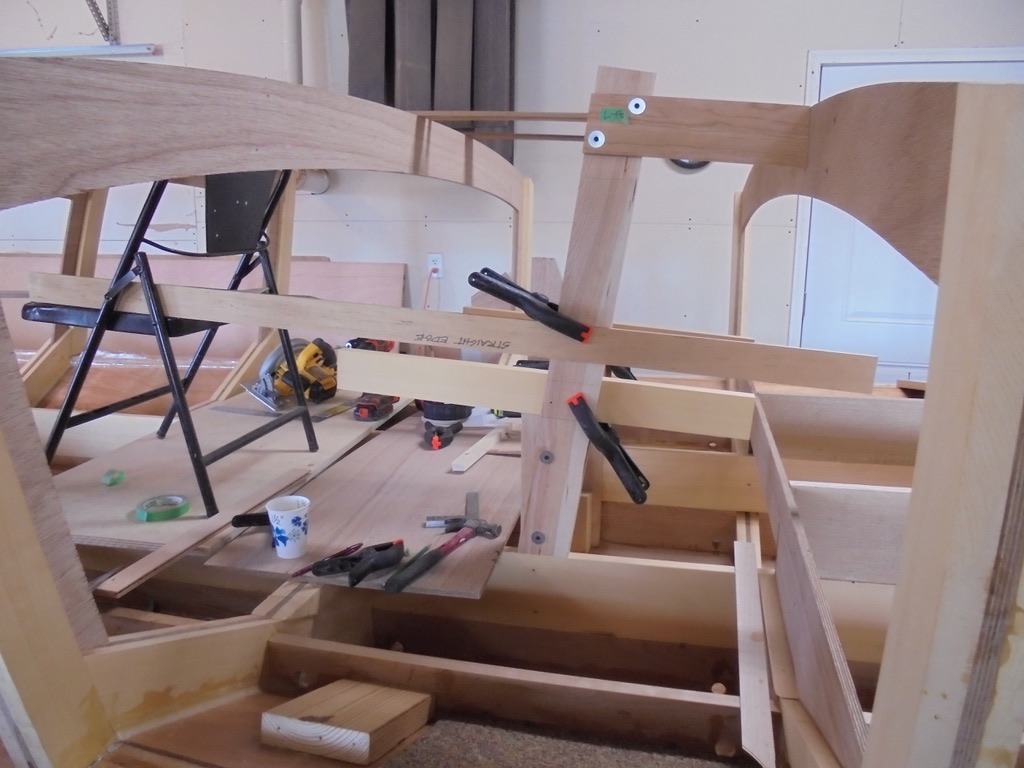
The wood frames are easy enough, but making them comfortable, in a well planned layout is the most important goal of the present. Notice the chair, with a straight edge on the seat, which was my pattern for setting the angle for the bench. The back of the bench follows closely to the angle of the seat also.
This is not a couch to slouch back and watch TV. It is an upright posture to interact, talk maybe, and be prepared for hammer down on occasion. Once the mockup is complete, it is time to get out the trusty dowel drilling jig and make some holes.

The dowel strengthened joints will be another long lasting part of the boat construction. All the way along, I am thinking how I can build the current part in such a way that it does not become the weakest Link.
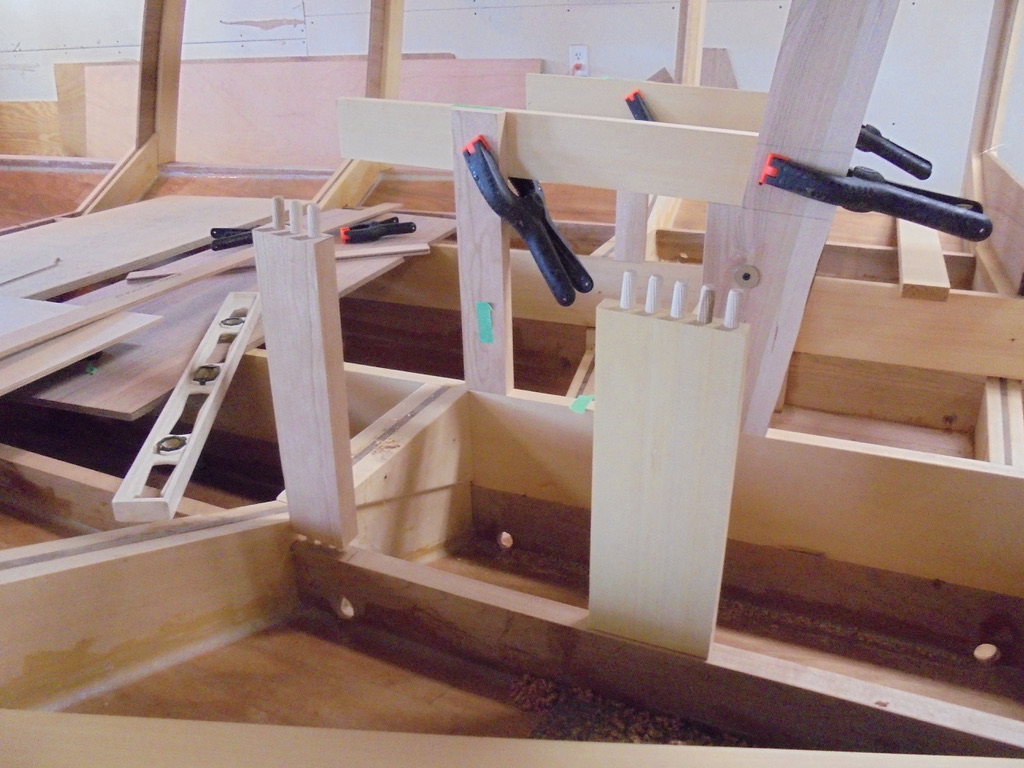
Below the four seat frames are dowelled and assembled to the boat longitudinal frames. The cross frame top over the seat will eventually be cut out, and moved behind the seat for more support there.
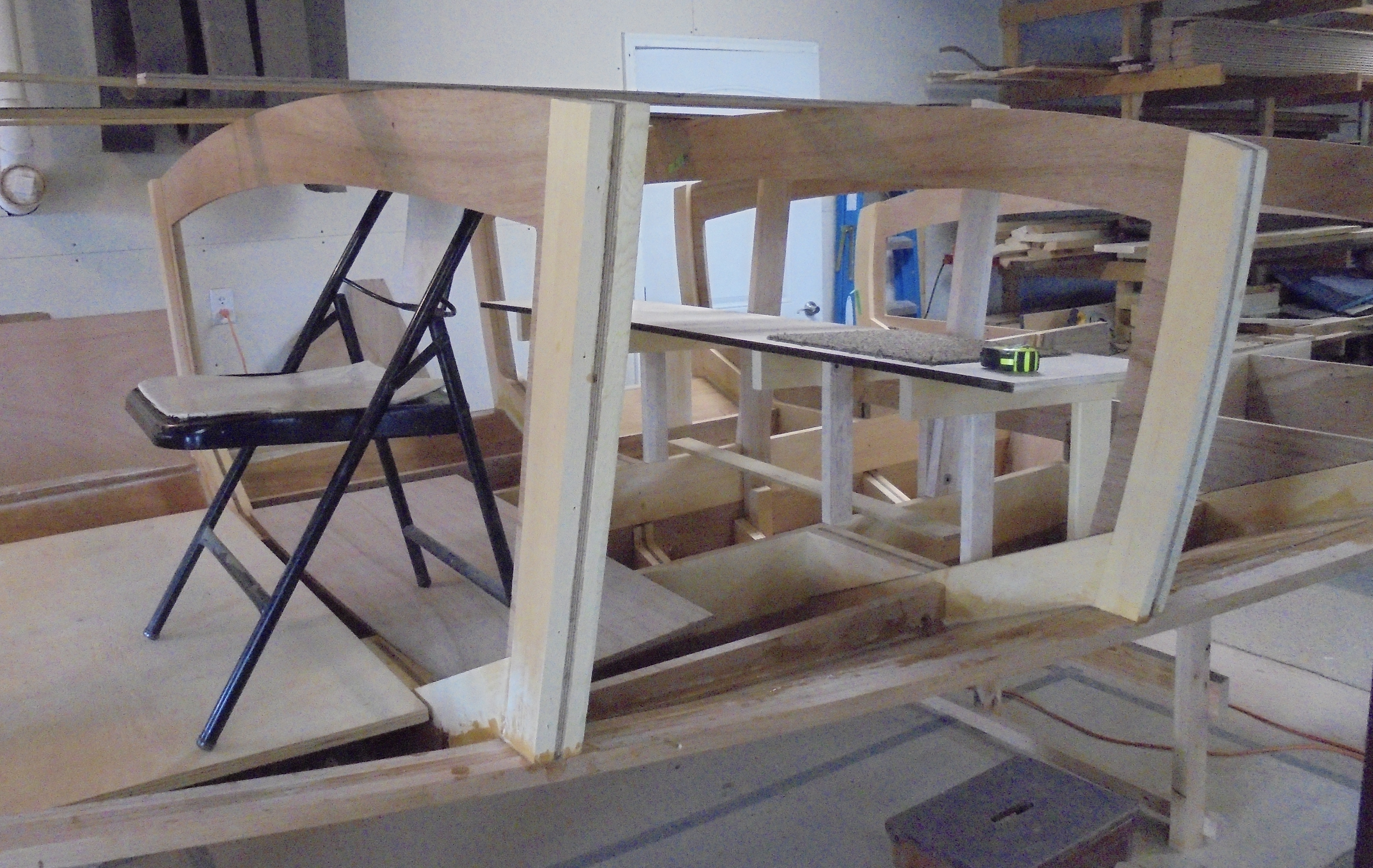
Next, layout for the front seats begins. A complicating factor is the possibility of two flip down seats behind the driver and copilot. It’s a fine line between ample personal distance and wasted space, as this boat is intended to have short run seating for eleven.
There’s plenty to be nervous about on the things that need to be figured out on the fly. I do prefer to get it right the first time, not like the sheer moulding I rebuilt today. I didn’t think the small knot was a problem, but the extra pressure needed to bend the moulding into the sheer line cracked it. I guess it was the weakest link.
A couple of hours on a repair detour and we are back on track. You are not lost if you are not out of time.
 Building Redemption