
The line where the top of the boat meets the side is called the sheer line by traditional builders. It is never straight, and is a defining shape of the personality of the boat. Sometimes it starts high in front, to cut the big waves, and comes down in the middle perhaps for rowing or fishing. This beautiful rowboat shows that reverse sheer.

My speedboat on the other hand, will not be battling such severe weather, but will need great visibility forward at all times. In this case, it has a positive sheer line, lower at the front to see across, and higher in the cockpit area for seating comfort and wind protection.

The line always curves inward toward the front, and the whole shape must be “fair,” a beautiful shape. Fairing a curve means making the shape flow with out hills or valleys. Lumpy does not make a winner. The best help for a good curve is a slender board long enough to go the full distance, thin enough to make a consistent bend, and thick enough to resist distortion between supports.
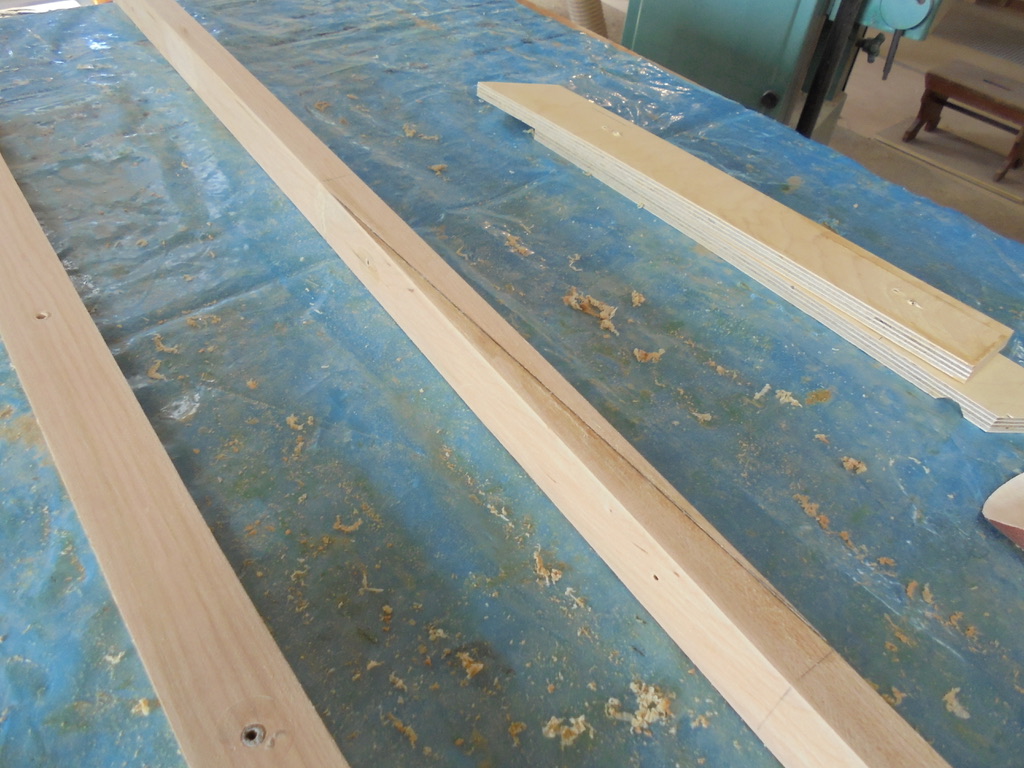
I chose a piece of cherry, and sized it to 7/8″ x 1-1/2″, and then had to splice together 2 twelve foot pieces to make 20 ft. As noted in the last post, the first one broke under the pressure of bending. I picked a straighter grained piece, thinned it a little, and started over. Below is the scarf joint, angled over 14″ so when glued, it will behave mostly like a solid original piece.
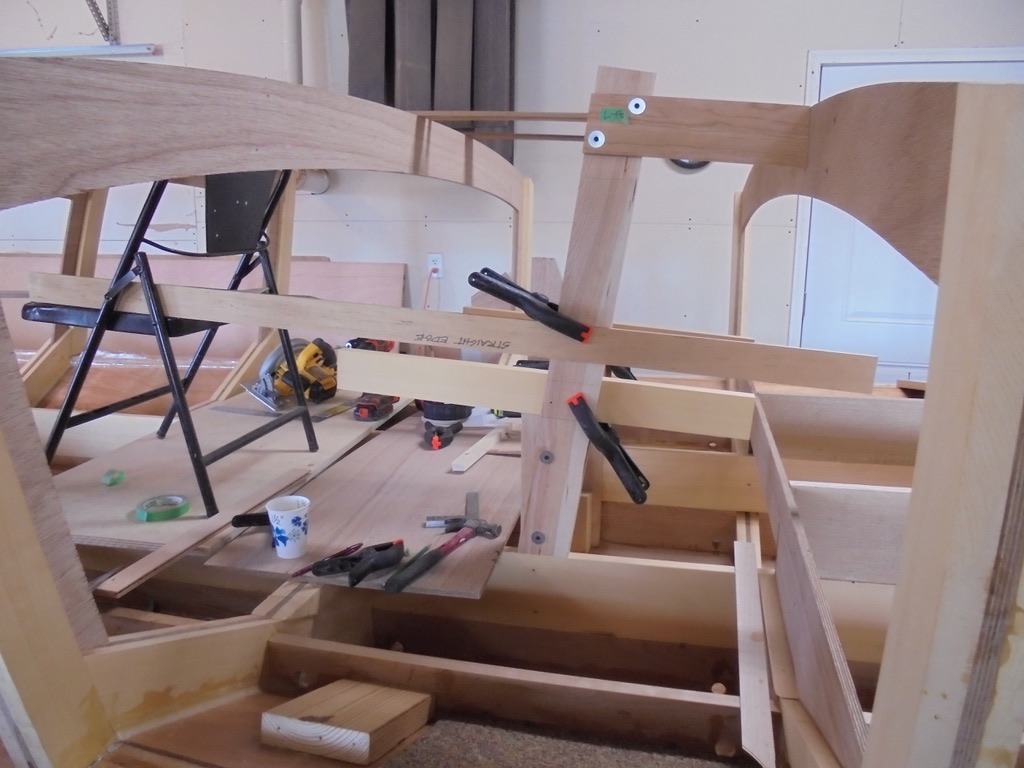
Then, the process begins by cutting a notch at the corner of one cross frame, and gradually fitting the sheer log in place. The photo below shows starting in the middle, using a bungee cord to hold it and then going on the next frame. Not a step to rush, as it will be examined, praised and criticized ad infinitum should this boat ever get on the water.

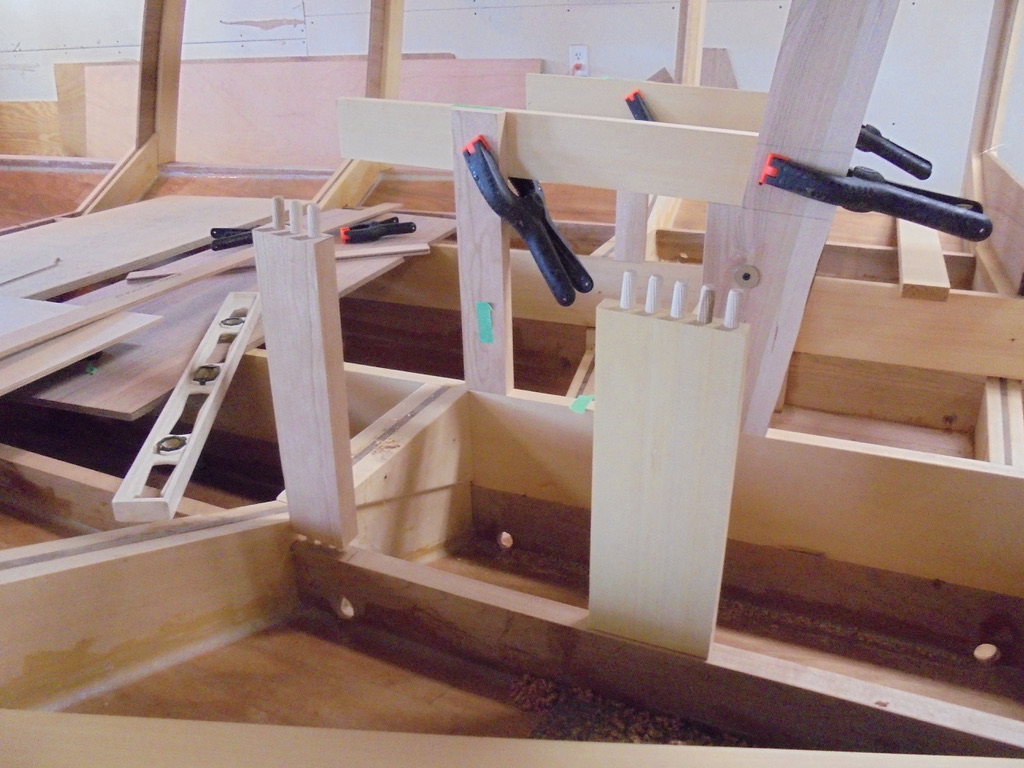
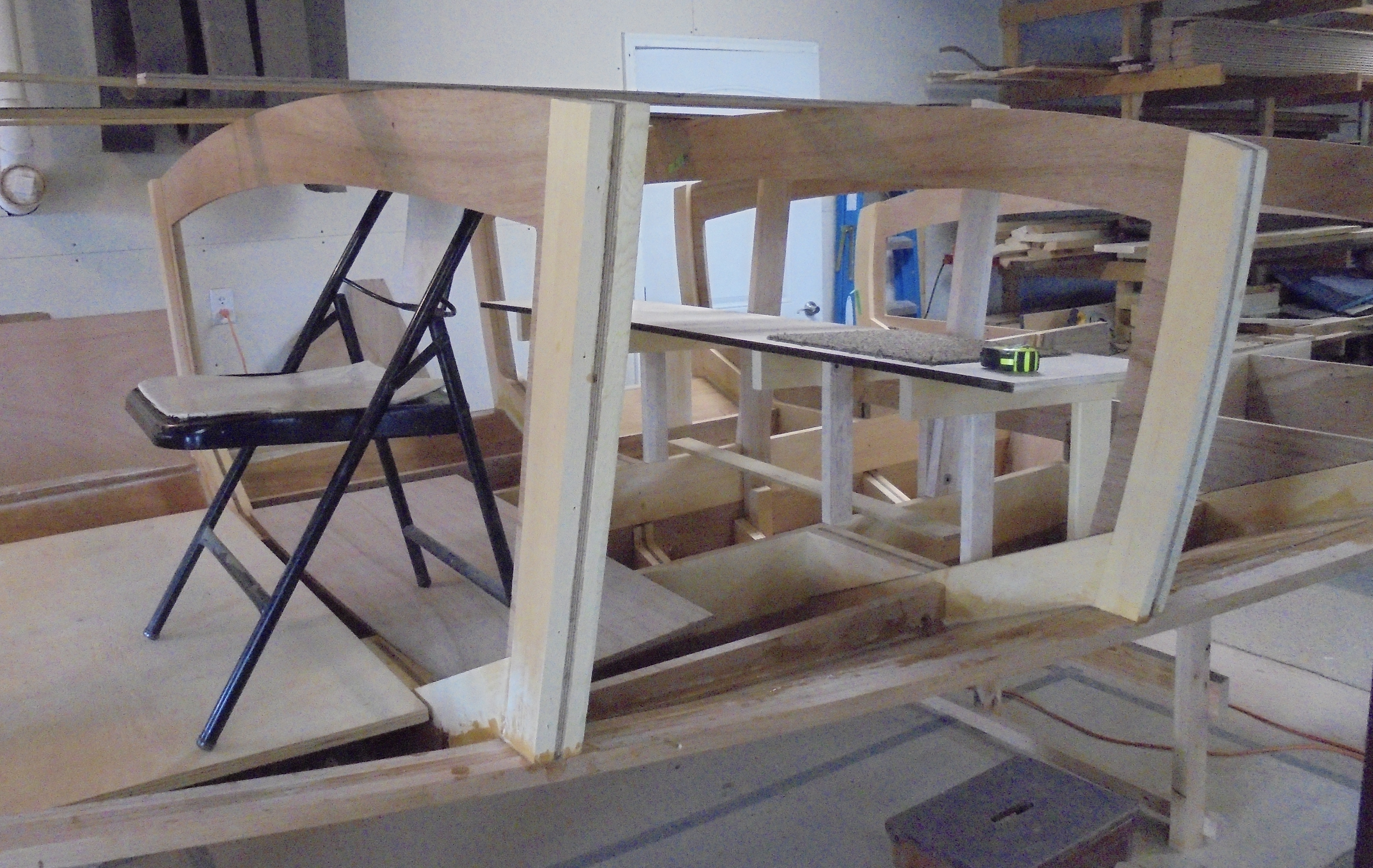
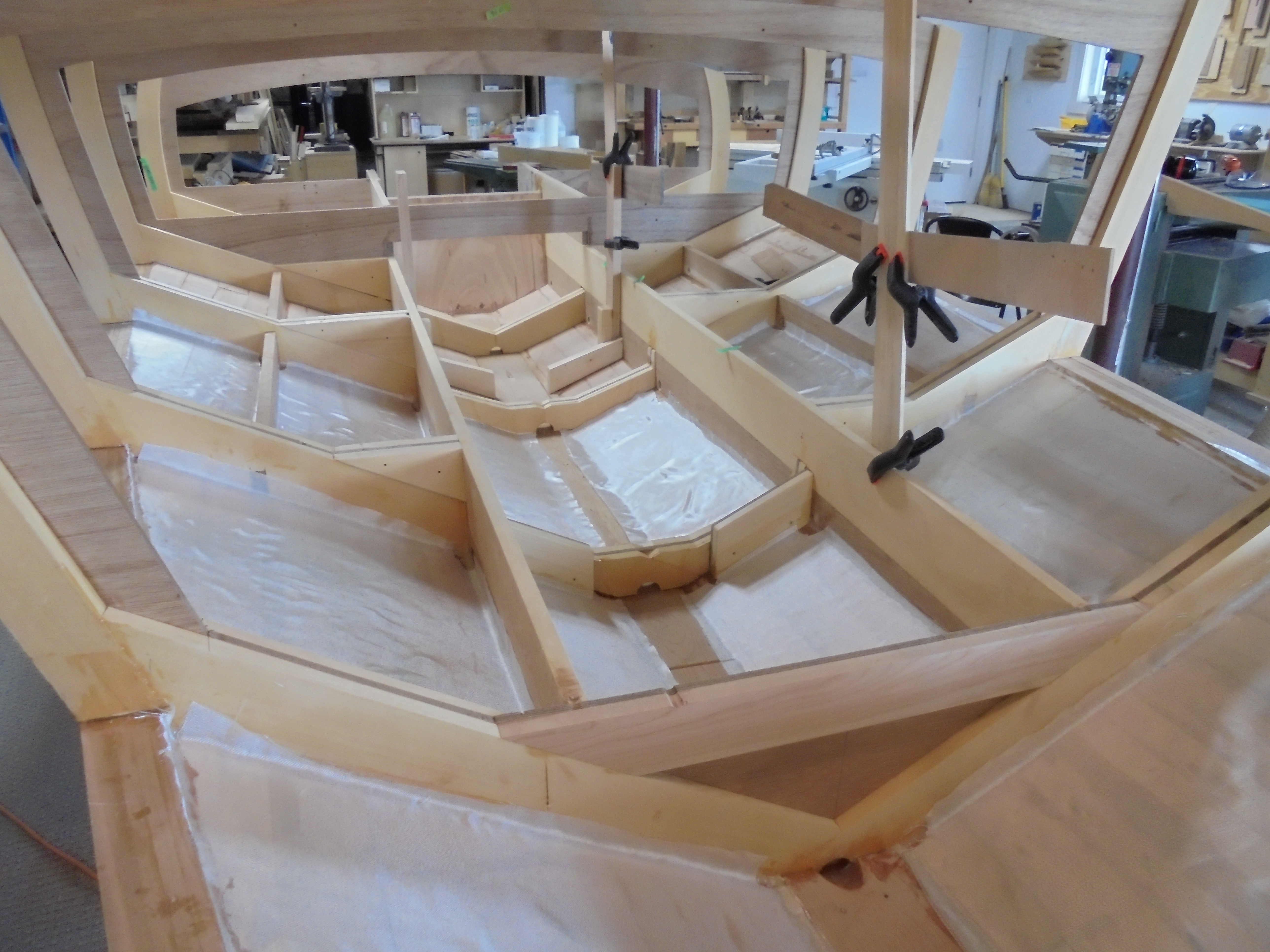
My friend Stan Oyer asked if there is a point in boat building when you have to give up the tight tolerances of levels, angle guides, and tape measures. Yep, and this is another of those many times. Below, I spring clamped two straight sticks to the extended sheer molding, just to see if the angle is similar side to side. I did not measure, or level up, but just got back and looked at the two sides from a couple of angles. My conclusion is that they are beautifully compatible, if not perfect.

On to the seat framework coming up . . . You are never lost until you are out of time.






 Building Redemption