
After the cross frames take shape, the profile of the bow line is the next most important visual. These days a wide variety of design style abounds. The front of Redemption, my first boat, followed the upswept, pointed lines of the long sleek ocean racers.

A more contemporary front design shows a reverse, back-leaning bow line. For a slow moving boat like a cruiser or a sail boat, the result is a longer the water line compared to the width, for better performance. The downside is that especially on faster boats, waves will tend to come up the side easier, making for a wet ride. It is still a visual and functional mystery to me that anyone would use it on a speed boat.

Below is a straight upright bow line, which imitates the tradition of the old runabouts, and looks good sitting still. However, as soon as these boats get moving, they take a plane angle with the bow up, and the front angle tips back awkwardly.

The sketch below by Jeff Margush shows respect for the traditional, neat vertical front angle, but in my opinion will look good sitting or at any position from take off to high speed plane. Of a couple dozen photos and drawings of mine and Jeff’s, this one sits currently at the top of the pile for inspiration. The rake of the windshield may not be imitated . . . this time.

The first experiment extending the front was a cardboard pattern to test the visual sense, which is doubly hard being upside down.
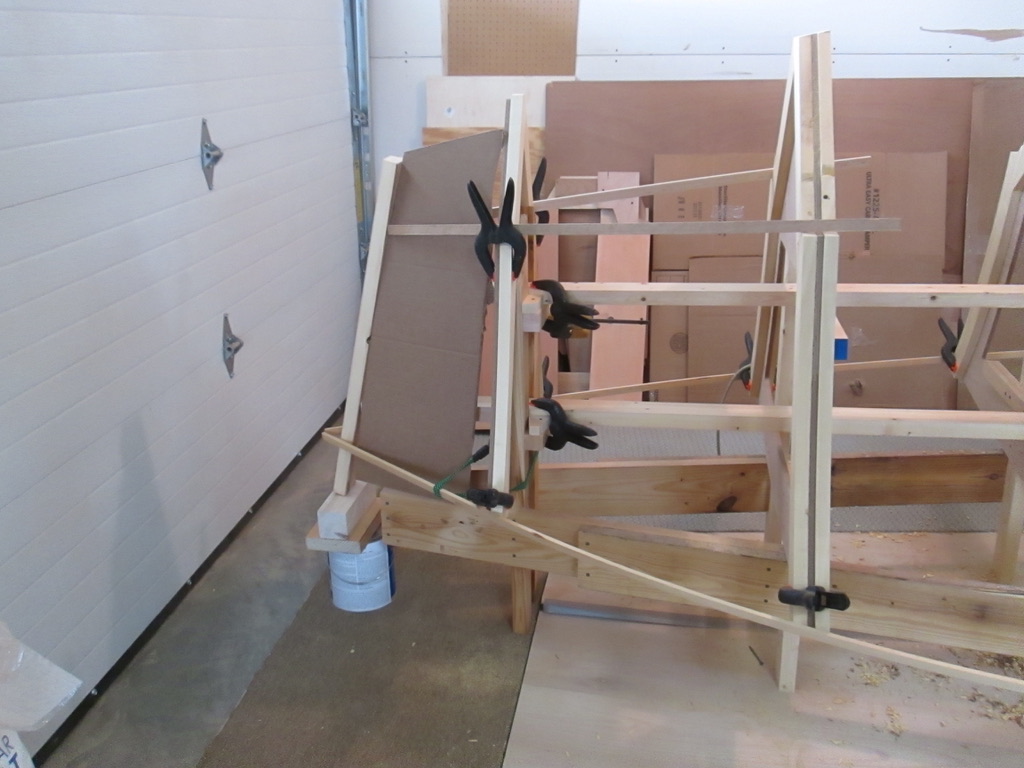
Adding the angled piece below was judged to be too upright.

This is the angle settled upon, and is now rather firmly established, being set in the “concrete” of boat building, epoxy.
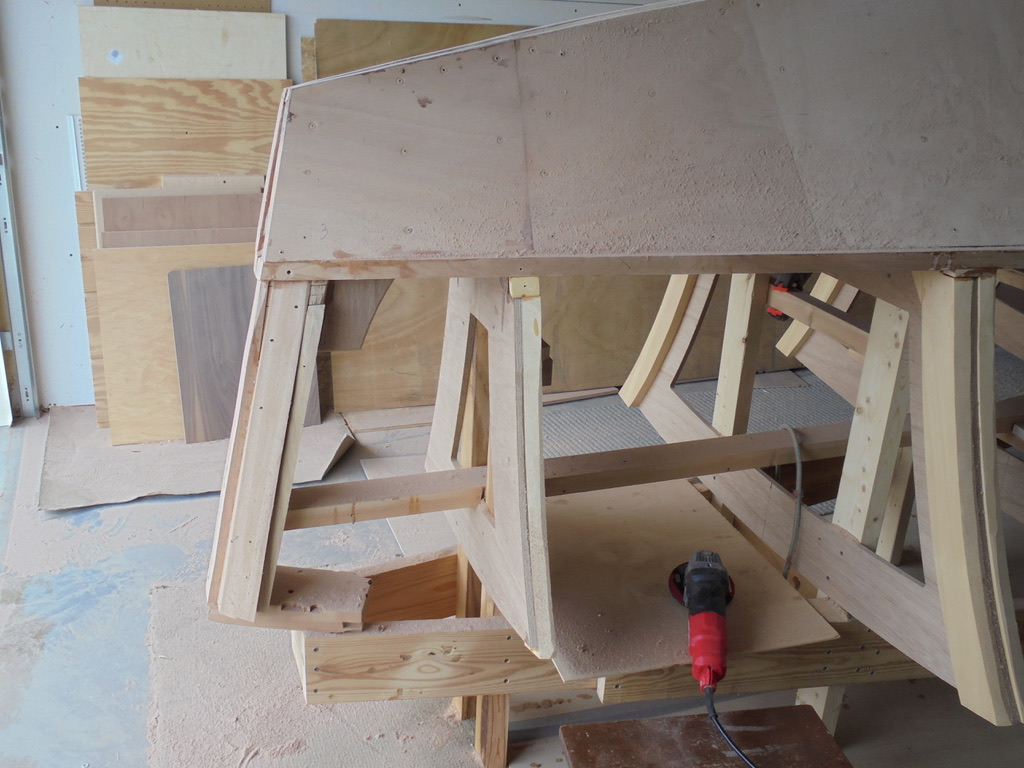
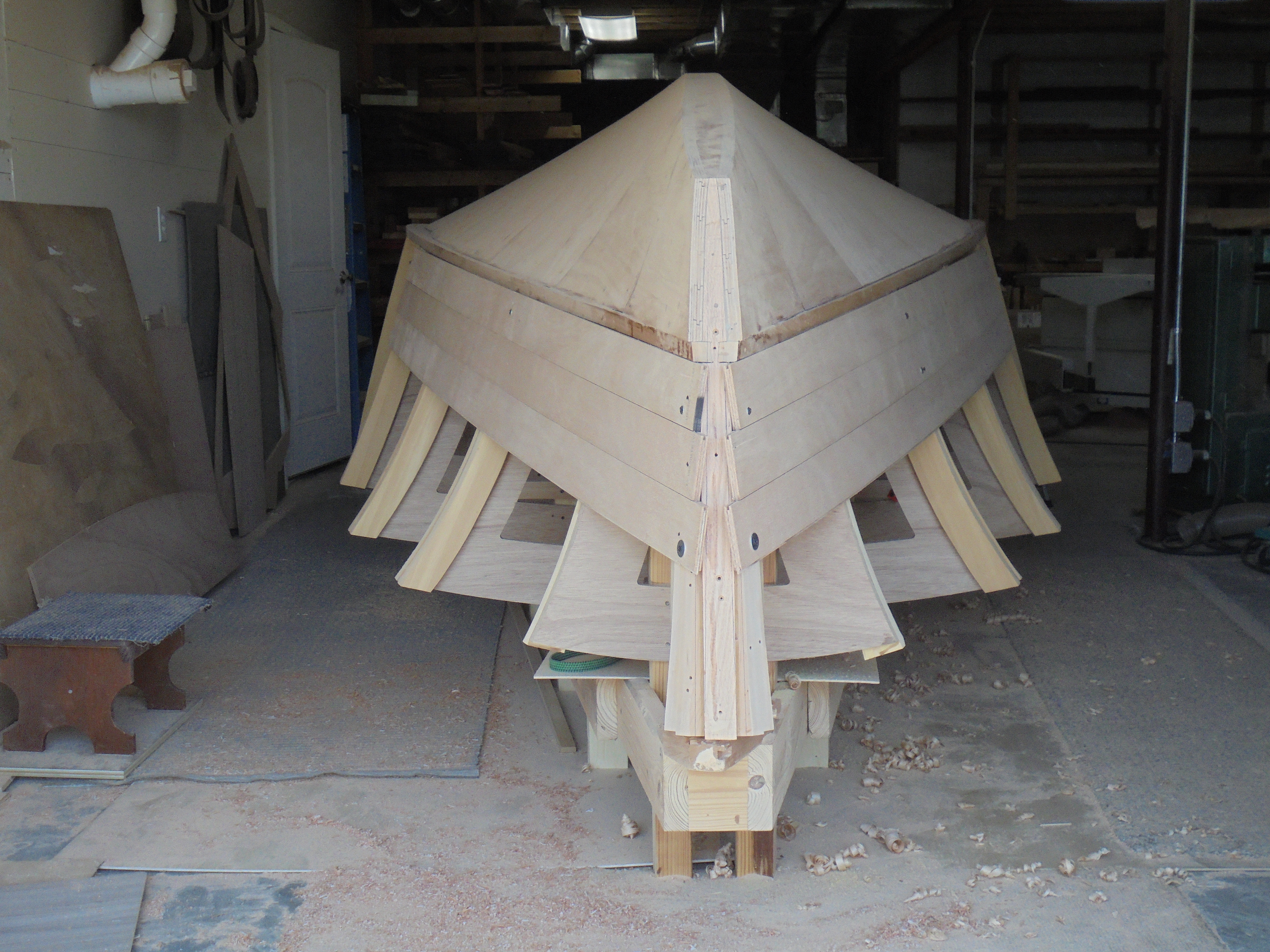
Although the side planks will not be permanently fixed until a later stage, I added three on each side just to see if we are headed in the right direction. With some sculptural attention to the chine line, it will eventually “fly.”
 Building Redemption
Hi David,
Enjoy reading about your boat building progress. You are so talented!
Beautiful boat designs!